 English
 Français
 Português
 Español
 العربية
نشرة الحقائق
E-News
اشترك في النشرة الإلكترونية
ملخصنا التحليلي اليومي الذي يشرح البيانات المحرّكة للسياسات والأسواق الحديثة.

الأربعاء 16 سبتمبر 2026 - 16:29

Finance Minister Yusuf Murangwa addresses a media briefing in Kigali as the country reports continued economic growth. Photo: Rwanda Daily
NNA News - Rwanda's economy grew by 9.4 percent in the second quarter of 2026 compared with the same period last year, with strong growth in industry and services supporting continued economic expansion, according to the National Institute of Statistics of Rwanda (NISR).
The latest figures show an acceleration from the 7.8 percent growth recorded in the second quarter of 2025. GDP at current market prices reached 7.174 trillion Rwandan francs, compared with 5.799 trillion francs a year earlier. Industry recorded the fastest growth, expanding by 18 percent and contributing 3.9 percentage points to overall GDP growth. Mining and quarrying increased by 26 percent, construction by 24 percent and manufacturing by 10 percent.
Manufacturing growth was supported by a 51 percent increase in the production of metal products, machinery and equipment, while non-metallic mineral products rose by 22 percent and textiles, clothing and leather products increased by 13 percent. The services sector, which remains Rwanda's largest economic sector, grew by 7 percent and contributed 3.7 percentage points to overall growth. Wholesale and retail trade increased by 18 percent, while information and communication services rose by 29 percent.
Finance Minister Yusuf Murangwa said the economy had remained resilient despite external pressures, including the effects of geopolitical tensions in the Middle East. “This shows that if the war had not happened, our economy would have grown much more strongly,” Murangwa said, adding that measures taken by the government had helped prevent significant disruption to supplies. “At no point did we run out of petrol or other essential goods that we needed in the country,” he said.
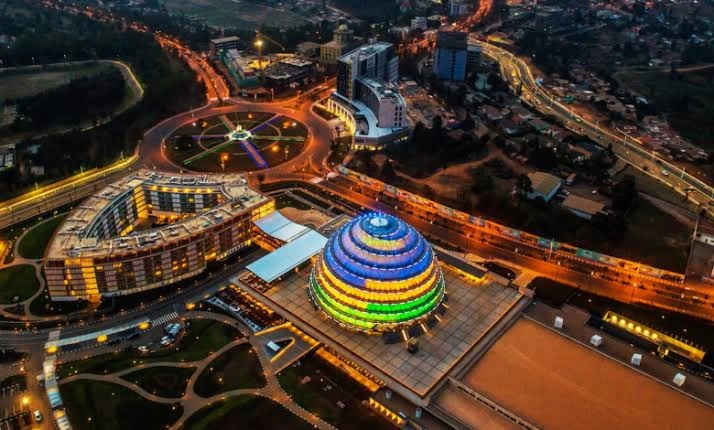
An aerial view of Kigali, Rwanda, showing the Kigali Convention Centre and surrounding roads and commercial developments in the city. Photo: Rwanda Daily
Agriculture grew by 4 percent, contributing one percentage point to overall GDP growth. Food crop production increased by 5 percent and livestock production by 6 percent, while export crop production declined by 20 percent, largely because of a fall in coffee production. Murangwa said the declining share of agriculture in the economy should not be interpreted as a contraction in agricultural production. “The share of agriculture in the overall economy may be declining, but that does not mean agricultural production is declining,” he said. “Agriculture is growing, even though its share of the economy is declining.”
Services accounted for 51 percent of GDP, followed by industry at 23 percent and agriculture at 21 percent. Net indirect taxes accounted for the remaining 5 percent. The latest quarterly figures come alongside strong full-year performance. NISR reported that Rwanda's economy grew by 10.6 percent in the 2025/26 fiscal year, with industry expanding by 16 percent, services by 8 percent and agriculture by 7 percent.
The second-quarter data also showed continued expansion in domestic demand and investment. Household consumption increased by 13 percent, exports of goods and services rose by 19 percent, while gross capital formation increased by 32 percent. Imports, however, grew by 36 percent during the quarter.
The figures point to continued momentum across Rwanda's industrial and services economy, while the performance of agriculture remains an important factor in how broadly economic growth is distributed across the country's sectors.

انضم إلى أكثر من 46,000 من المواطنين حول العالم والمديرين التنفيذيين وصنّاع القرار الذين يعتمدون على NNA يومياً للحصول على رؤية واضحة. أدخل بريدك الإلكتروني لتحصل على منظور لا يقبل المساومة مجاناً.
لا شكراً، أعدني إلى الصفحة الرئيسية.نحترم صندوق بريدك. ألغِ الاشتراك بنقرة واحدة في أي وقت.
ثلاث طرق للحصول على أخبار NNA لحظة وقوعها.
ملخصنا التحليلي اليومي الذي يشرح البيانات المحرّكة للسياسات والأسواق الحديثة.
معلومات عملية مركّزة تصل إلى بريدك قبل اجتماعك الأول.
الشبكة كلها في جيبك، مع تنبيهات الأخبار العاجلة.