
Brazil warns of real risk of world war and says global order no longer exists
Monday 06 April 2026 - 10:48am
By Brasil 247
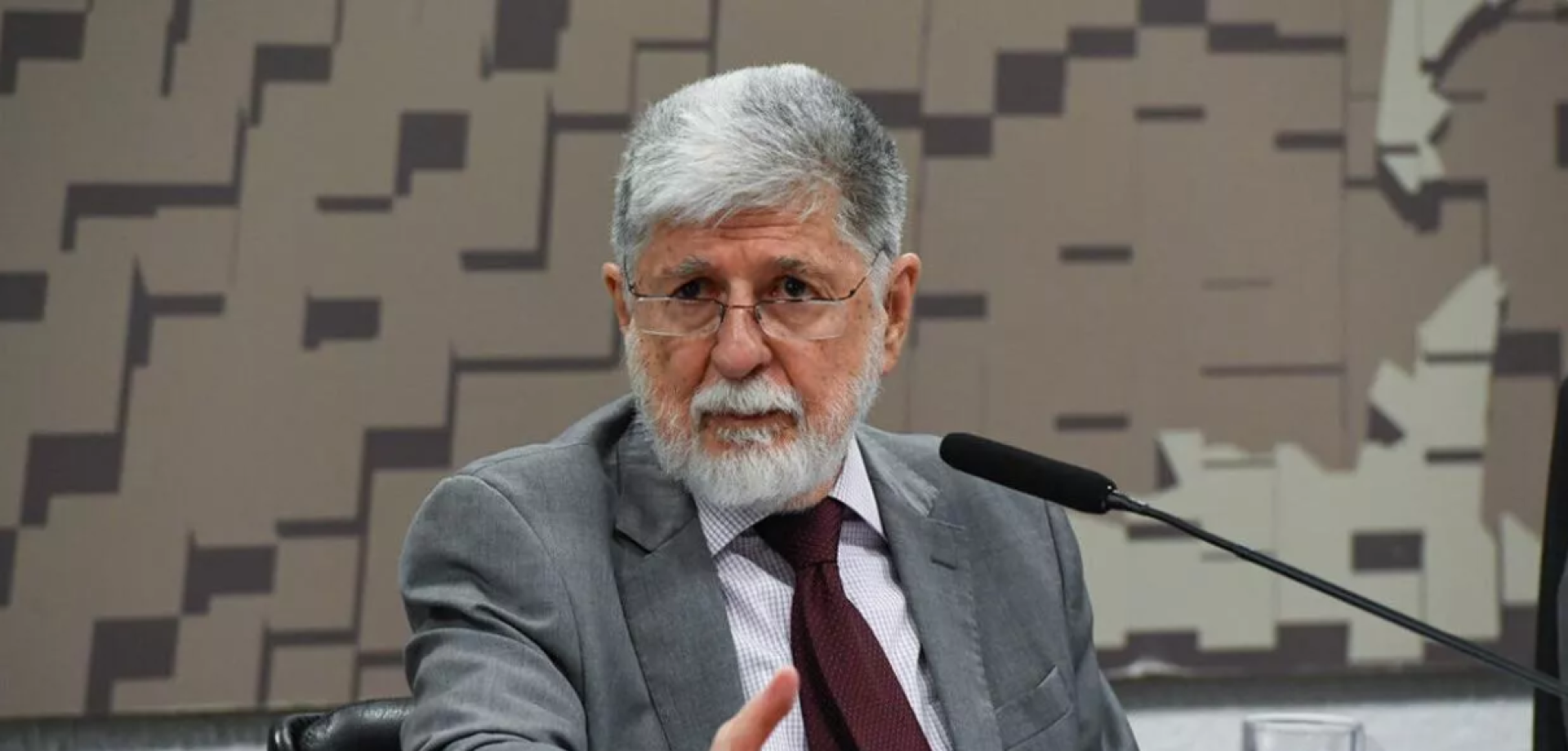
Brazilian presidential special adviser Celso Amorim warned that the international system faces a “very grave” situation with a concrete risk of broader conflict expansion, according to an interview with the TV 247 program Forças do Brasil, aired on April 4.
During the interview conducted by journalist Mario Vitor Santos, Amorim assessed the geopolitical crisis triggered by the war involving the United States and Israel against Iran, stating that the world is experiencing escalating instability and the possible collapse of the already weakened international order. “We are living through a situation that could trigger a much larger conflict,” Amorim said. When asked about the possibility of a third world war, he added: “It is a real risk.”
Amorim described his evaluation of the war as “the worst possible,” arguing that the offensive against Iran intensifies devastation in the Middle East while connecting multiple conflict fronts, including southern Lebanon, Gaza and the war in Ukraine. According to him, these crises can no longer be analyzed separately.
Referring to reports that a nuclear-capable bomber allegedly flew over Iran, Amorim highlighted the severity of the situation. “If this is true, it is even more dramatic, because once a nuclear war begins, I do not know how it ends,” he said, adding that “the attacks were carried out without measuring the consequences.”
The former Brazilian foreign minister criticized what he described as Western underestimation of Iran, arguing that Washington and Tel Aviv misjudged the country’s resilience. “We are talking about a country that has existed for 3,000 years,” he said, emphasizing Iran’s historical and civilizational continuity. He added that although Iran would emerge damaged, it would endure as a state: “Certainly Iran will come out very mutilated from this conflict, but it will remain an entire Iran,” and “Iran, in my opinion, will survive as an integral country.”
Amorim also warned that ongoing attacks during diplomatic contacts have severely undermined trust necessary for negotiations. “There is one factor that is absolutely essential in a negotiation: trust,” he said, explaining that attacks occurring during negotiation pauses make it “almost impossible” to resume talks. He added that eliminating negotiating interlocutors strengthens military factions and weakens civilian political forces inside Iran.
Assessing broader consequences, Amorim argued that the crisis goes beyond military confrontation and reflects a deeper systemic breakdown. “There is no longer a world order,” he said, attributing the deterioration to the erosion of multilateral rules and institutions, including principles governing global trade and cooperation. He also criticized attempts to restore the G7 as a central forum of global governance at the expense of broader platforms such as the G20, stating: “We are seeing a very large setback.”
While acknowledging that international relations increasingly follow a logic of power, Amorim argued that even dominant powers face limits. “The jungles are more harmonious than today’s world,” he said, adding that the United States emerges weakened because it did not achieve the expected results as quickly as anticipated.
Discussing regional impacts, Amorim said insecurity is spreading across Gulf countries and West Asia, noting that US military bases intended to guarantee security have become sources of vulnerability. He also described the situation in southern Lebanon as extremely serious and warned against underestimating developments there. According to Amorim, countries seeking to consolidate themselves as tourism and financial hubs, such as Dubai and Doha, are already experiencing economic and political effects from growing instability.
Despite the escalation involving Iran, Amorim stressed that the Palestinian issue remains central to regional instability. “The problem of the Middle East is very complicated as long as the Palestinian question is not resolved,” he said, describing the conflict as a permanent source of tension. He added that renewed warfare has overshadowed international debate about ongoing crimes in Gaza and noted that prospects for negotiations now appear absent.
Asked about implications for Brazil and possible external political pressure linked to US President Donald Trump, Amorim said global developments directly affect Brazil through oil prices and fertilizer supply. He noted that parts of the US establishment still operate under ideas similar to the Monroe Doctrine, while other sectors recognize Brazil’s importance and favor pragmatic relations. “I trust that this second vision will prevail,” he said.
Concluding the interview, Amorim warned that simultaneous conflicts around the world resemble interconnected bubbles that could merge into a global confrontation. “If suddenly a factor escapes even the control or desire of those involved and they connect, you have a war of worldwide proportions,” he said, emphasizing that although