
Mercosur–European Union Trade Deal Set to Take Effect
Friday 24 April 2026 - 03:14pm
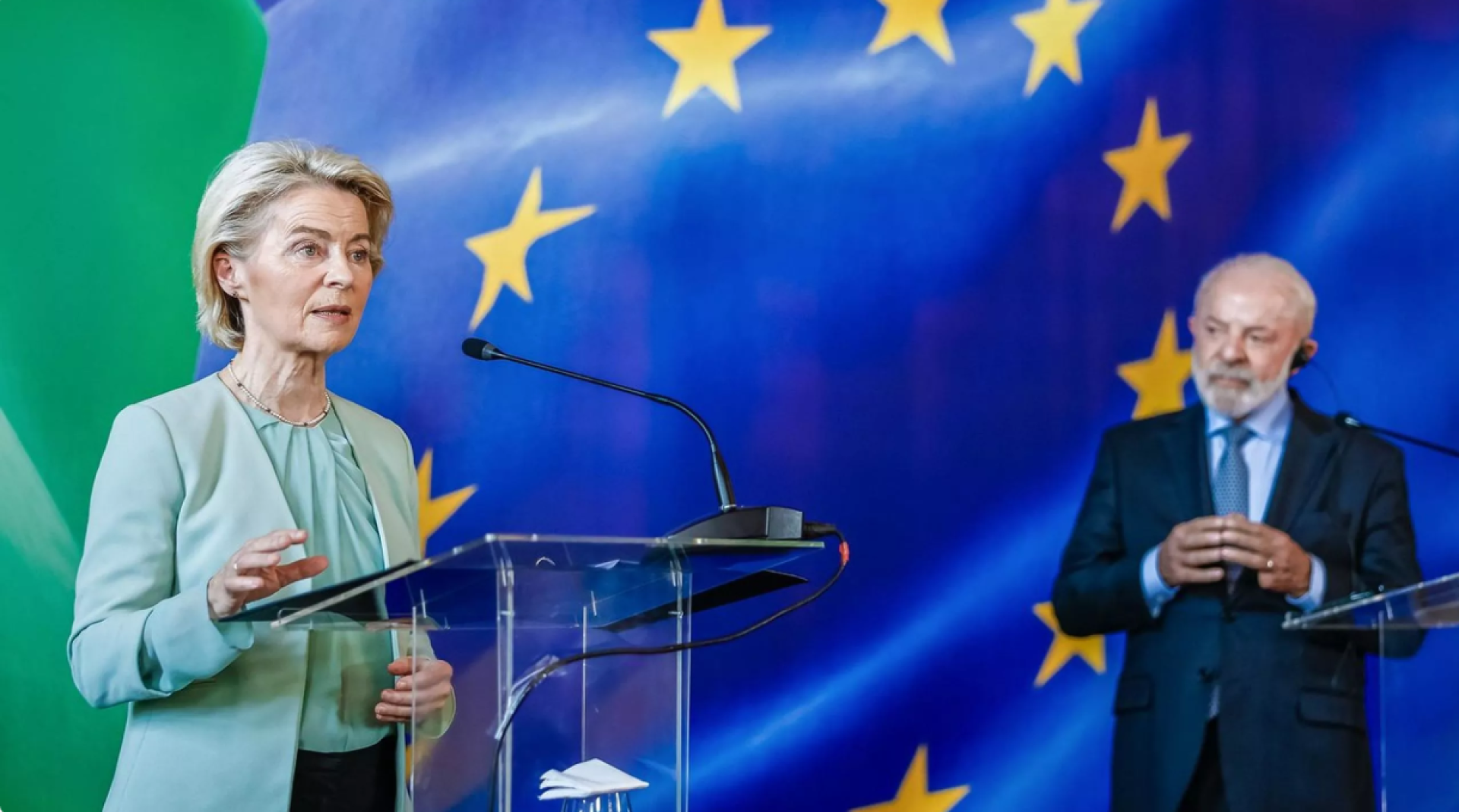
By Brasil 247 (Photo: Ricardo Stuckert / PR)
The trade agreement between Mercosur and the European Union will begin to take effect on May 1, marking one of the most significant moments in Brazil’s trade policy in recent decades.
After years of negotiations, the treaty establishes the largest bilateral free trade zone in the world, significantly expanding the economic reach between the two blocs. According to Brasil 247, the agreement is expected to reshape trade flows and strengthen international economic integration.
In an interview with the program A Voz do Brasil, Márcio Elias Rosa, from Brazil’s Ministry of Development, Industry, Commerce and Services (MDIC), highlighted the scale of the agreement and its potential impact on both the global and national economy. “We are witnessing the formation of a new economic and commercial bloc composed of 720 million people. They correspond to the population of Mercosur — Brazil, Paraguay, Uruguay, Argentina, and soon Bolivia — and all the countries that make up the European Union. We have 720 million consumers in this market and a GDP of 22 trillion dollars,” he said.
The treaty provides for the gradual elimination of import tariffs on most goods traded between the two blocs. Over time, around 95 percent of products are expected to circulate without such taxes, promoting greater competitiveness and economic integration. “It is a free trade agreement. Over time, we will not pay import taxes on certain products or almost all products — 95 percent of products coming from Europe — and Europe will also not pay, after a period, import taxes on products purchased from Mercosur, not only from Brazil,” he explained.
According to the minister, tariff reductions will not occur immediately but will be implemented progressively, at different paces for each bloc. Exports from Mercosur, largely composed of commodities, are expected to benefit more quickly compared to European industrial goods. “But this is not done immediately. It starts on May 1 and then slowly reduces the rates. In the case of Mercosur, it is more benefited than the European Union. Why? Because we export more commodities, more protein, meat, soy, oil itself, crude oil. In their case, it is more industrialized products, so the tariff is reduced almost immediately — it is reduced more quickly for our imports,” he said.
Beyond expanding bilateral trade, the agreement is also expected to stimulate foreign investment and strengthen Mercosur’s international position. The new framework may attract interest from other trade partners and consolidate the South American bloc as a relevant actor in global trade.
Positive effects are also expected in Brazil’s labor market. According to the MDIC official, trade liberalization combined with industrial policies could contribute to job creation and income growth. “Today, Brazil is experiencing full employment. We have more than 100 million people employed, with social rights guaranteed. It is the lowest unemployment rate in our historical curve, thanks to an economic development policy that has at its core, among other measures, Nova Indústria Brasil. Industry generates jobs and qualified income, as do commerce and services,” he said.