
China Tariff Shift Reshapes Egypt Citrus Exports
Saturday 02 May 2026 - 11:47am
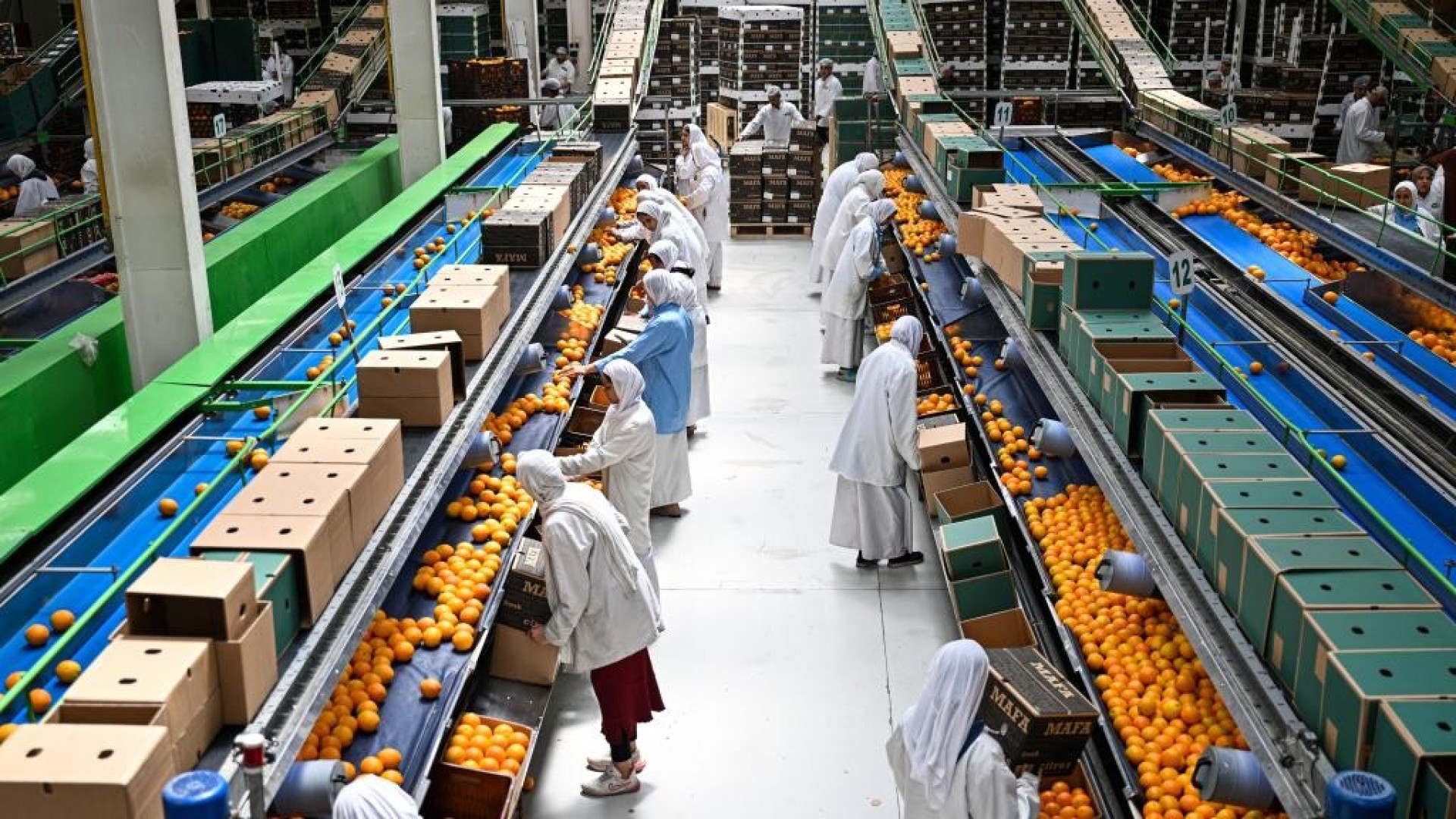
NNA News report by Mahmoud Fouly | Beheira
(Photo Credit: Ahmed Gomaa)
At a citrus packing plant on the edge of Egypt’s Beheira province, the pace rarely slows. Workers in white coats move along conveyor belts, sorting and sealing cartons of Valencia oranges as they pass through inspection lines, each box bound for markets thousands of kilometres away.
The facility, operated by Magrabi Agriculture, reflects the scale and discipline of Egypt’s export-driven citrus industry. Across its orchards and production lines, output is measured not just in tonnes, but in timing, quality, and access to global markets.
Now, a shift in trade policy is beginning to shape that rhythm.
China has expanded its zero-tariff policy to include all 53 African countries with diplomatic ties to Beijing, bringing Egypt into a preferential trade framework set to run until April 2028. The move introduces new competitive advantages for exporters seeking to deepen access to one of the world’s largest consumer markets.
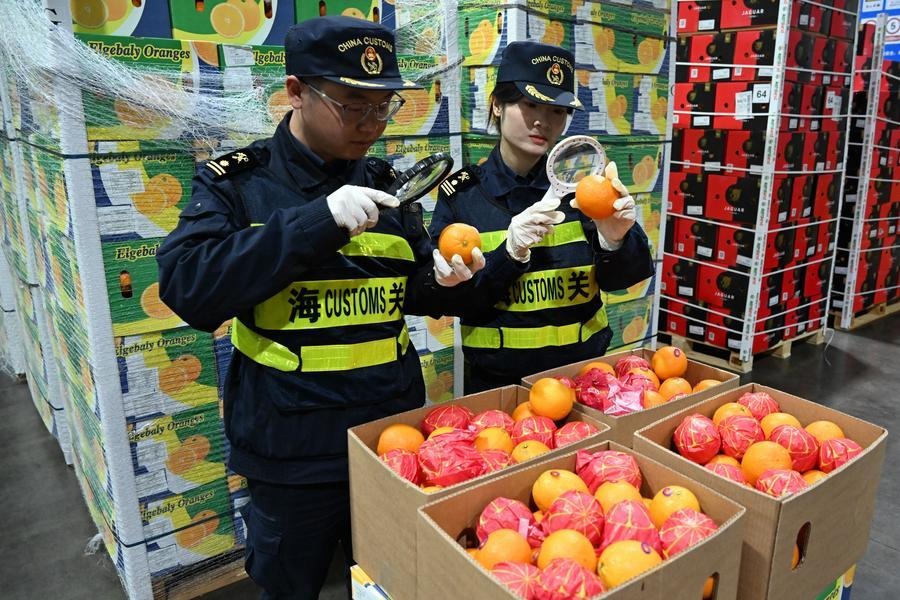
Customs officers inspect oranges imported from Egypt in Shanghai, east China, May 1, 2026. (Photo Credit: Xinhua)
For producers on the ground, the implications are immediate.
“This decision will certainly help Egyptian exports become more competitive inside the Chinese market,” said Ibrahim El-Banna, export manager at the company.
Egypt remains the world’s largest citrus exporter, with volumes reaching around 2 million tonnes annually. Yet access to China is defined as much by regulation as by demand.
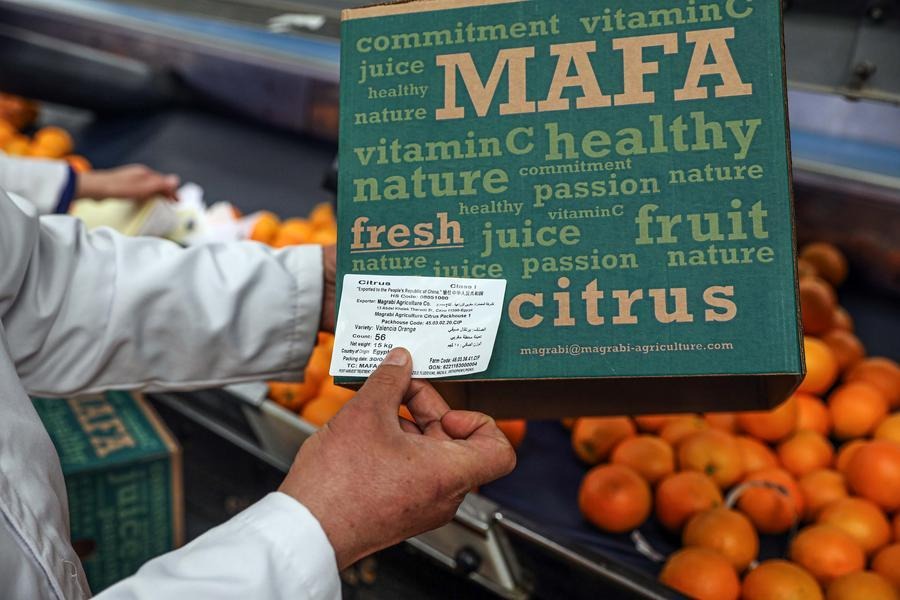
Exporters must comply with strict phytosanitary requirements, including farm accreditation and cold treatment protocols that require fruit to be maintained below specific temperatures for extended periods during transit. These conditions act as both a safeguard and a filter.
“Those with higher quality and stronger capabilities will be able to achieve the required gains and the required connection with the Chinese market,” said Ahmed Fikry, a citrus packhouse assistant manager.
 .
.
People work in a citrus packing plant of Magrabi Agriculture in Beheira province, Egypt, April 30, 2026. (Ahmed Gomaa)
At the Beheira facility, between 70,000 and 90,000 tonnes of citrus are processed each year, with roughly 70 percent destined for export. The operation supports nearly 1,000 workers and already supplies oranges to China, alongside smaller volumes of lemons, grapefruit, and mandarins.
On the packing floor, the process continues without pause. Cartons are stacked, sealed, and loaded, each shipment moving steadily from reclaimed desert farmland toward distant markets.
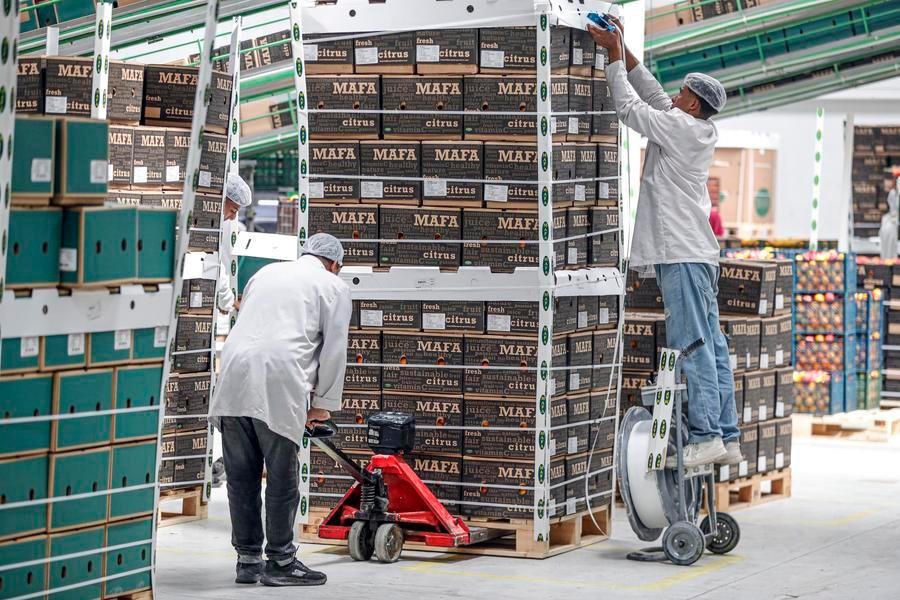
People work in a citrus packing plant of Magrabi Agriculture in Beheira province, Egypt, April 30, 2026. (Ahmed Gomaa)
Industry participants say the demands of the Chinese market are influencing production standards beyond a single export route, pushing improvements in packaging, cold chain logistics, and regulatory compliance across the sector.