
WHO Monitors Hantavirus Cases on Cruise Ship
Wednesday 06 May 2026 - 12:05pm
By Sello Lentsoane, NNA News | Geneva, Switzerland
Health authorities are continuing to monitor a hantavirus outbreak aboard the cruise ship Hundius in the Atlantic Ocean, after seven passengers and crew members fell ill and three people died, according to the World Health Organization.
The WHO said the source of the infections remains under investigation, although initial findings suggest some passengers may have contracted the virus before boarding the vessel in Argentina.
“One patient is in intensive care in South Africa, although we understand that this patient is improving,” WHO chief of Epidemic and Pandemic Preparedness and Prevention Maria Van Kerkhove told reporters in Geneva on May 5th, 2026.
The agency said two additional patients who remain on board are being prepared for medical evacuation to the Netherlands for treatment.
As investigations continue, passengers have been asked to remain inside their cabins while disinfection and public health measures are carried out on the ship.
“The plan is, and our highest priority is, to medically evacuate these two individuals” to ensure they receive the necessary treatment and to confirm there are no additional symptomatic patients on board, Van Kerkhove said.
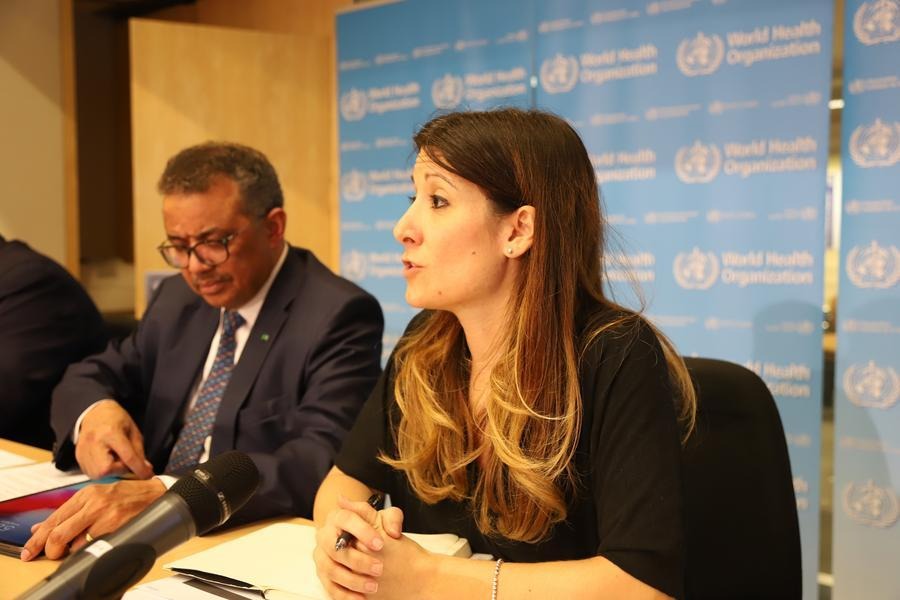
This file photo shows Maria van Kerkhove (R), who was technical lead for the WHO's Health Emergencies Programme, speaking during a daily briefing in Geneva, Switzerland, on March 5, 2020. (Chen Junxia)
The vessel is expected to continue to the Canary Islands in Spain, where Spanish authorities and the WHO are preparing to conduct “a full epidemiologic investigation” and disinfection of the ship.
Hantaviruses are typically carried by rodents and can cause severe respiratory illness in humans. Infection usually occurs through contact with infected rodents, or exposure to their urine, saliva or droppings. According to the WHO, the first known patients were a husband and wife who boarded the ship in Argentina.
“With the timing of the incubation period of hantavirus, which can be anywhere from one to six weeks, our assumption is that they were infected off the ship,” Van Kerkhove said.
She added that limited human-to-human transmission among close contacts could not be ruled out. “We do believe that there may be some human-to-human transmission that’s happening among the really close contacts,” she said, referring to passengers sharing cabins and living spaces.
According to the WHO, person-to-person transmission of hantavirus is uncommon, although limited spread has previously been documented in outbreaks linked to the Andes virus strain.
There is currently no specific treatment for hantavirus beyond supportive medical care. “Typically, people will develop respiratory symptoms, so respiratory support is really important,” Van Kerkhove said.
The situation remains under close monitoring as health authorities continue investigations and medical support operations. NNA News