
Uganda’s Electric Bus Expansion Reflects Africa’s Push for Greener Urban Transport
Thursday 21 May 2026 - 02:51pm
Sello Lentsoane, NNA News | Kampala, Uganda
Uganda is expanding its electric bus operations in Kampala as African cities continue searching for cleaner and more affordable public transport systems amid rising fuel costs and growing urban populations.
Across parts of the Ugandan capital, locally manufactured electric buses are increasingly becoming part of daily commuter life. The development forms part of Uganda’s wider efforts to strengthen electric mobility and reduce dependence on fuel-powered public transport.
The green and grey 40-seater buses have also attracted public attention for their onboard Wi Fi services, allowing passengers to share photos and videos of their journeys in real time.
Uganda first entered the electric mobility sector in 2016 when it unveiled the Kayoola electric vehicle, widely recognised as Africa’s first solar-powered electric bus.
At the centre of the country’s electric mobility programme is Kiira Motors Corporation and its subsidiary, E Bus Xpress Kiira Ltd.
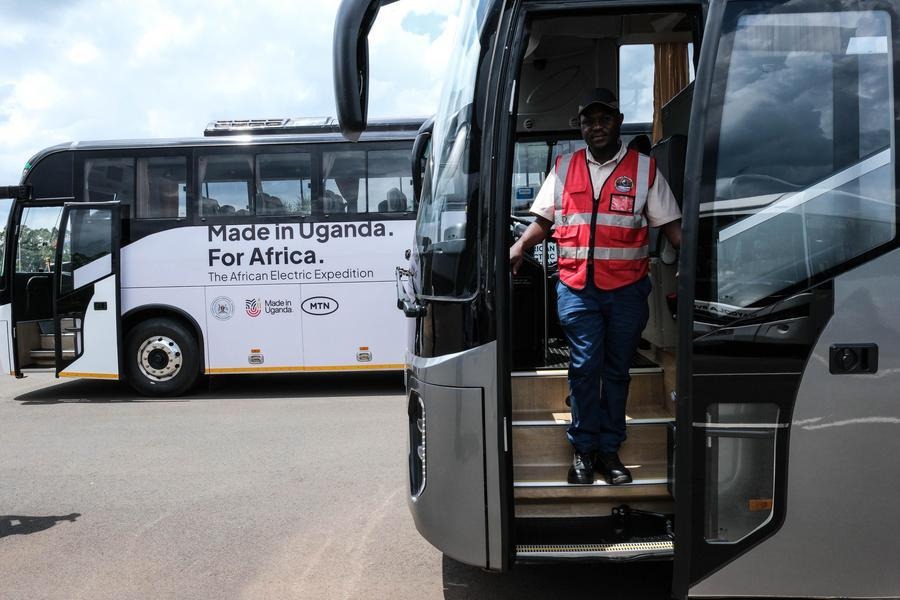
An engineer stands inside an electric bus at the Kiira Vehicle Plant in Jinja, Eastern Uganda, on May 18, 2026. (Photo by Hajarah Nalwadda, NNA News)
Speaking during a recent media tour at the company’s production plant in Jinja, Managing Director Ian Kyeyune said the number of buses operating on Kampala routes is expected to increase from 16 to 45 within a month.
He added that Uganda plans to manufacture more than 1,500 electric buses over the next year as part of a national strategy targeting 15,000 electric vehicles by 2030.
“The goal for us is to transport over five million Ugandans daily. What this means is that on each route that is passable by motorized vehicle, there must be a Kayoola electric bus,” Kyeyune said.
Authorities in Kampala are also restructuring sections of the city’s transport system to support public transport operations. Measures include removing roadside parking in parts of the city centre and introducing dedicated bus lanes aimed at easing congestion.
The Ugandan government is further encouraging private sector participation in the electric transport sector through franchise and investment models linked to bus operations.
According to engineers at Kiira Motors, electric buses offer lower operating and maintenance costs compared to diesel-powered vehicles.
“We save over 60 percent of energy costs. Where an ordinary taxi would spend 1,800 shillings, we only spend 800 shillings on energy cost per km,” Kyeyune said.
He added that operators could recover their investment within approximately three years because of reduced fuel expenses.
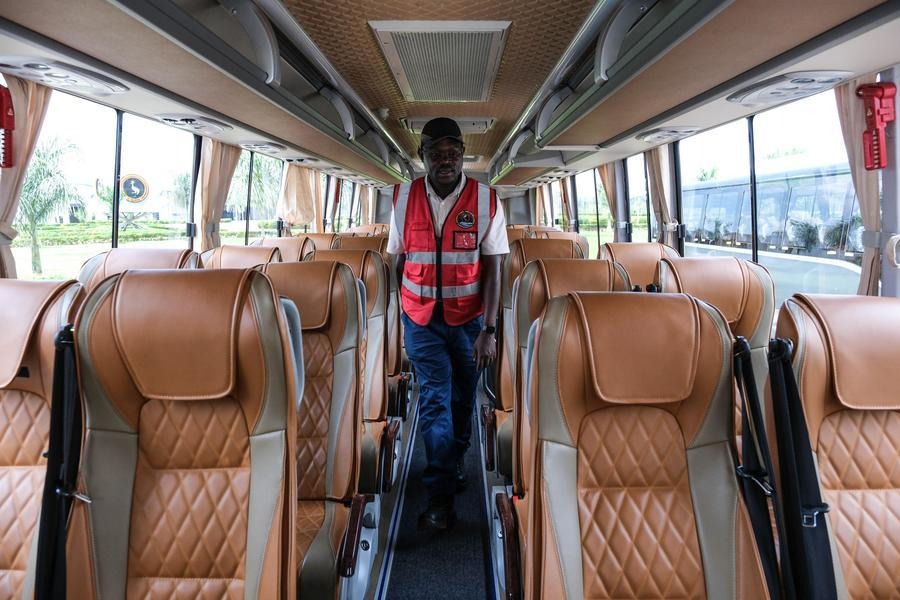
An engineer walks inside an electric bus at the Kiira Vehicle Plant in Jinja, Eastern Uganda, on May 18, 2026. (Photo by Hajarah Nalwadda, NNA News)
The company also says the buses’ batteries, which have an estimated lifespan of 12 years, can later be reused for solar energy storage and other energy applications.
Production Director Richard Madanda said the batteries used in the buses are imported from China, while the company continues working with Chinese partners to strengthen technical expertise in electric vehicle manufacturing.
“We are working with a partner from China because their auto industry, in terms of electric vehicles, is the best in the world. We want to learn from the best,” Madanda said.
Uganda has also started testing its electric mobility ambitions beyond its borders.
Late last year, the country launched an African expedition involving a locally manufactured electric bus that travelled approximately 13,000 kilometres across Tanzania, Zambia, Botswana, Eswatini and South Africa.
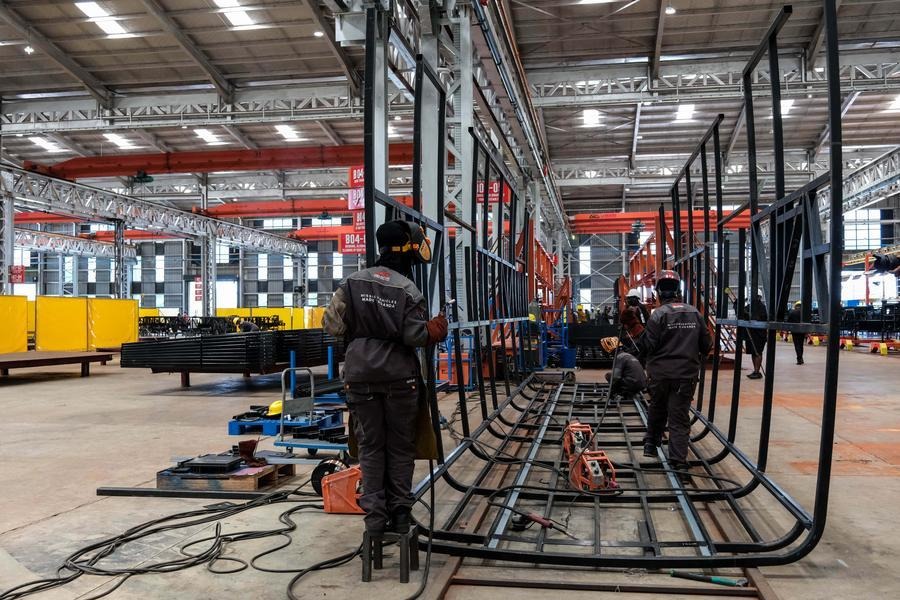
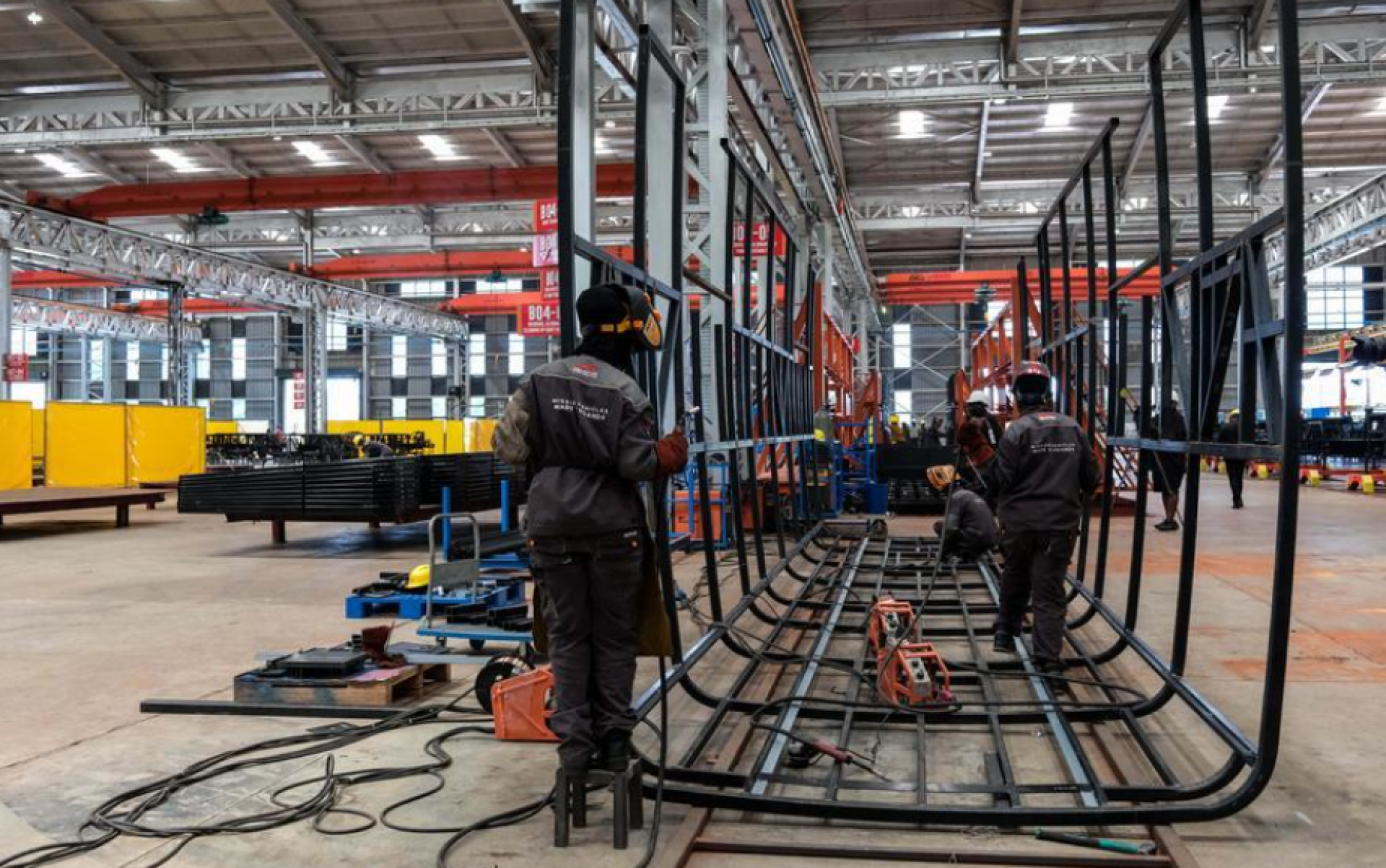
Workers weld a bus frame inside the electric bus workshop at the Kiira Vehicle Plant in Jinja, Eastern Uganda, on May 18, 2026. (Photo by Hajarah Nalwadda, NNA News)
The journey aimed to demonstrate the endurance of African-made electric buses and encourage wider adoption of green mobility solutions across the continent.
For Kyeyune, the shift towards electric mobility reflects broader ambitions around African industrial development and technological self reliance.
“It is about Africa providing or being the net source of mobility solutions for itself,” he said.
“We have come of age, and we are providing solutions to our own problems. But the overarching benefit from this is the ability to afford and access this technology at an affordable fee.”