
Ethiopia Holds Seventh General Election
Tuesday 02 June 2026 - 03:31pm
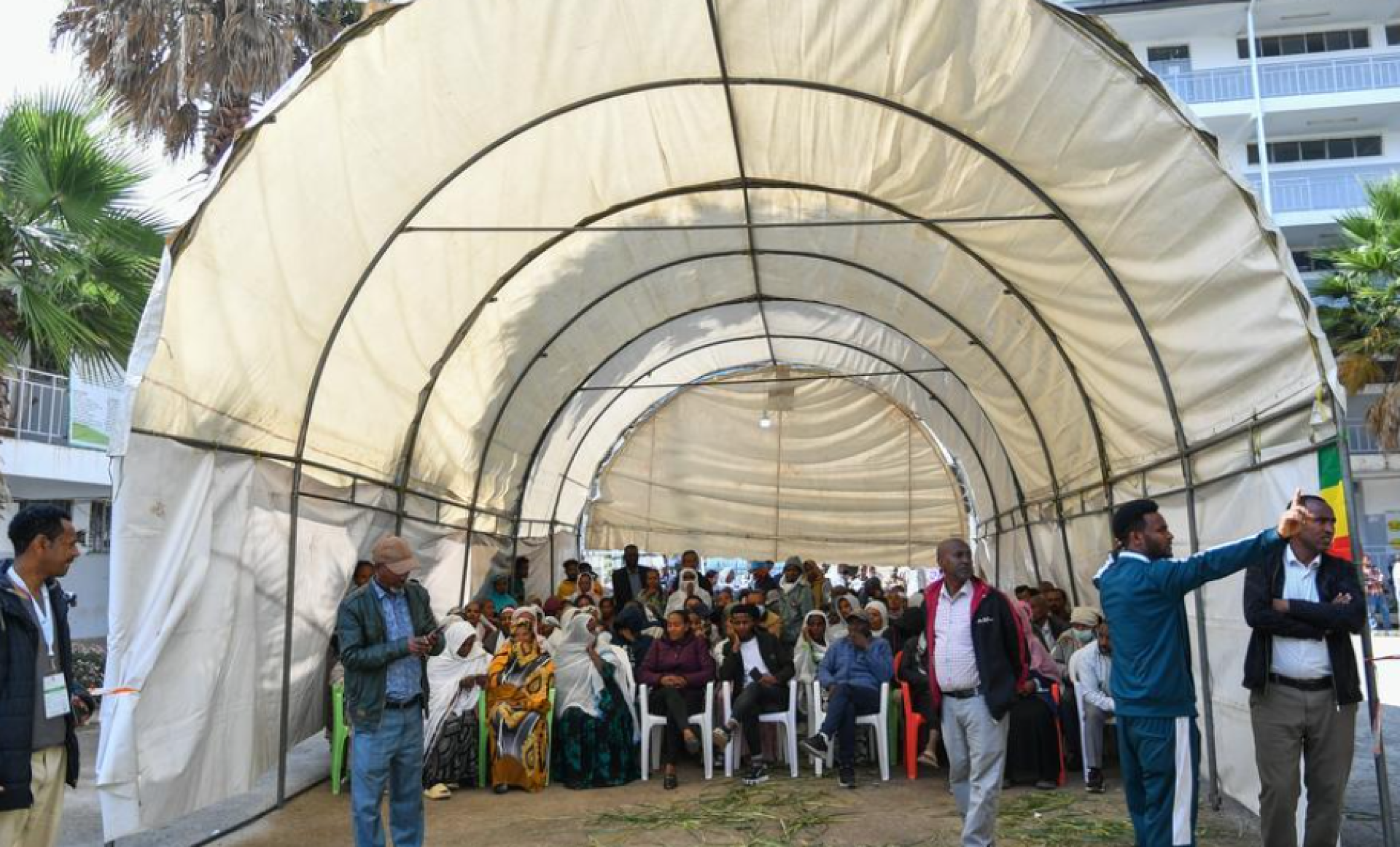
People wait to cast their ballots in the country's seventh general election at a polling station in Addis Ababa, Ethiopia, on June 1, 2026. (Photo by Michael Tewelde)
Millions of Ethiopians began voting on Monday in the country’s seventh general election, as polling stations opened across the East African nation amid high voter turnout and increased regional attention on the electoral process.
According to Ethiopia’s National Election Board (NEBE), more than 54 million people are registered to vote out of the country’s estimated population of 130 million. Youth and women make up a significant portion of the electorate. Polling stations opened at 6:00 a.m. local time across approximately 52,000 voting centres, with long queues forming early in parts of the capital, Addis Ababa.
Under Ethiopia’s constitutional system, voters are electing representatives to the House of Peoples’ Representatives, the lower chamber of parliament, as well as members of regional state councils. The party or coalition that secures a parliamentary majority will form the next government and appoint the prime minister, the country’s highest executive authority.
Data from the election board showed that 42 political parties and more than 10,000 candidates are contesting the election, alongside 80 independent candidates. The ruling Prosperity Party is widely expected to retain its parliamentary majority after securing 410 of 484 contested seats during the 2021 election.
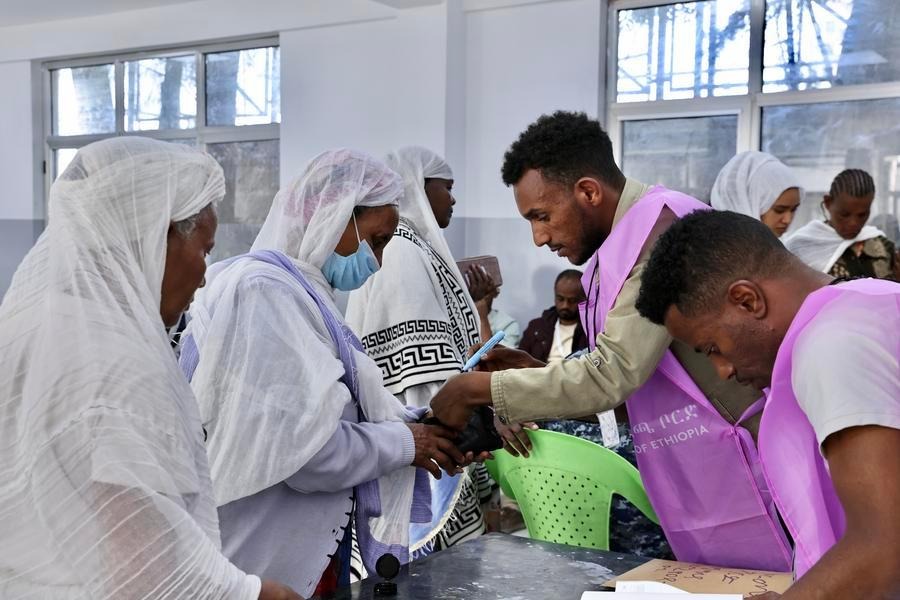
People register before casting their ballots in the country's seventh general election at a polling station in Addis Ababa, Ethiopia, on June 1, 2026. (Geng Xinning)
At a polling station in Addis Ababa, first-time voter Khalid Bahru said he arrived before 7:00 a.m. but still encountered large crowds waiting to cast ballots. “I came here very motivated, as this is my first experience of voting,” Bahru told the media.
The election comes at a time when Ethiopia, Africa’s second most populous country, continues facing economic pressures, political tensions and security concerns in parts of the country. Voting is not taking place in some constituencies because of security-related challenges, according to local reports.
International observer missions from the African Union and the Intergovernmental Authority on Development have been deployed across the country to monitor the election process. The African Union observer mission is led by former Kenyan president Uhuru Kenyatta and includes 73 observers drawn from 37 African countries.
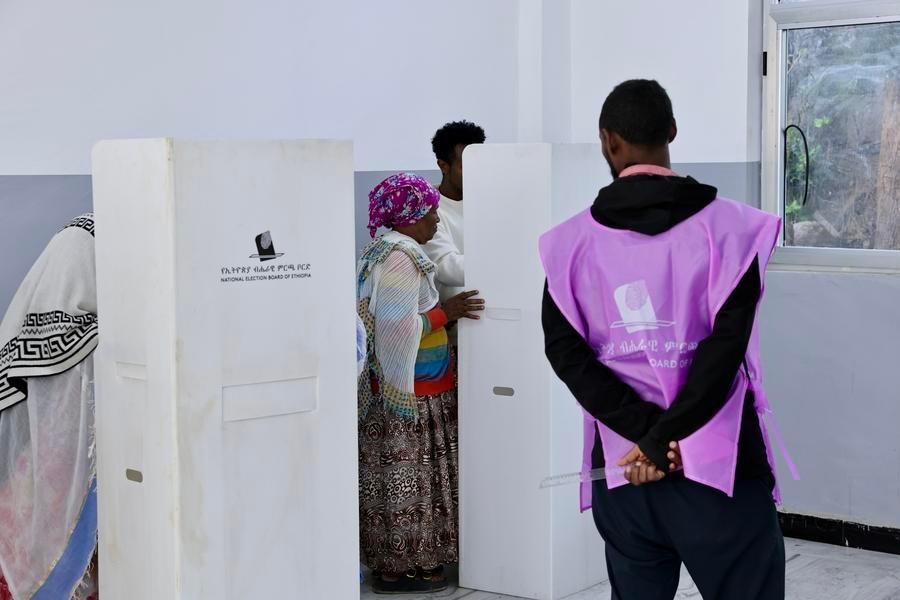
People write on ballots in the country's seventh general election at a polling station in Addis Ababa, Ethiopia, on June 1, 2026. (Geng Xinning)
Speaking ahead of the vote, Kenyatta described Ethiopia’s election as significant not only for the country, but for democratic processes across the African continent. Observers are expected to release preliminary assessments in the coming days after the voting, counting and tabulation processes are completed.
The election is being closely watched across Africa as governments and regional organisations continue emphasising democratic governance, institutional stability and electoral credibility amid growing political and economic pressures in several parts of the continent.