
Zimbabwe Wins UN Security Council Seat
Thursday 04 June 2026 - 10:51am
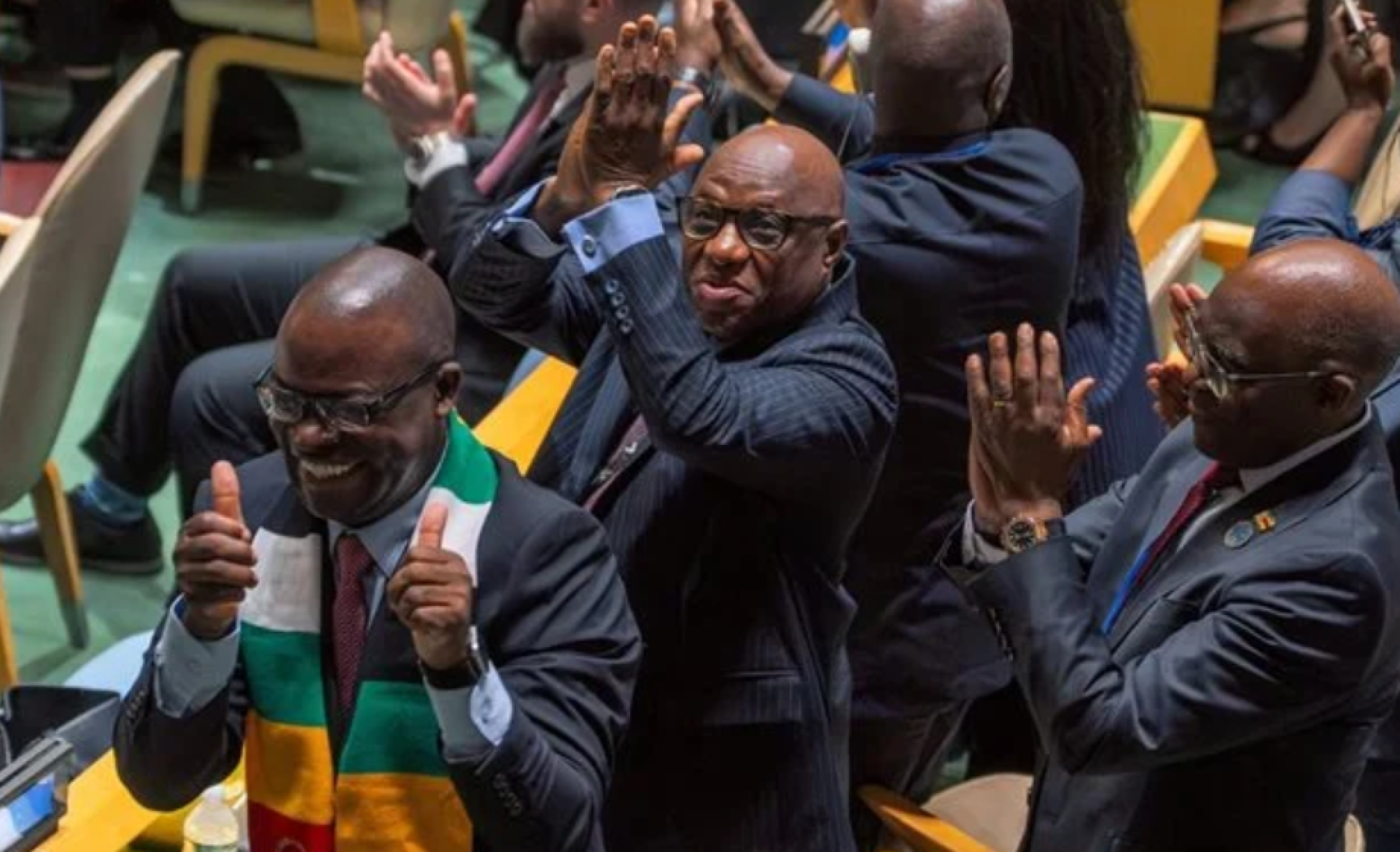
Source: Reuters/David 'Dee' Delgado. Zimbabwe's Minister of Foreign Affairs and International Trade Amon Murwira and the Zimbabwean delegation celebrate after winning the election of non-permanent members of the United Nations Security Council at UN headquarters in New York City, US, Wednesday, 3 June 2026.
Zimbabwe has been elected as a non-permanent member of the United Nations Security Council for the 2027–2028 term, securing a seat on the UN’s most powerful body responsible for maintaining international peace and security.
The election took place at the United Nations General Assembly on Wednesday, where member states voted to fill five non-permanent seats on the 15-member council. Zimbabwe was elected alongside Austria, Kyrgyzstan, Portugal, and Trinidad and Tobago. The newly elected members will begin their two-year terms on 1 January 2027 and serve until 31 December 2028.
The Security Council is responsible for addressing international conflicts, peacekeeping operations, sanctions and global security threats. Its resolutions are legally binding on UN member states. Zimbabwe's election marks a significant diplomatic achievement for the Southern African nation and provides it with an opportunity to contribute to global discussions on peace, security and development.
To secure an election, candidate countries must obtain the support of at least two-thirds of UN member states present and voting in the General Assembly. While Zimbabwe, Austria, Portugal and Trinidad and Tobago secured election in the first round of voting, Kyrgyzstan won the final seat after several rounds of voting against the Philippines.
The Security Council consists of five permanent members - China, France, Russia, the United Kingdom and the United States - alongside 10 non-permanent members elected for two-year terms. Zimbabwe will replace Somalia as one of Africa's representatives on the council when its term begins in 2027.
The election comes as African countries continue advocating for greater representation and influence within global governance institutions, including ongoing discussions around reform of the UN Security Council.