
Libya’s Tuna Boom Brings Relief to Consumers and Coastal Communities
Thursday 11 June 2026 - 07:06am
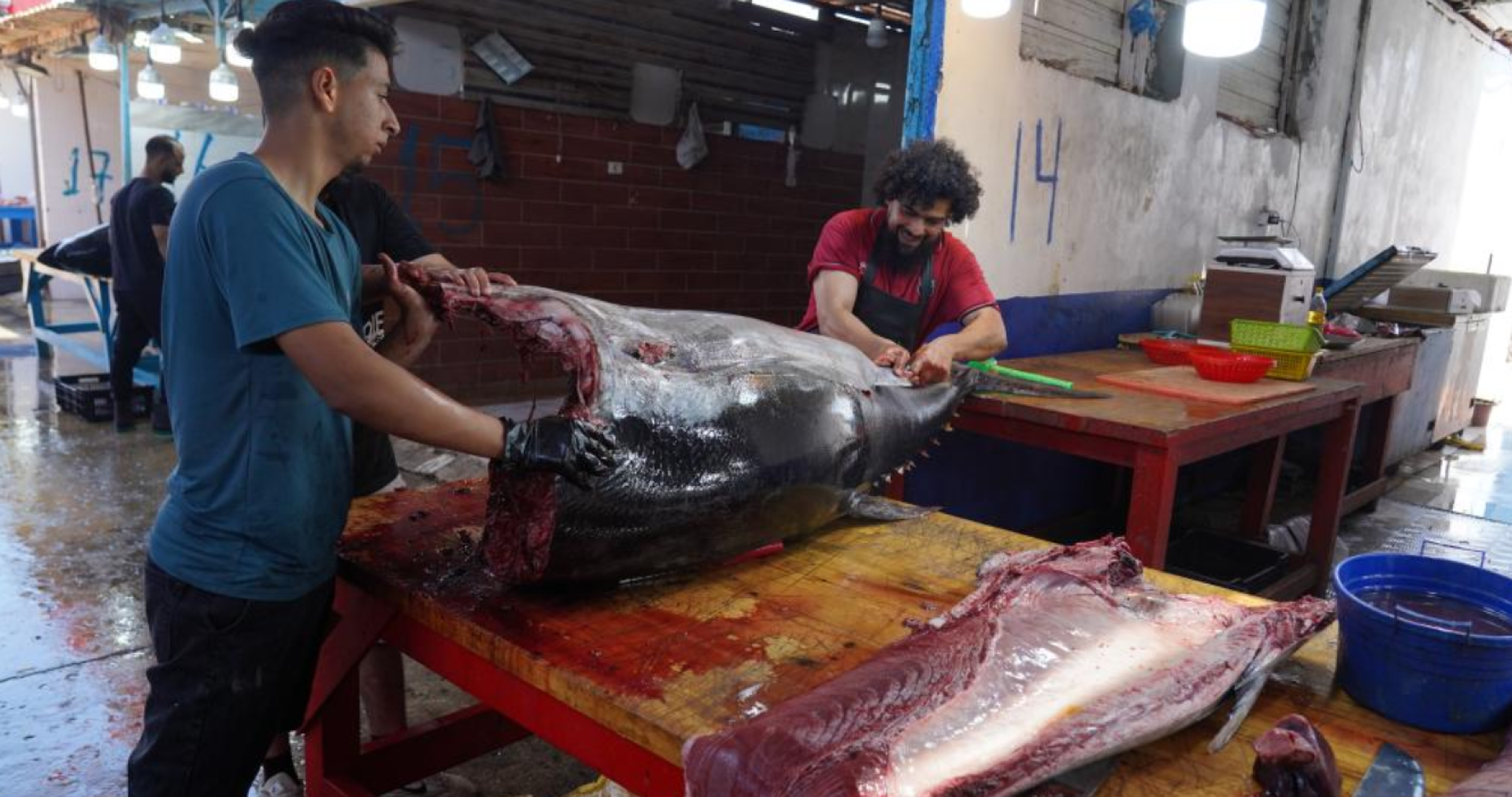
Fishermen butcher a tuna at a fish market in Tripoli, Libya, on June 1, 2026. (Photo by Hazem Turkia)
Source: Xinhua News Agency - Libya’s annual tuna season is delivering a significant boost to coastal communities, supporting jobs, strengthening food security, and driving activity across local fish markets as abundant catches reach consumers. Across Tripoli, markets have become increasingly busy as fishermen bring in large quantities of bluefin tuna during the peak migration season. The strong supply has helped keep prices relatively affordable, attracting consumers seeking alternatives to more expensive meat products.
Experts say the season highlights the strategic importance of Libya’s fisheries sector, which remains a critical source of employment and economic activity along the country’s Mediterranean coastline. According to Hassan Mohammed Al-Sharik, a food science and nutrition specialist, migrating tuna pass along Libya’s coast between mid-April and mid-July as they travel from the Atlantic Ocean into deeper Mediterranean waters.
The seasonal migration has created favourable conditions for fishermen, many of whom describe this year as one of the strongest in recent memory. Fisherman and fish trader Abdulbasit Ben Youssef said the current season has been particularly productive. "This season is one of the best in recent years," he said, noting that some tuna caught this year weighed more than 350 kilograms, while others approached 400 kilograms.
Libya’s extensive Mediterranean coastline, stretching more than 1,900 kilometres, provides access to rich fishing grounds that support a variety of marine species. Retired researcher Abdulrahman Khalifa Al-Daghri said demand for bluefin tuna traditionally increases during May and June as larger catches become available.
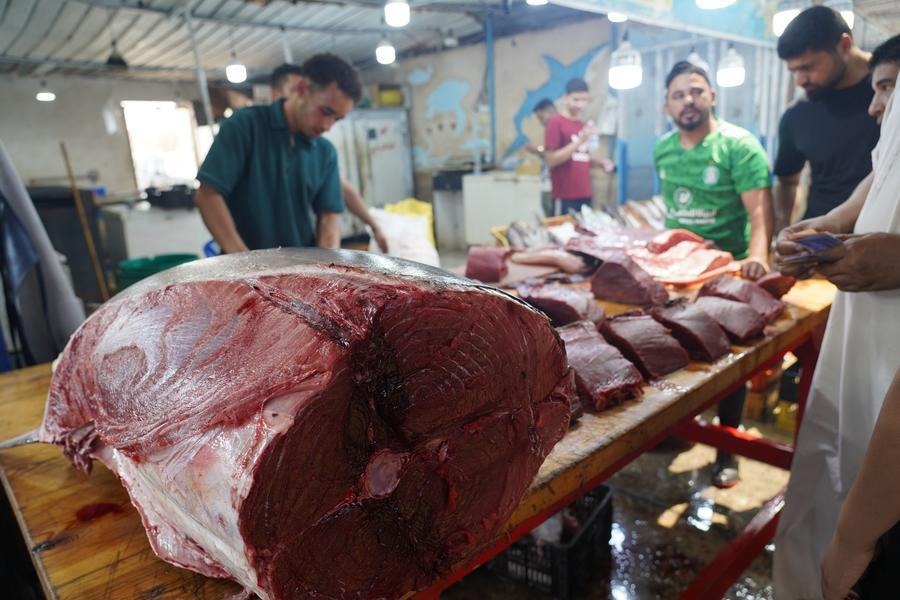
This photo taken on June 1, 2026 shows tuna meat at a fish market in Tripoli, Libya. (Photo by Hazem Turkia)
The fisheries sector continues to play an important role in Libya’s economy. According to data from the International Commission for the Conservation of Atlantic Tunas (ICCAT), Libya’s tuna production and quotas have steadily increased over the past two decades, reflecting the sector’s growing significance. To support domestic consumers, Libya’s Ministry of Economy and Trade recently imposed a temporary ban on fish and seafood exports, a move aimed at stabilising local prices and ensuring adequate supplies.
The policy has helped make tuna one of the most affordable protein sources available to many households. Youssef said tuna is currently selling for around 15 Libyan dinars per kilogram, making it accessible to a broad segment of the population. Beyond food security, industry observers note that the tuna season supports thousands of jobs across fishing, transport, processing and retail activities in coastal communities.
As Libya continues efforts to strengthen economic recovery and diversify sources of growth, the fisheries sector remains an important contributor to livelihoods and local development. The season also serves as a reminder of the opportunities available within Africa’s blue economy, where sustainable management of marine resources can support employment, trade and long-term economic resilience.