
Water Shortages Raise Ebola Risks in Eastern DRC Camps
Sunday 14 June 2026 - 08:36am
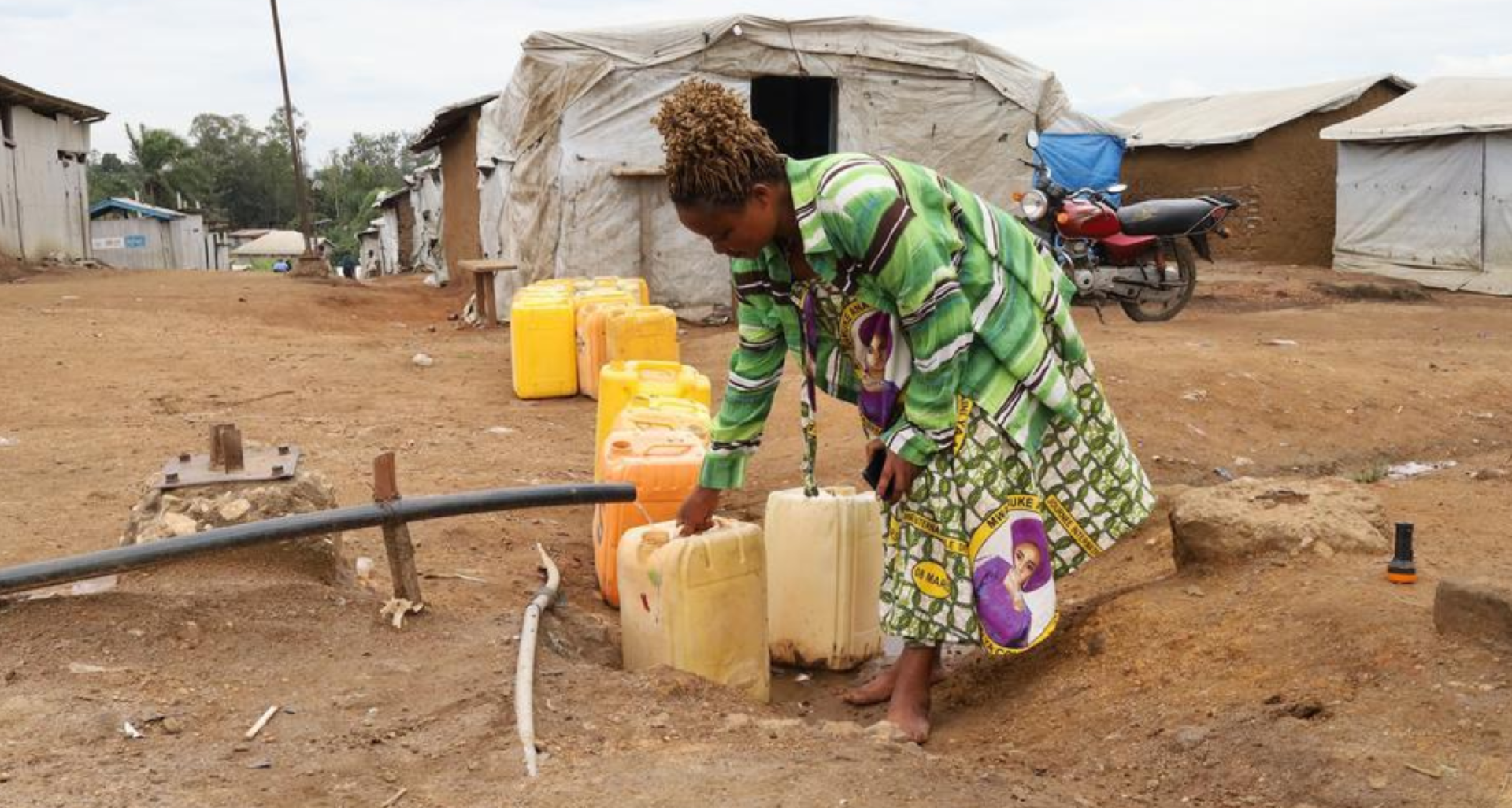
A woman fetches water from a tap in the Kigonze camp, June 9, 2026.
NNA News – For thousands of displaced families in camps across eastern Democratic Republic of the Congo (DRC), the battle against Ebola starts long before anyone has contact with healthcare workers. It starts with clean water, functioning sanitation facilities and safe living conditions.
As the Ebola outbreak continues to spread across parts of eastern DRC, humanitarian workers and camp leaders say overcrowding, water shortages and poor sanitation are increasing the risk of transmission among vulnerable communities already displaced by years of conflict. Residents of Kigonze camp on the outskirts of Bunia in Ituri Province say daily survival has become increasingly difficult as they struggle to access basic services essential for disease prevention.
For the last few days, displaced mother Furha Jeannette had been waiting at a communal water point with dozens of other residents since early morning. The taps remained dry hours later. "You see how we live here," she said. "Since 6 a.m., we have not even found one jerrycan of water. There is no water. We don’t know how to wash our hands. The taps are dry." She added.
This is especially worrisome as health authorities are still struggling to contain an Ebola outbreak that has infected hundreds of people and claimed more than 100 lives. While Kigonze has not found any confirmed cases of Ebola, camp leaders fear that current living conditions could accelerate transmission if the virus settles.
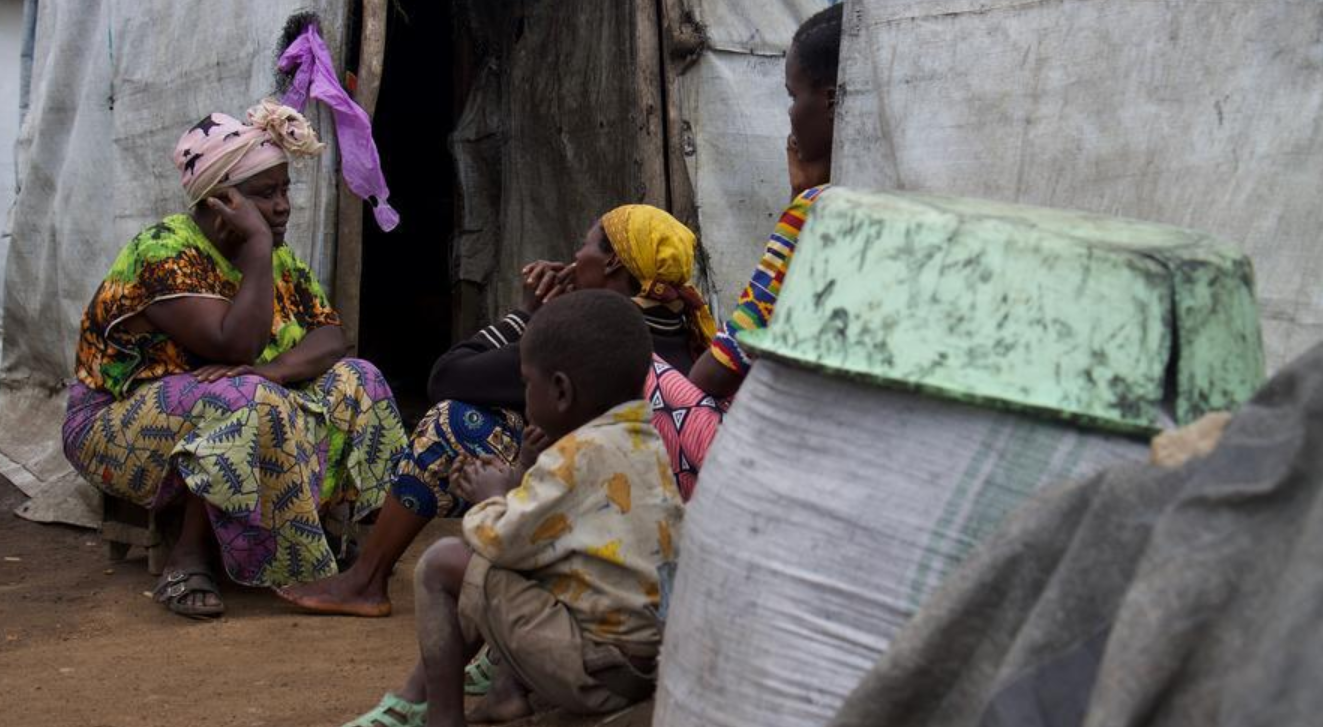
Asylum seekers rest in the Kigonze camp for internally displaced people (IDP) on the outskirts of Bunia, Ituri Province, the Democratic Republic of the Congo, June 9, 2026.
Local officials estimate that there are more than 11,000 displaced people in the camp, but community leaders say the true number is likely much higher. Rows of temporary shelters made from tarpaulins and timber line muddy pathways, while damaged sanitation facilities and overflowing latrines remain a longstanding problem.
Camp leader Nzodjo Lusi Etienne has taken on the role of public health educator, regularly traveling through the settlement with a megaphone, reminding residents about handwashing and disease prevention. "When we heard the information about Ebola, we started raising awareness so that we would not be contaminated by this virus," Etienne said. "For many residents, it is difficult to follow those recommendations when water is scarce, and living spaces are overcrowded," Etienne added.
In front of her shelter, a displaced mother of seven, Bi Kanza Caudine, described the daily living conditions for families in the camp. "Look at where we live. How can we avoid disease in these conditions?" Caudine said. "When it rains, water enters the house and turns everything into mud," she added.
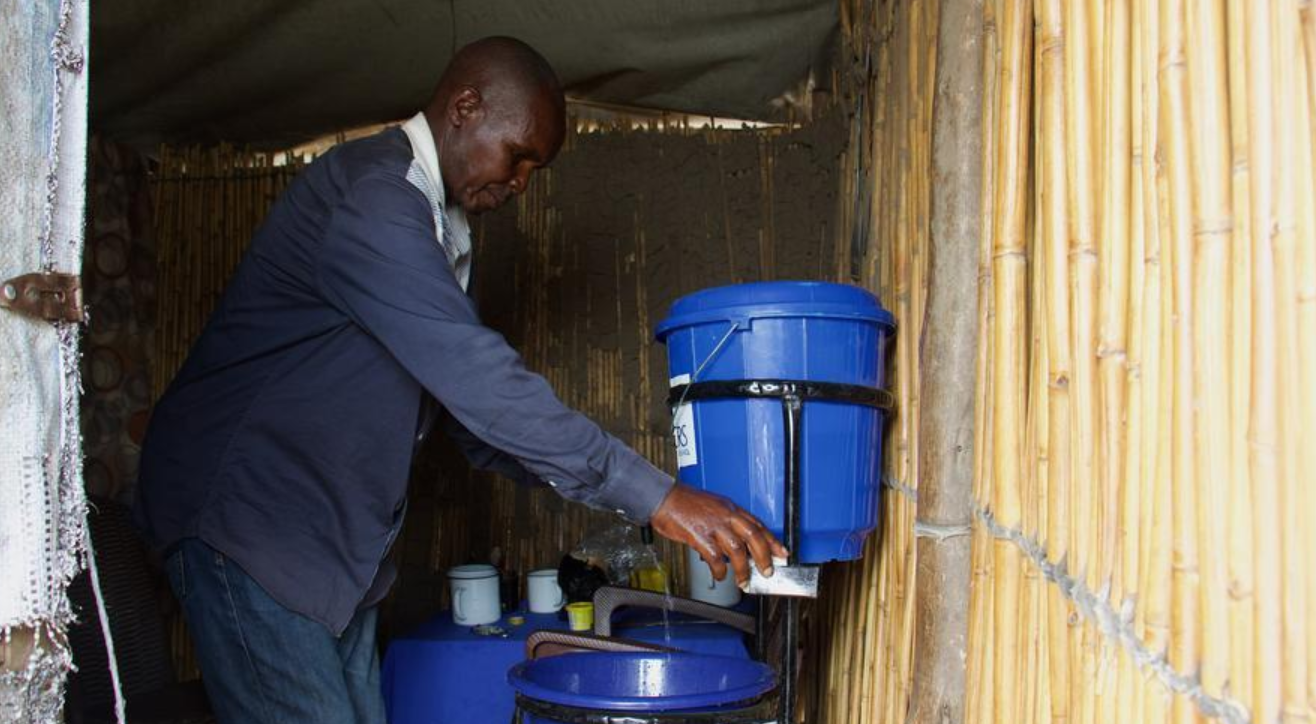
A man installs a hand-washing station in the Kigonze camp for internally displaced people (IDP) on the outskirts of Bunia, Ituri Province, the Democratic Republic of the Congo, June 9, 2026.
She called for urgent support to improve shelter conditions and reduce health risks."They could help us reinforce these shelters or give us the means to build others," she said. "This situation has lasted too long, and it increases the risk of contamination," Caudine added.
Another big problem is sanitation. "For the moment, the big problem here is our toilets. They are in bad condition,” Gerare Mbocho said. "Our hygiene facilities should be improved to protect us from Ebola," Mbocho added.
The outbreak, caused by the Bundibugyo strain of the Ebola virus, was officially declared by the DRC government in May. Since then, cases have been reported across Ituri, North Kivu, and South Kivu provinces, areas already affected by armed conflict, displacement and recurring humanitarian crises. Humanitarian agencies say millions of people are still displaced throughout the country, while food insecurity continues to affect large sections of the population.
For Kigonze, the outbreak of Ebola is exposing a deeper set of vulnerabilities linked to conflict, poverty and inadequate infrastructure. Health professionals warn that treating the virus will take more than medicine alone. Access to clean water, sanitation, shelter and community trust may be just as important in preventing the outbreak from spreading further across eastern DRC.