The newsletter of the facts
E-News
Subscribe to E-News
Our daily analytical digest breaking down the data driving modern policy and markets.

Monday 08 June 2026 - 09:45am
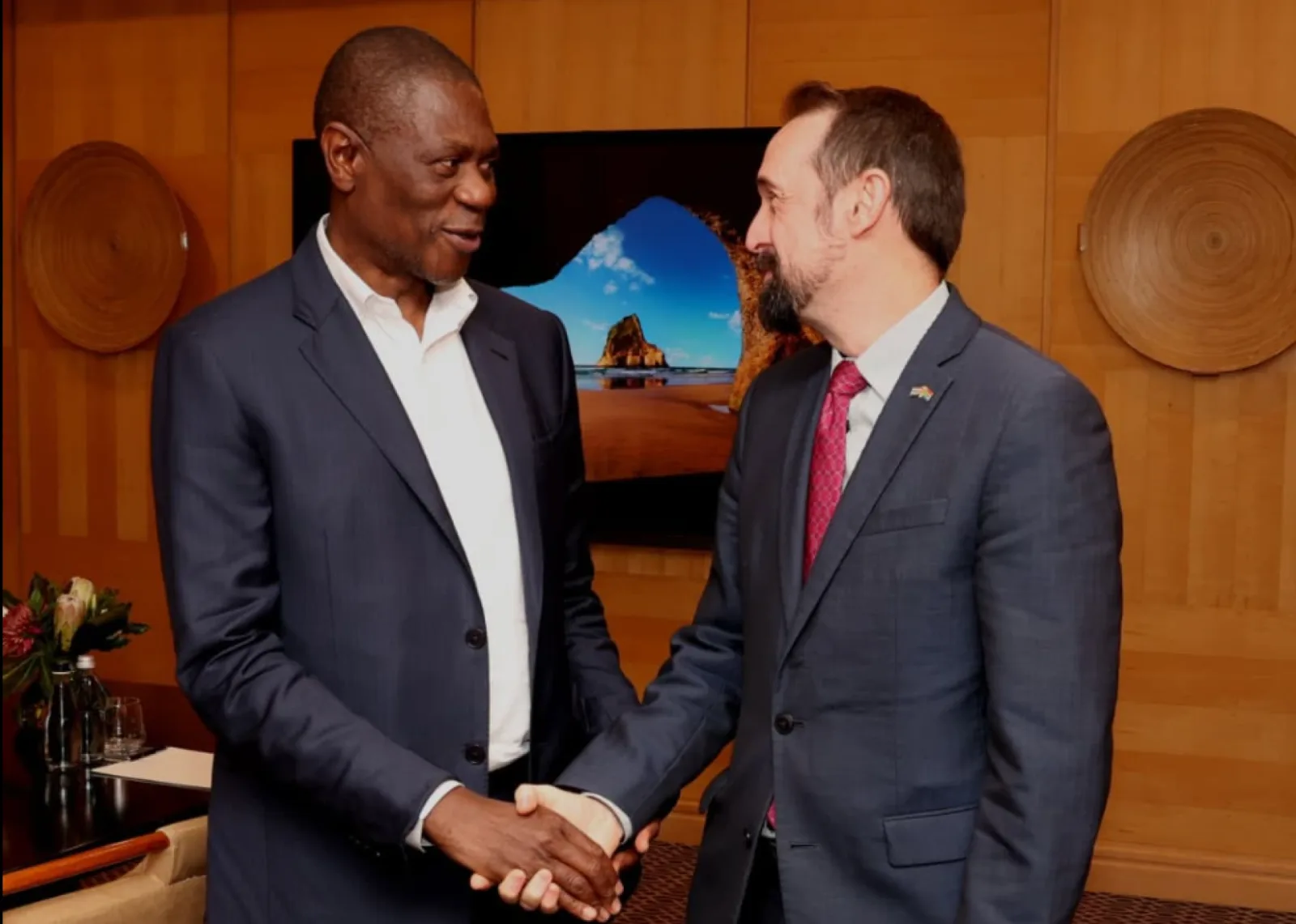
South African Deputy President Paul Mashatile during a meeting with Cuban Ambassador Fakri Rodríguez Pinelo in Johannesburg on 5 June 2026. (Photo: The Presidency)
NNA News - South Africa’s Deputy President Paul Mashatile on Friday called on the United States to lift its 63-year-old embargo on Cuba, warning that the sanctions were causing “devastating humanitarian and socio-economic difficulties” for ordinary Cubans. Mashatile made the remarks after meeting Cuban Ambassador Fakri Rodríguez Pinelo in Johannesburg for talks the presidency described as a courtesy visit.
The meeting came as Cuba continues to grapple with severe shortages of fuel, food and basic supplies. Following the talks, the presidency said Mashatile stressed the need to expand bilateral cooperation. “We are committed to sustaining and strengthening this cooperation for the mutual benefit of our peoples,” he said.
In a statement, his office reaffirmed South Africa’s “enduring solidarity with Cuba” and opposition to “unilateral coercive measures against Cuba, which have caused devastating humanitarian and socio-economic difficulties for the people of Cuba”. Mashatile also said Pretoria looked forward to hosting the 19th session of the South Africa-Cuba Joint Consultative Mechanism later this year.
The call comes as US pressure on Havana intensifies. The embargo has been in place since 1962, and Washington has stepped up enforcement recently with sanctions on oil shipments to the island and on vessels carrying Venezuelan or Russian crude. United Nations officials say those measures are hitting civilians hardest.
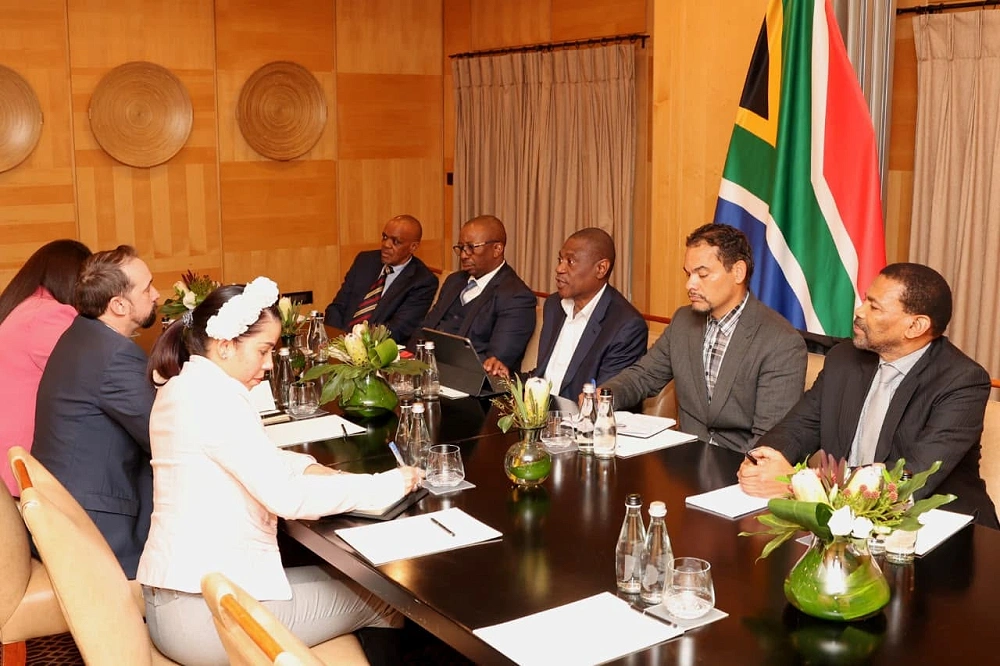
South African delegation meets the Cuban delegation during talks in Johannesburg on 5 June 2026. (Photo: The Presidency)
On 15 May 2026, humanitarian and health officials issued a statement, warning that Cuba’s healthcare system was under “severe and worsening strain” due to fuel shortages and blackouts. Edem Wosornu, of the UN Office for the Coordination of Humanitarian Affairs and WHO official Altaf Musani said more than 100,000 patients, including 11,000 children, were facing delayed surgeries, while about five million people living with chronic illnesses had treatment interrupted. “The human cost is significant and continues to grow,” Musani said. Wosornu added that “staff have to carry water up the stairs while women give birth since pumps don’t work”.
Washington maintains that its sanctions target the Cuban government only, and insists food and medicine are exempt. That argument has not stopped a wave of solidarity actions. In the days after the UN warnings, the Friends of Cuba Society, South Africa (FOCUS) and more than 20 local organisations joined the Global Day of Action for “No War on Cuba” on 3 June.
The coalition said statements of solidarity were no longer enough amid escalating pressure on Havana, and urged Pretoria to take a more active role in defending Cuba internationally. FOCS stressed that, South Africa’s history placed a particular responsibility on the government to speak out. In a statement on Wednesday, it said, “South Africa cannot remain silent”.
Linking its appeal to the liberation struggle, the group added: “Cuba stood with the people of South and Southern Africa when many of the world’s most powerful governments stood with apartheid.” It concluded: “To remain silent now would be a betrayal of Cuba and of our own history.”
The alliance also criticised recent US moves, saying they formed part of a broader campaign of pressure on the island. It described remarks made on 20 May, Cuba’s Independence Day, as “a political act designed to create a pretext for further escalation”. It cited a ceremony at Miami’s Freedom Tower where US Attorney Jason Reding Quiñones announced criminal charges against former Cuban president Raúl Castro, calling it further evidence of mounting pressure.
The US Justice Department has not confirmed any arrest, while Cuban authorities rejected the move as politically motivated. As a result, the solidarity movements called on Pretoria to take Cuba’s case to the United Nations, African Union, BRICS and other multilateral forums. They additionally warned that “sanctions and coercive measures were increasingly being used to undermine the sovereignty of countries that refuse to submit to external pressure”.
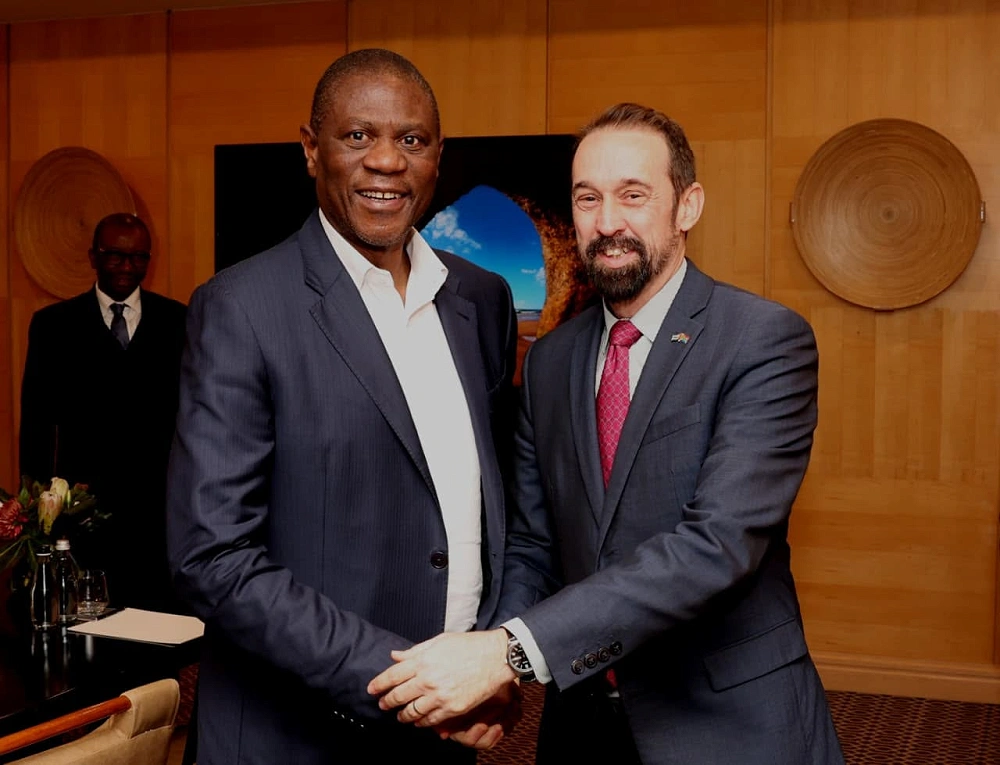
South African Deputy President Paul Mashatile, during a meeting with Cuban Ambassador Fakri Rodríguez Pinelo in Johannesburg on 5 June 2026. (Photo: The Presidency)
Mashatile, who is also deputy president of the ANC, said the relationship with Cuba was forged during the liberation struggle. The party’s ties to Havana go back to the apartheid era. In 1991, Nelson Mandela praised Cuban internationalists for making “a contribution to African independence, freedom, and justice unparalleled for their principled and selfless character”. He described the 1988 Battle of Cuito Cuanavale as “a milestone in the struggle for southern African liberation”, a view that still shapes the ANC’s position on Cuba’s role in the region.
That historical bond underpins Pretoria’s current stance. South Africa and Cuba have maintained diplomatic ties since 1994, with South Africa consistently backing UN resolutions calling for an end to the embargo. The partnership has grown through multilateral platforms. Pretoria invited Cuban President Miguel Díaz-Canel to the 2023 BRICS Summit in Johannesburg, and Cuba became a BRICS partner country on 1 January 2025 after its status was approved at the Kazan summit in October 2024.
Much of the practical cooperation runs through the Joint Consultative Mechanism, which has coordinated work for decades in healthcare, education, science, technology, infrastructure and skills development. Thousands of South African medical students have trained in Cuba, and Cuban doctors and specialists have worked in South Africa since apartheid ended.
The upcoming 19th session of the mechanism, expected later this year, will aim to deepen that cooperation as Cuba contends with economic hardship, fuel shortages and the impact of US sanctions. “We are committed to sustaining and strengthening this cooperation for the mutual benefit of our peoples,” Mashatile said after meeting Ambassador Rodríguez Pinelo.
For many South African liberation movement members and the Cuba solidarity movement, the relationship extends beyond policy. Mandela once said, “The Cuban people hold a special place in the hearts of the peoples of Africa” and praised Cuban internationalists for making “a contribution to African independence, freedom, and justice unparalleled for their principled and selfless character”.
According to the presidency, Friday’s meeting formed part of preparations for the 19th session of the South Africa-Cuba Joint Consultative Mechanism, which South Africa will host later this year. The session will be the first since Cuba joined BRICS+ and is expected to reinforce ties forged during the anti-apartheid struggle while underlining Pretoria’s continued diplomatic support for Havana.

Join 46,000+ global citizens, corporate executives, and decision-makers who rely on NNA every day for definitive clarity. Enter your email to unlock uncompromised perspective for free.
No thanks, take me back to the home page.We respect your inbox. Unsubscribe in one click, any time.
Three ways to get NNA News the moment it breaks.
Our daily analytical digest breaking down the data driving modern policy and markets.
High-utility situational intelligence delivered directly to your inbox before your first meeting.
The whole network in your pocket, with breaking-news alerts.