
Cabo Verde Bets on the Blue Economy for Its Future
Tuesday 09 June 2026 - 04:34pm
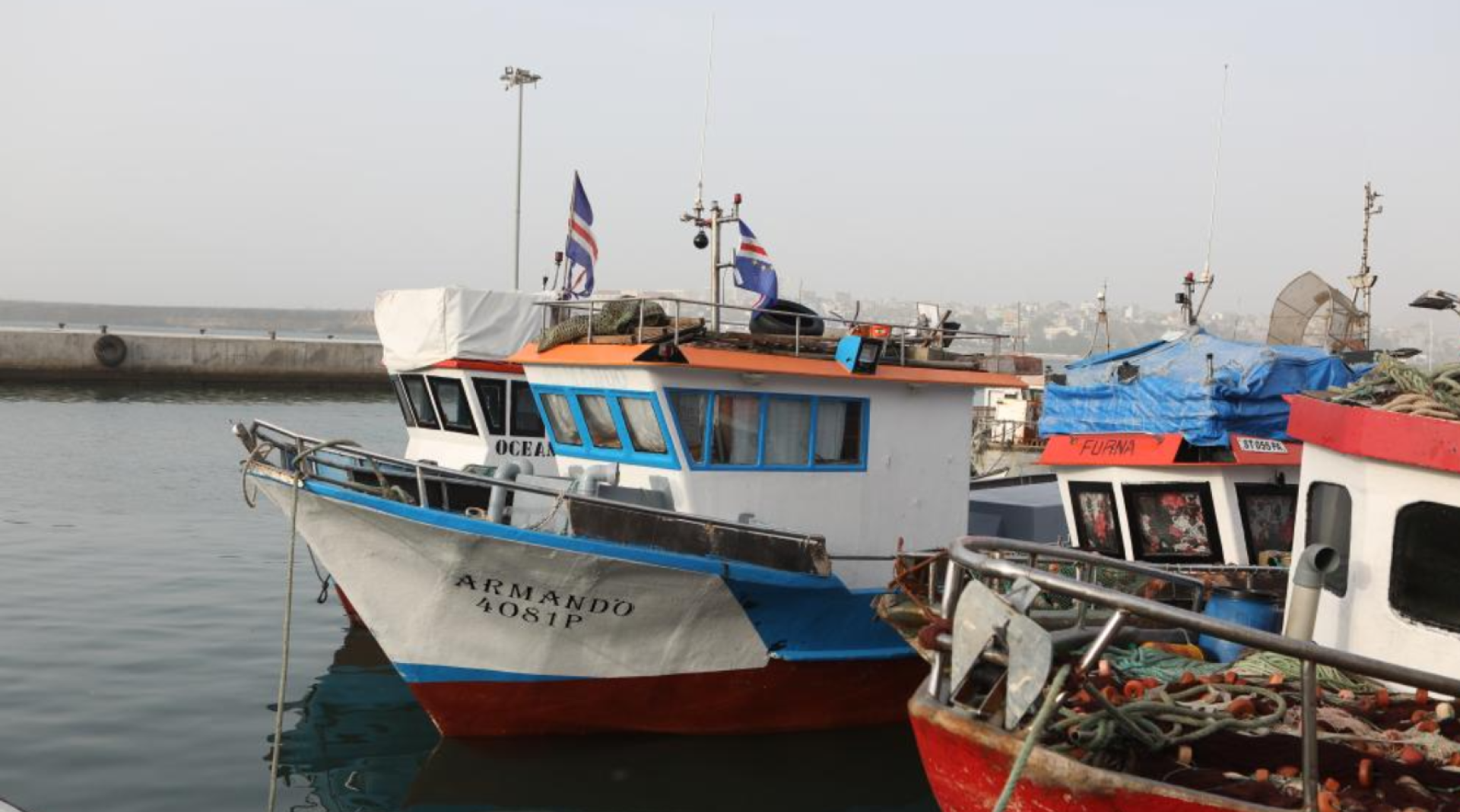
Small fishing boats are seen moored at the Praia Port in Praia, capital of Cape Verde, on Jan. 10, 2026. (Photo by Elton Monteiro)
NNA News - In Cabo Verde, the ocean is more than a source of food or a route for trade. It is increasingly becoming the foundation of the country's economic future. From fisheries and tourism to desalination and renewable energy, the Atlantic Ocean shapes almost every aspect of life across the island nation, where more than 99 percent of its territory is ocean.
As governments and environmental organisations marked World Oceans Day this week, Cabo Verde's experience highlighted the opportunities and challenges facing many African coastal and island states as they seek to build sustainable ocean economies. At the Port of Praia, fishing vessels unload their daily catch while traders prepare seafood for local markets. Along the coastline, tourism operators rely on beaches, diving sites and marine ecosystems that attract visitors from around the world.
The sea also provides a vital solution to one of Cabo Verde's greatest challenges: water security. With limited freshwater resources and recurring droughts, desalination has become an essential component of the country's water supply system, helping communities meet growing demand for drinking water. According to Cabo Verde's Climate Portal, approximately 70 percent of the country's water consumption is supplied through desalinated seawater.
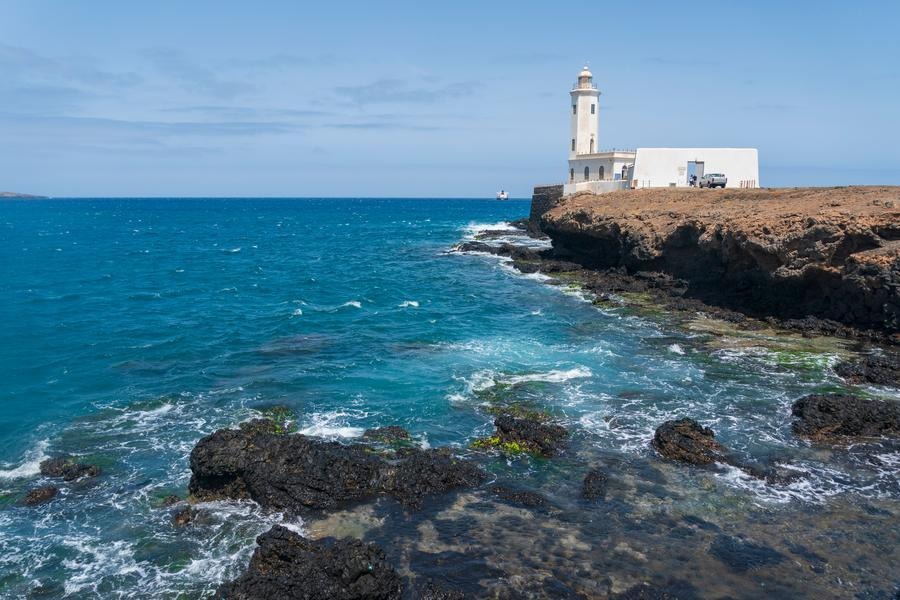
This photo taken on May 11, 2026 shows a lighthouse by the seaside of Santiago Island, Cabo Verde
For marine biologist Tommy Melo, president of the environmental organisation Biosfera Cabo Verde, the ocean should no longer be viewed simply as a source of fish or a transport corridor."The ocean regulates the climate, feeds communities, absorbs carbon, connects economies and holds biodiversity that is still largely unknown," Melo said.
For island nations such as Cabo Verde, he added, the ocean represents territory, identity, food security and economic opportunity. Yet experts warn that these opportunities are accompanied by increasing environmental pressures. Climate change, rising sea levels, ocean warming and marine pollution are placing a growing strain on coastal ecosystems and fisheries that support thousands of livelihoods.
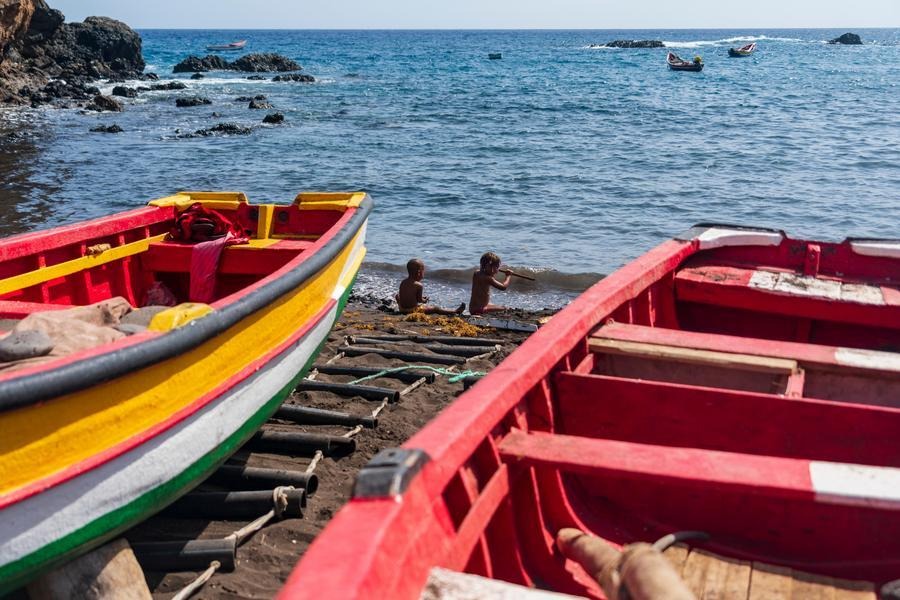
Children play beside painted fishing boats on the seaside of Cidade Velha, Santiago Island, Cabo Verde, May 11, 2026. (Xie Jianfei)
Ana Veiga, executive director of the environmental organisation Lantuna, said stronger conservation measures and international cooperation would be critical to protecting marine resources. "We are exploiting the oceans beyond their own capacity," Veiga warned. According to the United Nations Food and Agriculture Organization, fisheries contribute about two percent of Cabo Verde's gross domestic product, support more than 5,800 jobs and provide a significant source of protein for local communities.
Tourism remains another pillar of the ocean economy. National statistics show that more than 1.24 million visitors stayed in Cabo Verde's hotels during 2025, reflecting continued growth in a sector closely linked to the country's coastal environment. President Jose Maria Neves has repeatedly described the blue economy as central to Cabo Verde's long-term development strategy, identifying sectors such as fisheries, transport, renewable energy, desalination and marine industries as areas with significant growth potential.
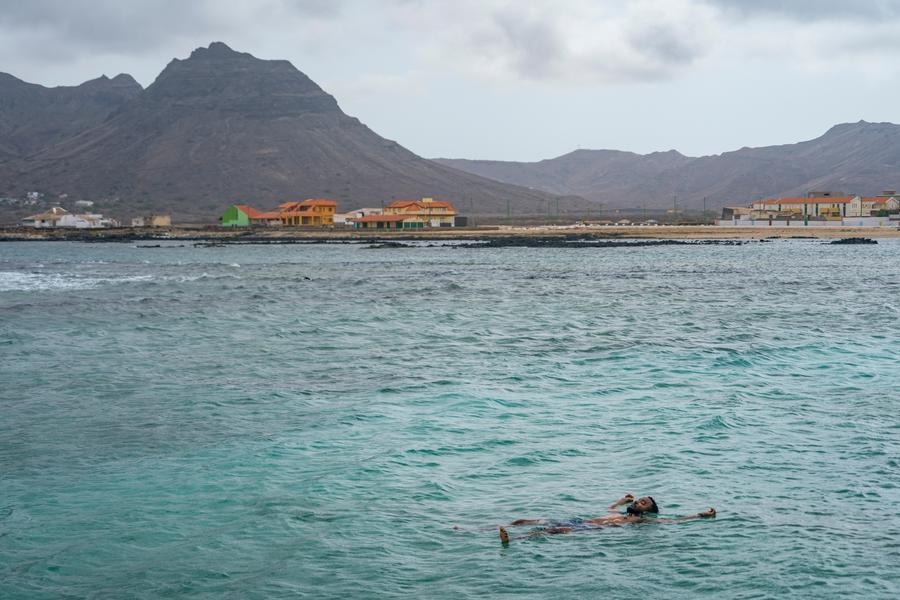
A man relaxes in the ocean near Sao Vicente Island, Cabo Verde, May 13, 2026. (Xie Jianfei)
For Cabo Verde, the challenge now is balancing economic development with environmental sustainability. How the country manages fish stocks, protects coastal ecosystems, secures water supplies and expands tourism will help determine whether the ocean remains a source of prosperity for future generations.
As African countries increasingly explore the potential of blue economies, Cabo Verde offers a glimpse into how the continent's coastal and island nations are seeking to transform their relationship with the sea into a driver of sustainable growth.
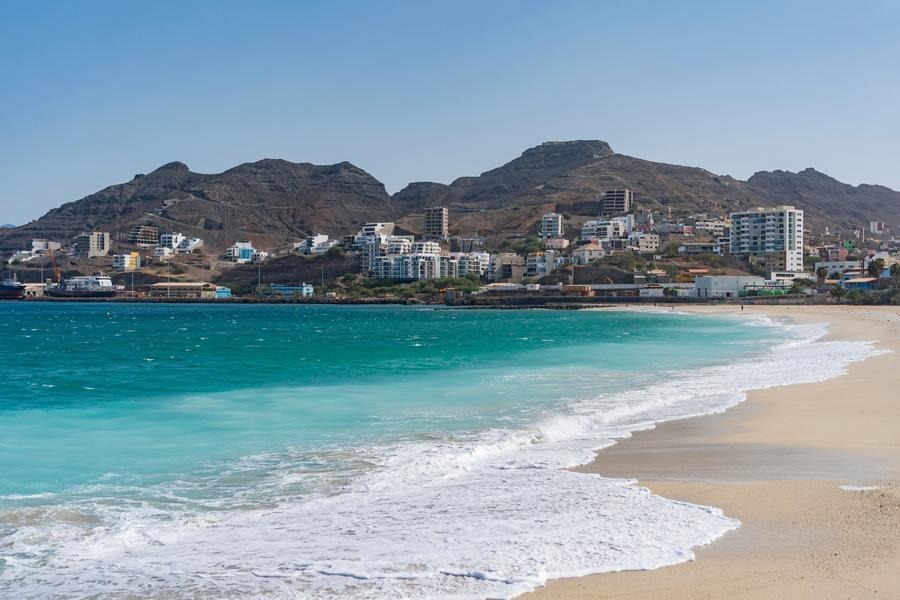
This photo taken on May 13, 2026 shows a coastal view of Mindelo, Sao Vicente Island, Cabo Verde. (Xie Jianfei)