
G7 divisions deepen as summit ends without joint declaration
Thursday 18 June 2026 - 05:39pm
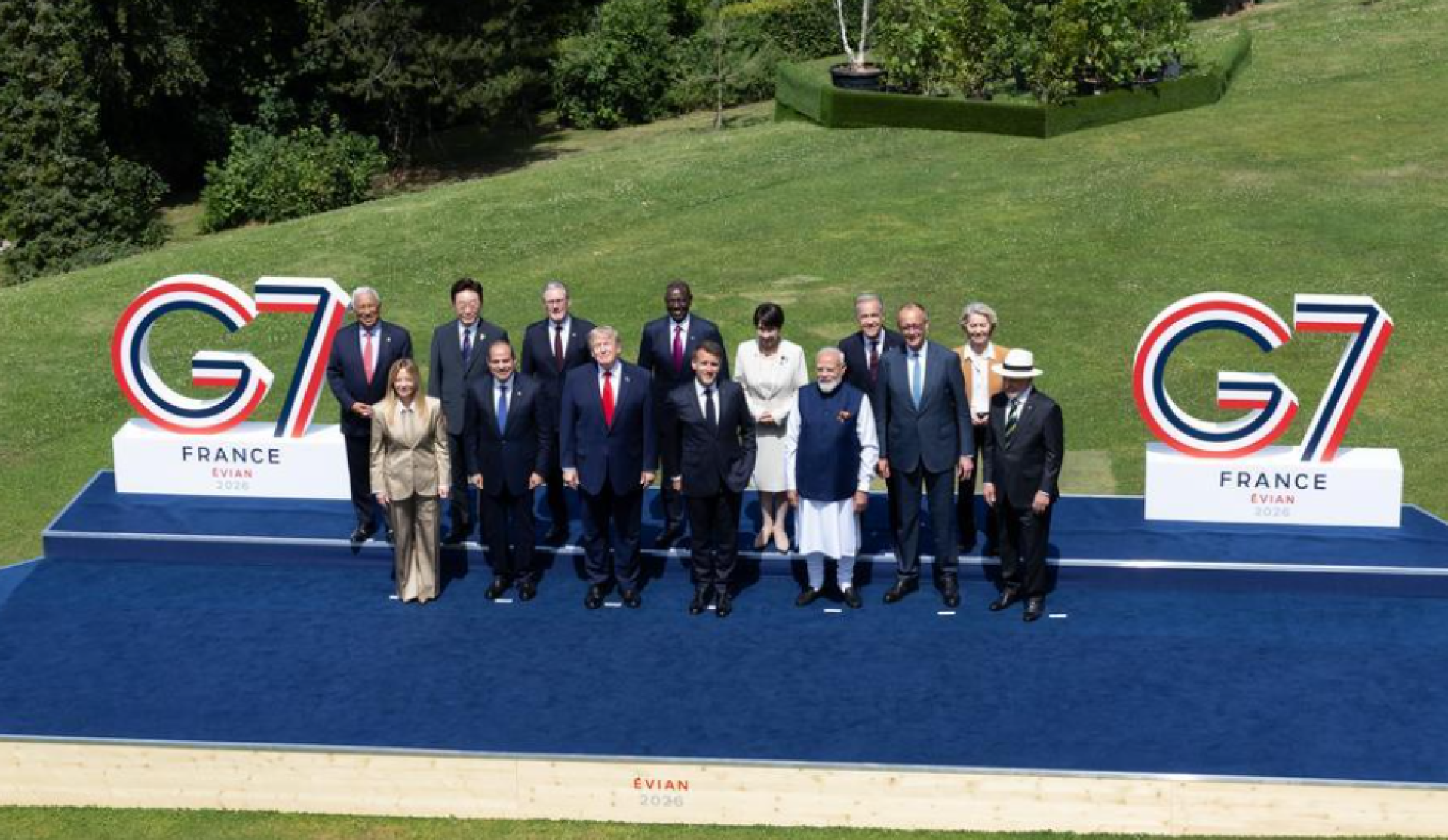
Participants pose for photos during the Group of Seven (G7) summit in Evian-les-Bains, France, June 16, 2026. (French Ministry for Europe and Foreign Affairs/Handout )
NNA News - The Group of Seven (G7) summit ended on Wednesday without a joint declaration for the second consecutive year, exposing deep divisions among some of the world's largest advanced economies over trade, security, technology and global governance. Instead of a unified communique, leaders released a series of thematic statements covering issues ranging from economic growth and public health to international security, underscoring the growing difficulty of reaching consensus within the bloc.
French President Emmanuel Macron described the summit as a success but acknowledged significant differences between the United States and its allies on several key issues. Trade tensions were among the most visible points of disagreement. U.S. President Donald Trump threatened steep tariffs on French wine during the summit, demanding that France abandon its digital services tax targeting major American technology companies. Paris rejected the proposal, insisting that taxation policies remain a sovereign European matter.
Differences also emerged over security and foreign policy. G7 members struggled to align their positions on developments in the Middle East, particularly around maritime security in the Strait of Hormuz and broader regional stability concerns.
Technology and artificial intelligence added another layer of tension. Several European leaders raised concerns about dependence on U.S.-dominated technology platforms and AI systems, while debates over regulation, digital sovereignty and online safety highlighted diverging policy priorities among member states.
The logo of G7 summit is seen in the G7 summit International Media Centre in Publier, France, June 15, 2026. (Xinhua/Wu Huiwo)
Political analysts say the growing disagreements reflect broader changes in the global balance of power. "The G7 no longer enjoys the same influence it once had over global economic and political affairs," said several observers attending the summit. The rise of emerging economies and new multilateral groupings has increasingly challenged the bloc's traditional leadership role.
Questions about the group's relevance have intensified as countries from the Global South demand greater representation in international decision-making structures. Economists argue that global challenges such as climate change, trade disputes, debt crises and security threats can no longer be effectively addressed by a small group of advanced economies acting alone.

Protesters march during a massive demonstration against the Group of Seven (G7) Summit in Geneva, Switzerland, June 14, 2026. (Lian Yi)
The summit also highlighted shifting perceptions of the United States among its traditional allies. Recent surveys in Europe suggest declining confidence in Washington as political, economic and strategic differences continue to grow. While G7 leaders sought to present a united front on several issues, the absence of a final communique once again underscored the challenges facing the grouping as it navigates an increasingly multipolar world.
As global power dynamics continue to evolve, analysts say future summits will likely face similar questions about whether the G7 can maintain relevance and influence in shaping international affairs.