
Global growth must reach the Global South, Lula tells G7 leaders
Friday 19 June 2026 - 11:38am
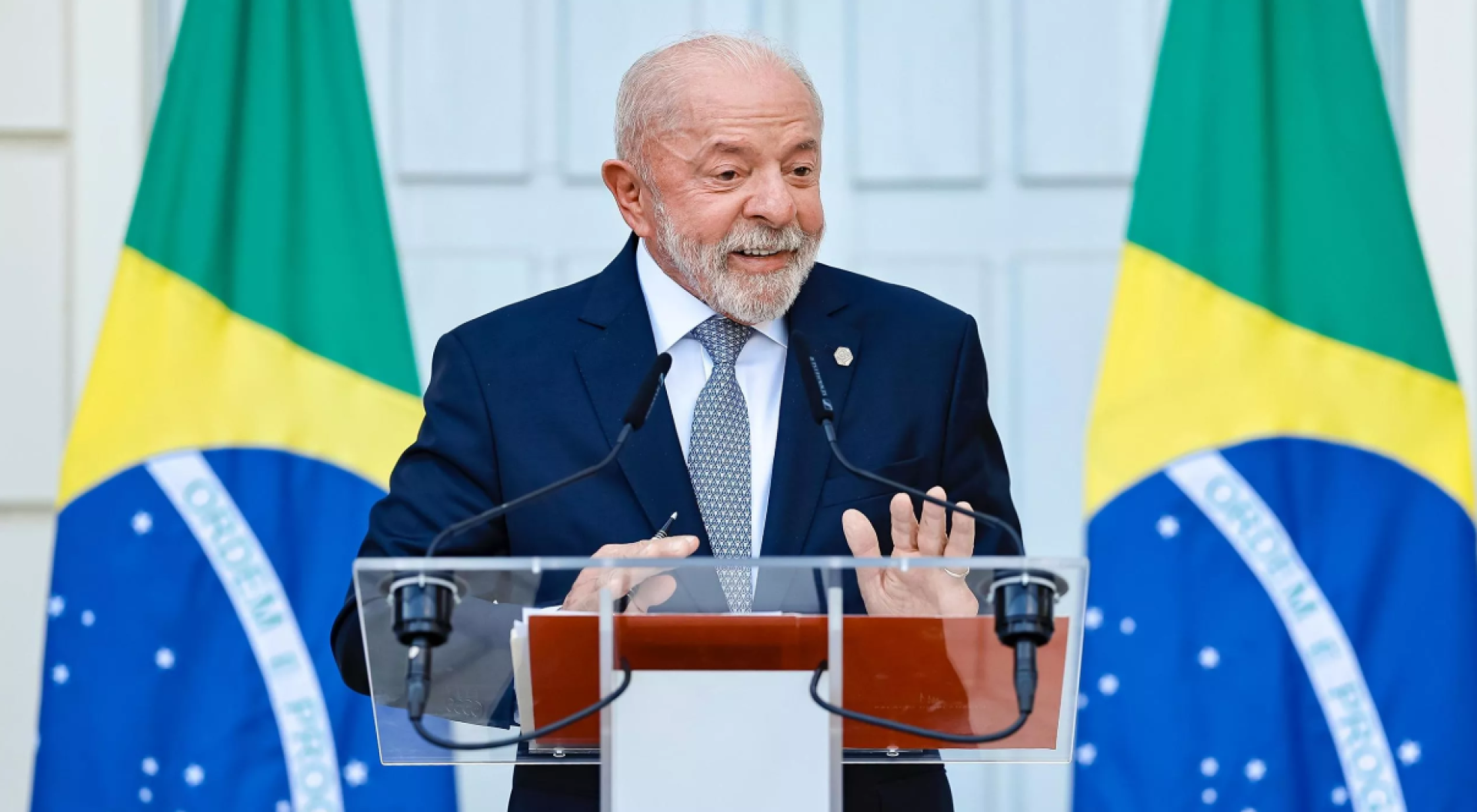
June 17, 2026 - President of the Republic, Luiz Inácio Lula da Silva, during a press conference at the Residence of the Permanent Mission of Brazil to the United Nations, in Geneva, Switzerland. Photo: Ricardo Stuckert / PR (Photo: Ricardo Stuckert / PR)
NNA News – Brazilian President Luiz Inácio Lula da Silva said global economic growth must extend to the Global South and should not remain concentrated in the world's largest economies. Speaking after the G7 Summit in Evian-les-Bains, France, Lula argued that developed countries need to invest more in regions such as Latin America, Africa, India and China to create jobs, raise incomes and expand consumer markets. According to Brasil 247, citing Agência Gov and the Brazilian Presidency, the remarks were made during a press conference in Geneva on June 17 following the summit.
Lula said each G7 meeting offers an opportunity to discuss both the balance and imbalances of the global political, economic and social order, while taking into account technological advances, artificial intelligence and the specific needs of individual countries.
The Brazilian leader argued that a new cycle of global economic expansion will not be possible if income remains concentrated in advanced economies. He said developed nations should focus on creating new consumers by encouraging investment, employment and wage growth in developing regions.
According to Lula, global growth must be more broadly distributed without reducing living standards in wealthy countries. He said expanding prosperity in other regions would also create opportunities for advanced economies to export higher value-added products.
The president said this message was one of the central points of his intervention during the summit. He called on developed countries to recognize that future consumer markets are increasingly located outside their own borders and to support investment in emerging economies.
Lula also addressed the issue of critical minerals and rare earth resources, which are considered strategic for the energy transition, digital economies and emerging technologies. He said Brazil welcomes international partnerships in these sectors as long as they include industrialization and value-added production within the countries that hold the resources.
He stressed that Brazil does not intend to repeat historical patterns in which natural resources were extracted and exported with limited domestic industrial development. Lula said future cooperation should contribute to local industrialization, technology transfer, qualified employment and economic sovereignty.
During the press conference, Lula also highlighted discussions on the digital environment that took place during the G7 Summit. He pointed to Brazil’s ban on mobile phones in schools and the country's digital protection framework for children and adolescents as examples of policies presented to international leaders.
Lula participated in three debate sessions with G7 members and invited countries. The first focused on building new partnerships and rebuilding international solidarity. The following sessions addressed balanced and sustainable economic growth as well as the safe and effective implementation of artificial intelligence.
At the conclusion of the summit, G7 countries issued eight joint declarations. Brazilian Foreign Minister Mauro Vieira said Brazil endorsed three of them, covering online safety for minors, international cooperation against cancer and international cooperation to combat drug trafficking.
Beyond the official summit agenda, Lula held bilateral meetings with French President Emmanuel Macron, Egyptian President Abdel Fattah El-Sisi, Ukrainian President Volodymyr Zelensky, Swiss President Guy Parmelin, European Commission President Ursula von der Leyen and European Council President António Costa.
Vieira also highlighted Lula’s meeting with Japanese Prime Minister Sanae Takaichi, during which the launch of negotiations between Japan and Mercosur was announced. The talks are expected to begin at the next Mercosur summit in Asunción, Paraguay, on June 30.
The foreign minister further reported progress on the Mercosur-EFTA trade agreement. He said the agreement had recently advanced in Brazil's Congress and was approved by the Swiss legislature while Lula was traveling from Evian-les-Bains to Geneva.