
Lula Takes Global South Agenda to G7 Summit
Monday 15 June 2026 - 08:41pm
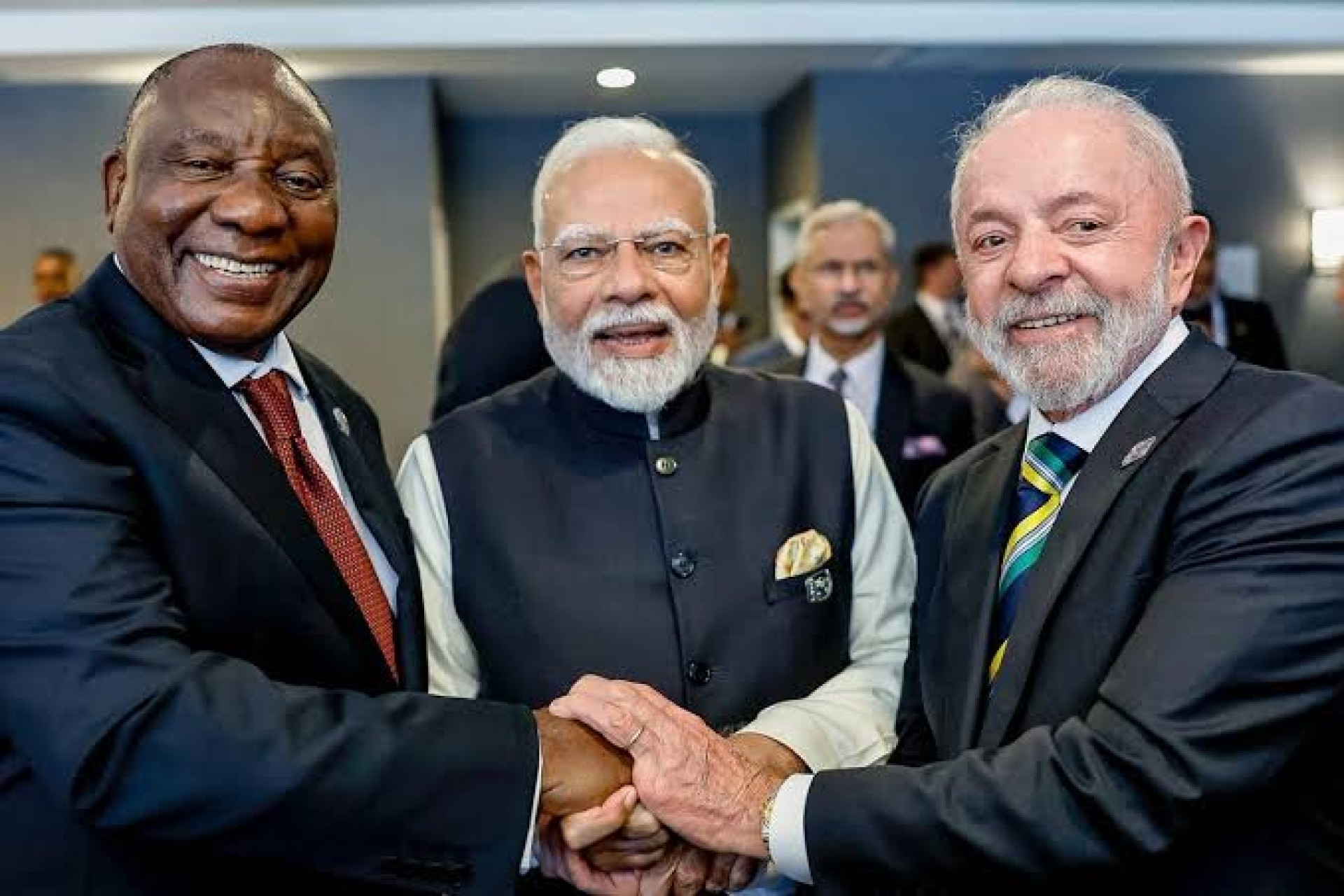
South African President Cyril Ramaphosa, Indian Prime Minister Narendra Modi and Brazilian President Luiz Inácio Lula da Silva meet during the G7 Summit at Kananaskis, Canada, on 17th June 2025.
By Brasil 247 – President Luiz Inácio Lula da Silva will arrive at the G7 summit in Evian, France, at a moment of significant international symbolism, following the announcement of an agreement between the United States and Iran that opened the way for the reopening of the Strait of Hormuz and a new round of negotiations on peace and security in the Middle East.
According to information published by Brasil 247, details of Brazil’s agenda at the summit were presented by Ambassador Philip Fox-Drummond Gough, Secretary for Economic and Financial Affairs at Brazil’s Foreign Ministry. He said seven texts remain under negotiation and that Brazil will submit contributions to all of them.
Invited by the French presidency, Lula will participate in the summit on June 16 and 17. It will be the tenth time the Brazilian president has attended a G7 meeting, placing him among the leaders with the highest number of participations in the forum, although Brazil is not a full member of the group. In addition to Brazil, India, Kenya, South Korea and Egypt were invited to attend. International institutions, including the International Monetary Fund, the World Bank, the African Development Bank and the OECD, will also participate.
Brazil’s agenda will focus on two sessions open to invited countries. On June 16, discussions will address international partnerships for development, the first of the seven topics under consideration at the summit. According to Ambassador Gough, the debate takes place amid a substantial decline in official development assistance. Brazil intends to express concern over the reduction of these resources and argue that neither private sector financing nor the budgets of developing countries can fully compensate for the shortfall.
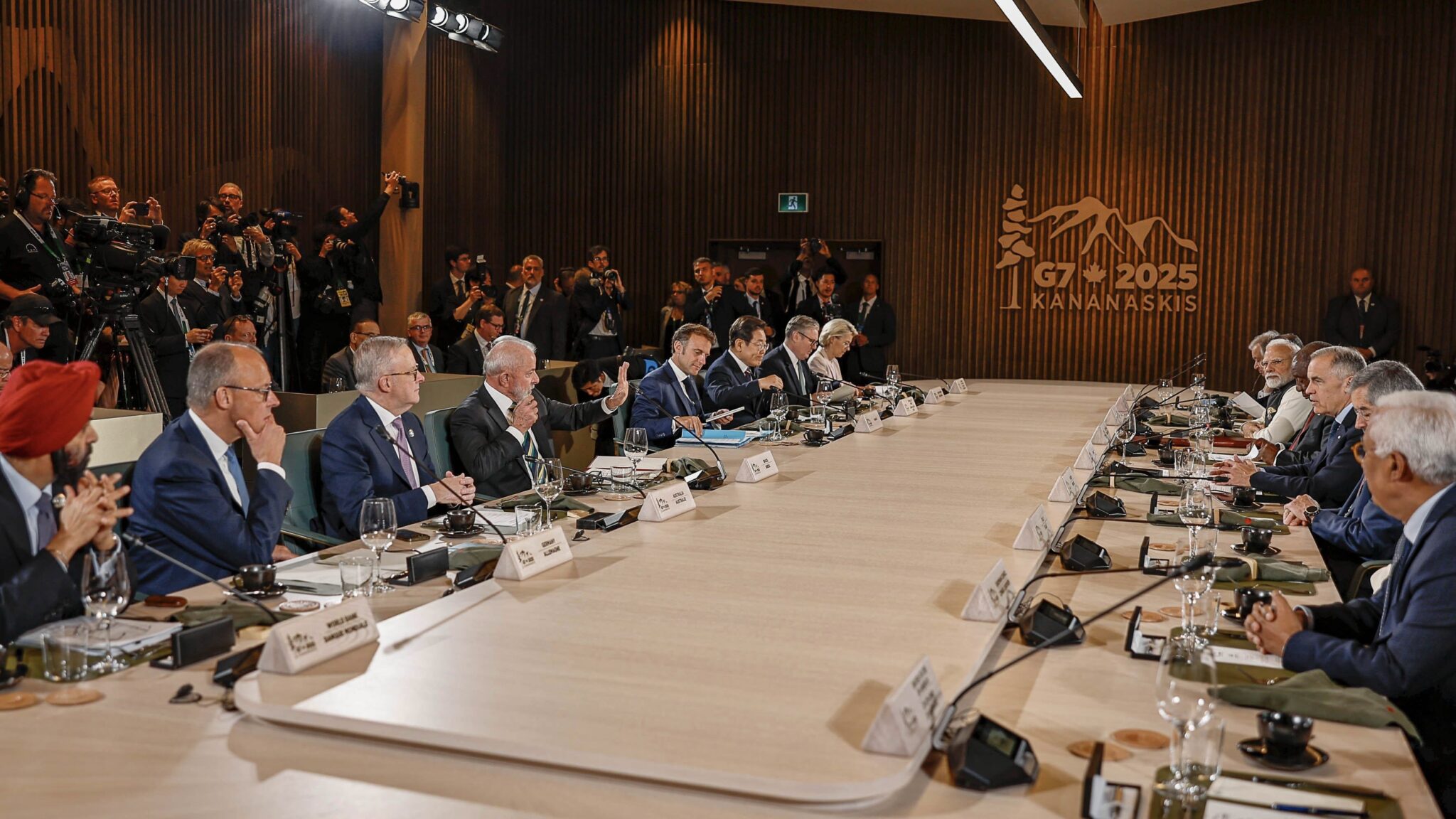
Brazilian President Lula da Silva speaking at the G7 meeting. 2025. Photo: Lula / X
On June 17, leaders will discuss balanced economic growth. Brazil is expected to emphasize the need for reforms in global governance structures, particularly within the World Trade Organization and the United Nations. Asked about unilateral measures, Gough said issues such as trade tariffs imposed by the United States are likely to appear throughout the discussions, although no specific session has been dedicated to the subject.
Lula’s arrival in Evian comes as the international community reacts to the agreement between the United States and Iran, which has been welcomed by several world leaders as an important step toward reducing tensions in the Middle East and reopening the Strait of Hormuz, a key route for global oil and gas trade. The summit is expected to address issues related to freedom of navigation, regional stability and energy security. Recent tensions highlighted the strategic importance of global supply routes and their role in geopolitical disputes.
Brazil is expected to use the occasion to reiterate its support for diplomacy, multilateralism and reforms of international institutions. The country has consistently advocated negotiated solutions to international conflicts and greater representation for developing nations in global decision-making bodies. According to the Foreign Ministry, seven texts are under negotiation. The first addresses international partnerships for development, while the second focuses on balanced economic growth. A third text concerns the online protection of minors.
Gough noted that Brazil has played a leading role in this discussion following the approval of the Digital Statute for Children and Adolescents, which recently entered into force. The issue has gained international attention amid growing concerns about the impact of digital platforms on young people. The fourth text addresses efforts to combat drug trafficking and strengthen cooperation against transnational organized crime.
The fifth focuses on cancer, with special attention to pediatric cancer and other forms of the disease. Gough recalled that health was among Brazil’s priorities during its BRICS presidency last year. The sixth text concerns measures against migrant smuggling. According to the ambassador, it is one of the most sensitive topics on the agenda because of differing views among G7 members themselves. The seventh text deals with critical minerals. Brazil’s position centers on increasing local processing and value-added production in countries where resources are extracted. “The central point for us regarding critical minerals is processing and value-added gains in the country itself,” Gough said.
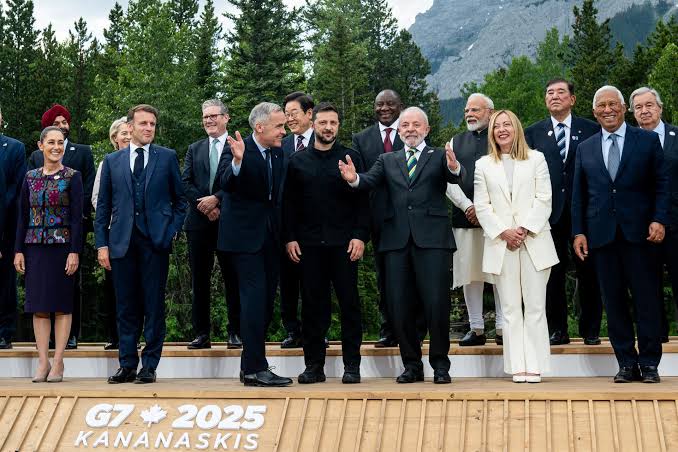
Brazilian President Lula da Silva speaking at the G7 meeting. 2025. Photo: Lula / X
Brazil argues that countries rich in natural resources should not remain solely suppliers of raw materials but should also develop industrial capacity, technology and skilled employment linked to those resources. In addition to the working sessions, Lula will attend a lunch on artificial intelligence on June 17, his final official activity at the summit.
During the event, the Brazilian president is expected to discuss both the opportunities and risks associated with artificial intelligence. The subject has become increasingly prominent in international debates because of its implications for employment, education, digital sovereignty, economic concentration, privacy and regulation. Brazil’s delegation will include Foreign Minister Mauro Vieira. Additional members of the delegation have yet to be confirmed. Regarding bilateral meetings, Ambassador Gough confirmed that talks are underway to arrange meetings between Lula and French President Emmanuel Macron, the summit host, as well as with Japan’s prime minister.
Possible meetings with representatives of the United States and the European Union remain under discussion. On relations with the European Union, Gough said the tone of any conversation would reflect concern over recent trade developments, including measures affecting Brazilian beef exports. Trade issues are expected to feature prominently at the summit amid ongoing tariff disputes, protectionist pressures and tensions surrounding global supply chains.
Lula’s participation in Evian is part of Brazil’s effort to strengthen its role as a representative voice of the Global South. By attending the G7 summit for the tenth time, the Brazilian president will bring issues such as development, global governance reform, economic sovereignty, technology, energy and value-added industrialization of natural resources to the center of the discussions.
The broader international context, marked by the US-Iran agreement and renewed prospects for dialogue in the Middle East, places diplomacy once again at the forefront of global affairs. For Lula, the summit in Evian will provide an opportunity to reaffirm Brazil’s longstanding support for multilateral cooperation and negotiated solutions to international challenges.