
Lula Calls for Sovereignty and Global South Development at G7 Summit
Wednesday 17 June 2026 - 08:46am
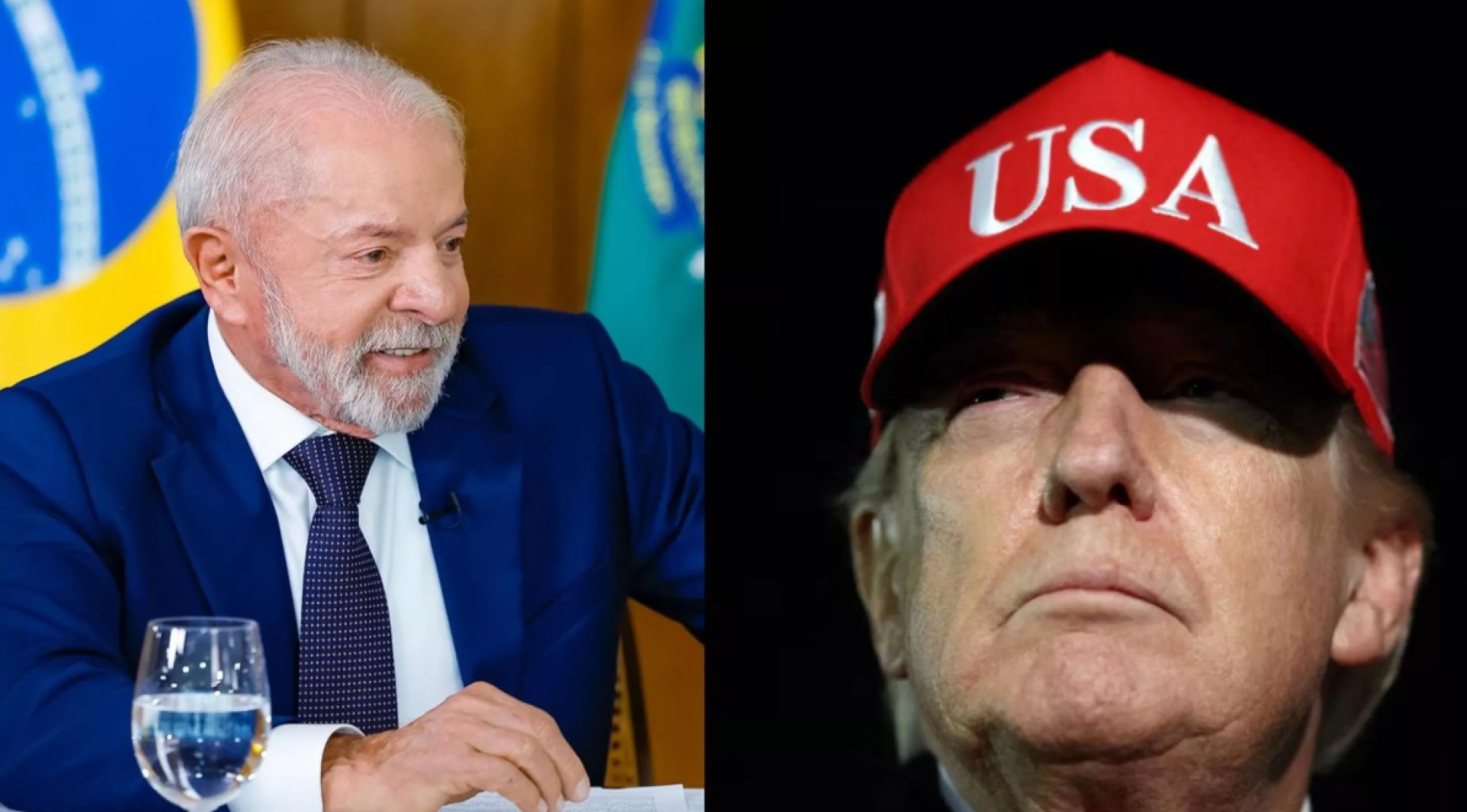
President Lula and Donald Trump (Photo: Ricardo Stuckert / PR / REUTERS/Kevin Lamarque)
NNA News – Brazilian President Luiz Inácio Lula da Silva said on Tuesday that efforts to combat organized crime must respect national sovereignty and be carried out through international cooperation. Speaking during an expanded G7 meeting in Évian, France, attended by U.S. President Donald Trump, Lula called for a coordinated response to drug trafficking, money laundering and arms trafficking. The remarks were reported by Brasil 247.
Addressing the session titled “Forging New Partnerships and Rebuilding International Solidarity,” Lula said transnational crime must be included in discussions on development because of its impact on communities and on public resources that should be directed to essential services. According to the Brazilian president, organized crime “terrorizes communities” and diverts resources that could finance schools, hospitals and infrastructure. He said efforts to address the problem must respect the sovereignty of states.
Lula described the G7 Leaders’ Declaration on Countering Drug Trafficking as a positive step. However, he warned that drug trafficking cannot be addressed separately from other criminal activities. “The fight against drug trafficking cannot be dissociated from other illicit activities such as money laundering and arms trafficking,” he said.
The president also called for stronger dialogue and institutional cooperation among countries and international organizations. He cited INTERPOL as a tool that can help identify assets and individuals linked to criminal activities. “Valuing dialogue and institutional cooperation, including through INTERPOL, will contribute to locating assets and individuals linked to these criminal activities,” Lula said.
In his speech, Lula also addressed broader international challenges. He said that despite participating in several G8 and G7 summits since 2003, world leaders have failed to build lasting collective responses to crises affecting millions of people. The Brazilian leader criticized policies based on market deregulation, a reduced role for the state and fiscal austerity. He said neoliberalism had intensified economic inequality and political crises affecting democracies. “Now, protectionism and unilateralism are re-emerging as false responses to the complexity of our problems,” Lula said.
Lula stated that the gap between the prosperity seen in Évian and the reality faced by billions of people in the Global South is not shrinking. He said inequality between rich and poor countries has increased in recent years amid an extreme concentration of wealth.
The president argued that the world is moving away from the goals of the 2030 Agenda. He noted that an annual funding gap of US$4 trillion remains for achieving the Sustainable Development Goals and called for climate financing to be increased to at least US$1.3 trillion to accelerate implementation of the Paris Agreement. Lula also highlighted a 23% decline in Official Development Assistance last year. According to him, the World Food Programme lost about 40% of its funding, while the World Health Organization and UNICEF reduced their budgets by more than 20%. “These are not abstract figures,” he said.
According to Lula, the reduction in funding directly affects populations in developing countries, including access to food, education, protection for women and disease prevention. He also criticized annual military expenditures of nearly US$3 trillion while developing countries transfer US$1.4 trillion each year in debt servicing.
The Brazilian president defended an international financial system that does not force countries to choose between paying creditors and feeding their children. He cited debt-for-climate and debt-for-social-investment mechanisms as alternatives to expand fiscal space for vulnerable nations. Lula also presented Brazilian initiatives, including the Tropical Forests Forever Fund and the Global Alliance Against Hunger. According to him, these instruments can help conserve forests, protect populations and share effective public policies aimed at reducing inequalities.
On technology, Lula said access to artificial intelligence and other advanced technologies should be included in development partnerships. He argued that the energy and digital transitions should not reproduce historical patterns in which economic benefits are concentrated among a limited number of actors.
According to the president, countries that possess critical minerals should participate in higher value-added stages of production chains through industrialization, technology transfer and capacity building, in line with their national needs.