
Europe and Brazil deepen cooperation on critical minerals, defense and technology
Wednesday 24 June 2026 - 08:34pm
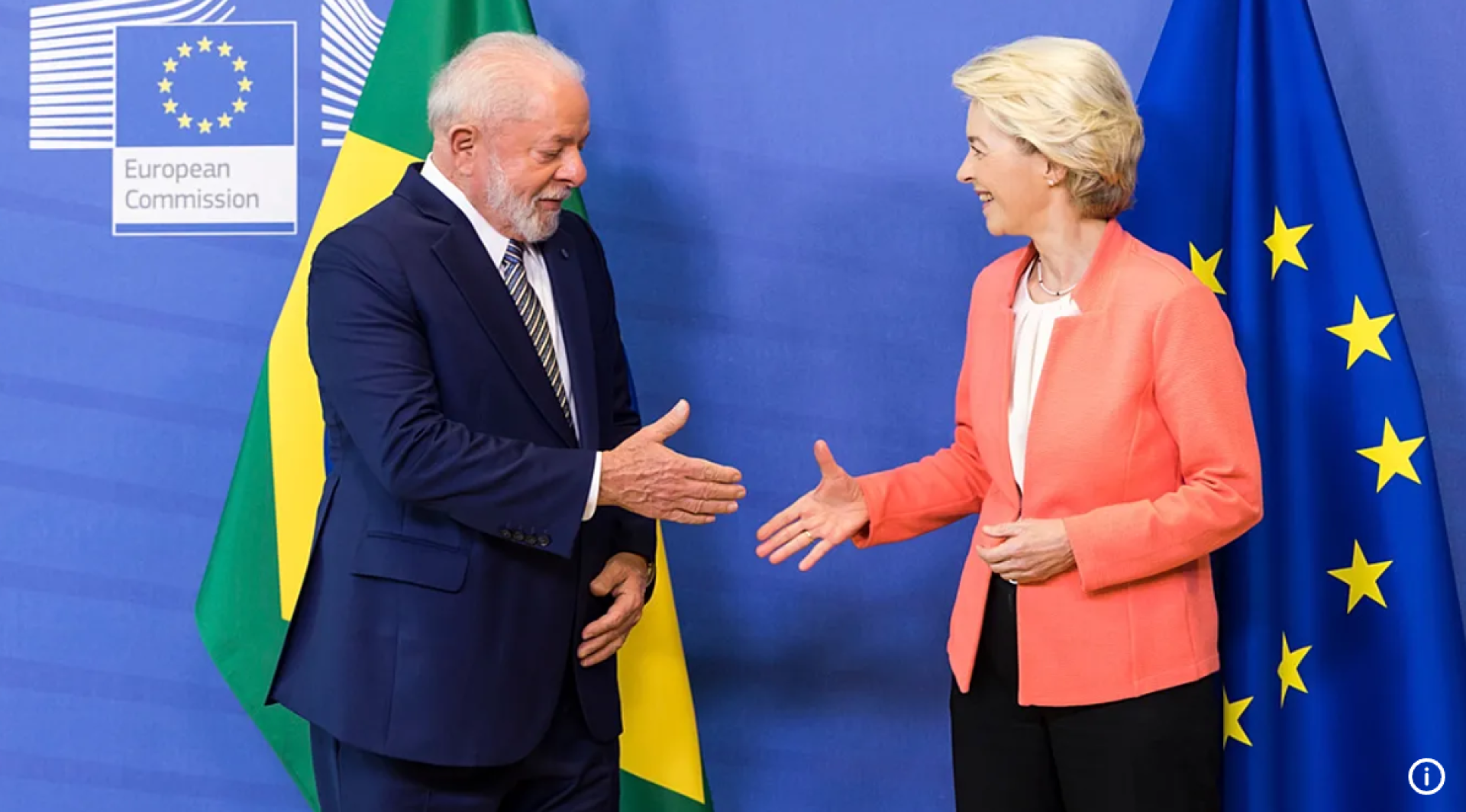
Photo Credit: Geert Vanden Wijngaert/ The AP(2023).
NNA News – The Mercosur-European Union agreement was presented on Tuesday during the II European Union-Brazil Investment Forum at ApexBrasil headquarters in Brasília as a tool to reshape relations between the two blocs beyond traditional trade. Brazilian and European officials defended greater integration focused on value addition, productive investment, technological innovation and new opportunities for cooperation in the defense sector.
According to Brasil 247, the meeting took place amid geopolitical tensions, trade disputes and the reorganization of global supply chains. Representatives from both sides argued that the partnership between Brazil and the European Union offers an alternative based on predictability, trust and long-term cooperation. ApexBrasil President Laudemir André Müller said, as cited by Sputnik Brasil, the strengthening of ties comes as Brazil records historic economic results. He noted that the country has achieved record levels of exports and investment attraction despite international turbulence.
Müller said these results stem from political and diplomatic choices centered on dialogue, negotiation and openness. He also stressed that relations with Europe go beyond economic interests and are based on shared values, including democracy, multilateralism, sustainability and dialogue. He said the agreement creates a new environment for business and investment. According to Müller, European investment stock in Brazil is approaching $500 billion, with significant room for expansion in sectors such as data centers, digital infrastructure and critical minerals.
The concept of integrated value chains was a recurring theme throughout the forum. José Pio Borges, chairman of the Brazilian Center for International Relations (CEBRI), said the world is undergoing profound economic and geopolitical transformations and that integration, rather than isolation, is required to address these challenges. Borges stated that Brazil and the European Union have the capacity to dominate entire production chains in strategic sectors, including artificial intelligence applications and defense-related industries. He added that the agreement can deepen strategic relations and redesign value chains based on trust, predictability and shared values.
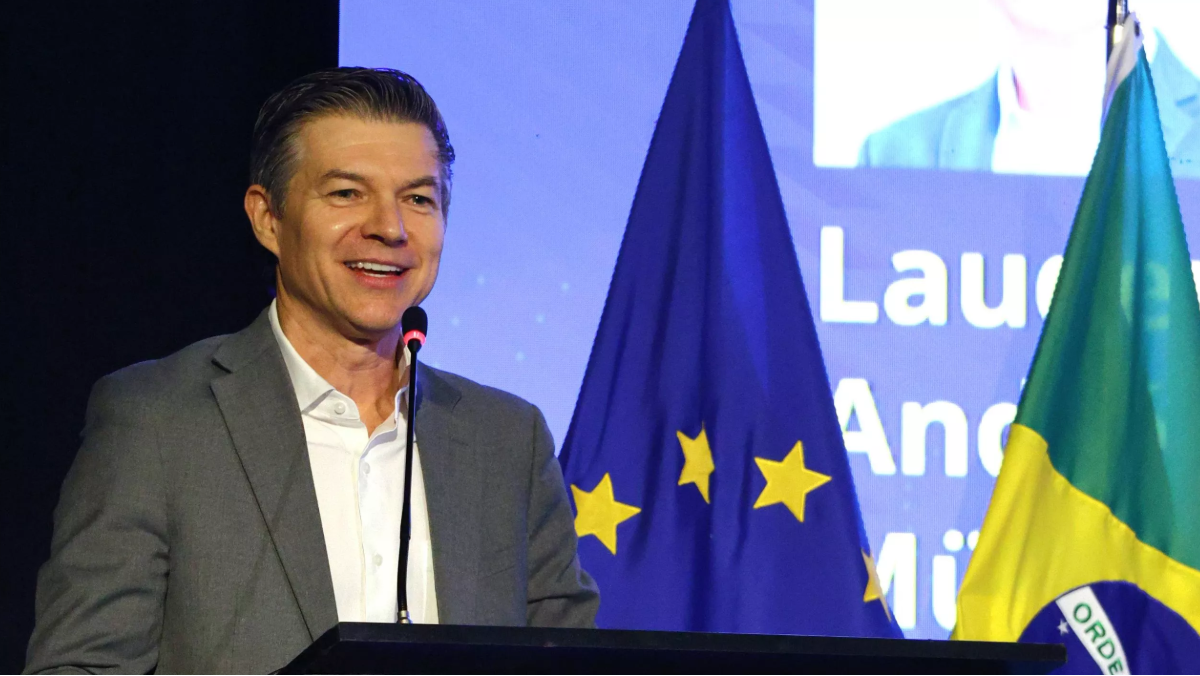
Laudemir André Müller (Photo: ApexBrasil)
European Union Ambassador to Brazil Marian Schuegraf described the trade agreement as a watershed moment but said its success will depend on converting opportunities into investments, projects and concrete results. She stated that the EU views Brazil as a fundamental partner in an increasingly complex world. Schuegraf emphasized that one of the main opportunities lies in generating added value from critical minerals, while applying the same approach to other sectors included in the EU's competitiveness agenda.
European Commissioner for International Partnerships Jozef Síkela said the EU's strategy is not limited to raw material extraction. He stated that the Global Gateway initiative aims to develop long-term productive and technological capabilities in partner countries and in Europe. Síkela announced more than €260 million in investment for the EliaLink high-capacity submarine internet cable connecting Brazil and Europe. The project is expected to improve connectivity in remote areas of the Amazon region.
Minister of Management and Innovation in Public Services Esther Dweck placed the partnership within a broader geopolitical context. Recalling remarks by presidential adviser Celso Amorim, she said Brazil had long viewed Europe as a potentially strategic partner alongside major poles represented by the United States and Asia. Dweck also highlighted shared commitments between Brazil and the European Union in climate and digital policies. She said recent developments such as Brazil's tax reform and declining deforestation rates have strengthened the country's international competitiveness.
Minister of Development, Industry, Trade and Services Márcio Elias Rosa described the agreement as a response to protectionist trends. He said the creation of what he called the world's largest economic bloc between Mercosur and the European Union is the best answer to those who favor isolationism. Rosa added that the Mercosur-EU agreement should serve as an example internationally and stressed the importance of ensuring its implementation proceeds without major disruptions.
The defense dimension of the partnership was also discussed. Maurício Carvalho Lyrio, secretary for Climate, Energy and Environment at Brazil's Foreign Ministry, noted that Europe is currently undergoing a process of military rearmament. He said Mercosur countries could position themselves as reliable partners for Europe and pointed to opportunities for deeper cooperation with the European defense industry.
Throughout the forum, participants emphasized that relations between Brazil and the European Union are evolving beyond commodity trade. The shared objective is to build integrated value chains, expand investment in technology, clean energy, digital infrastructure and critical minerals, and strengthen industrial cooperation, including in areas related to defense and economic security.