
Township Residents Prioritise Stability Over June 30 Protests
Thursday 25 June 2026 - 06:33pm

March and March members protest in Cape Town, demanding that illegal foreigners leave South Africa. Photo Credit: Rodger Bosch / AFP
NNA News – As South Africa approaches the planned June 30 anti-immigration demonstrations, many residents across Gauteng townships say their priority is not protest action but protecting livelihoods, maintaining community relations, and addressing the country's economic challenges through practical solutions.
The demonstrations, organised by the group March and March, have been promoted as a response to concerns around illegal immigration, crime, and unemployment. However, conversations with residents in communities including Soweto, Alexandra, Tembisa, and Diepsloot suggest that many people remain unconvinced that demonstrations will improve their daily circumstances.
For many residents, economic survival remains the overriding concern. "We've marched before, but my situation hasn't really changed. I have children depending on me. So right now, I'd rather focus on finding work and putting food on the table," said 46-year-old Soweto resident Mhlabeni Dube. Others expressed concern that demonstrations often disrupt economic activity and make it harder for people to earn an income.
In Tembisa, taxi driver Vusumuzi Mnguni said he would not participate in the planned action. "When protests happen, taxis stop running properly and many people can't get to work. Everyone wants change, but we also need stability because many families rely on what they earn each day," he said.
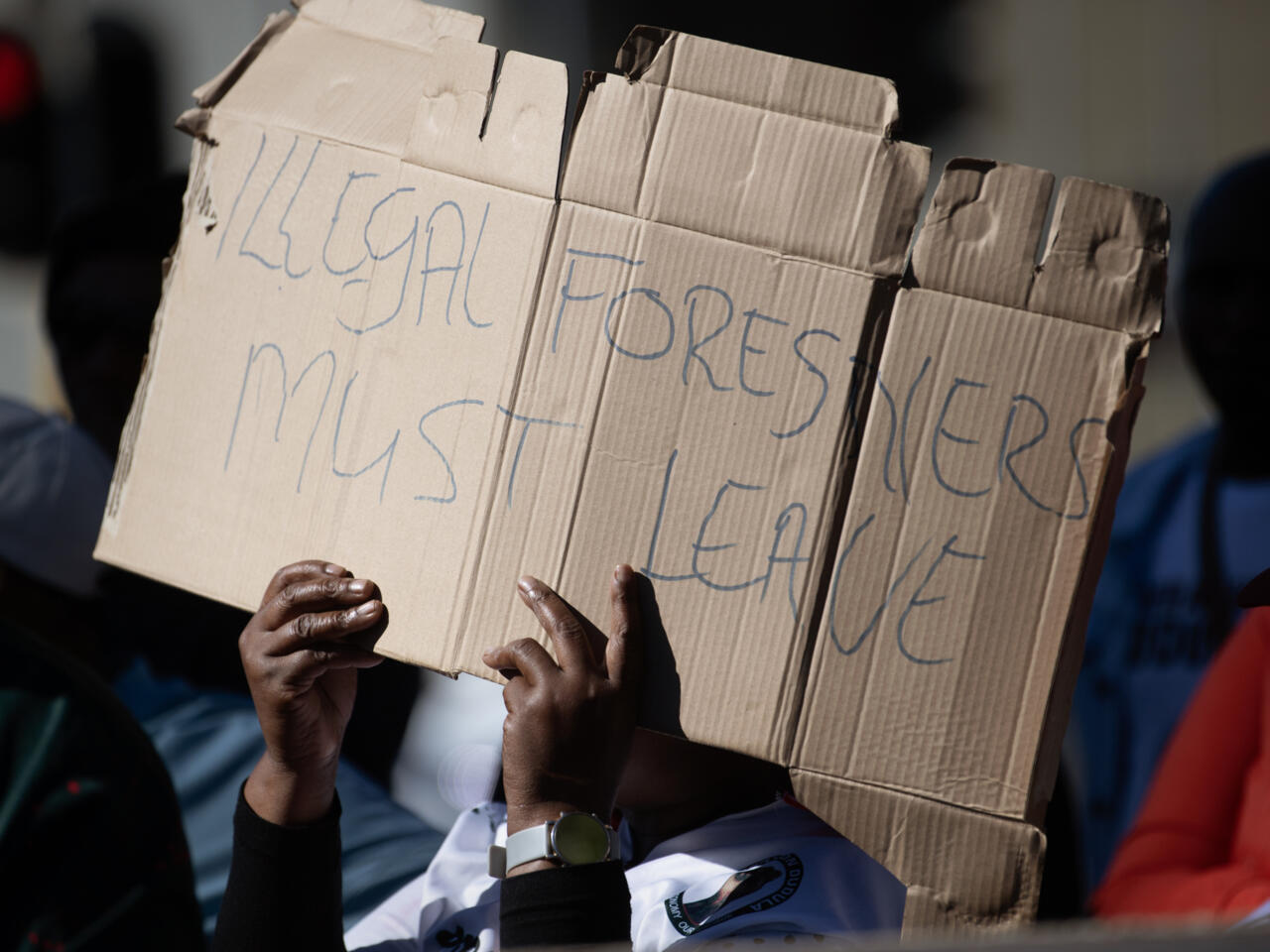
A March and March protester with a placard written: "illegal foreigners must leave". Photo Credit: Rodger Bosch / AFP
Several residents also highlighted the importance of preserving social cohesion in communities where South Africans and foreign nationals have lived and worked alongside each other for years. "We may come from different backgrounds, but we live together every day and need to find ways to get along," said Alexandra resident Nombulelo Hlatshwayo. She added that communities have already faced significant social and economic pressures and do not need further division.
In Diepsloot, residents pointed to the role that migrant-owned businesses play in local economies, particularly in areas where access to affordable goods and services remains limited. "People buy groceries there every day because they are convenient and affordable. Instead of fighting each other, we should appreciate the role they play," said Mpho Selowa.
Hair salon owner Busisiwe Makhanya echoed similar sentiments. "Some of them have been here for years. They've built relationships in the community. We can't ignore that," she said. For others, the debate is less about immigration and more about the need for sustainable economic opportunities. "What communities really need are jobs and practical solutions, not protests," said Alexandra resident Lindokuhle Gasa. Community leader Bheki Nxumalo from Soweto argued that engagement between communities, government, and stakeholders would be more productive than demonstrations. "Concerns over unemployment and the economy deserve attention. But creating divisions in communities won't help," he said.

A March and March protester with a placard written: "foreigners must go". Photo Credit: Rodger Bosch / AFP
The planned demonstrations come amid heightened national debate around immigration policy, border management, and unemployment. Authorities have repeatedly stressed that concerns related to immigration should be addressed through lawful and constitutional processes. Gauteng Premier Panyaza Lesufi recently called for calm, warning that violence and criminality would not be tolerated. "As a home to many immigrants, Gauteng will be directly affected, and we have therefore put clear, practical measures in place," Lesufi said.
President Cyril Ramaphosa also cautioned against actions that could fuel instability, saying the government remains focused on addressing the socio-economic challenges confronting South Africans. As June 30 approaches, the views emerging from many township communities suggest that while frustrations over unemployment and service delivery remain widespread, a significant number of residents believe that stability, dialogue, and economic development offer a more constructive path forward than confrontation.