
AI arms race risks widening global security divide, analyst warns
Saturday 20 June 2026 - 07:24pm
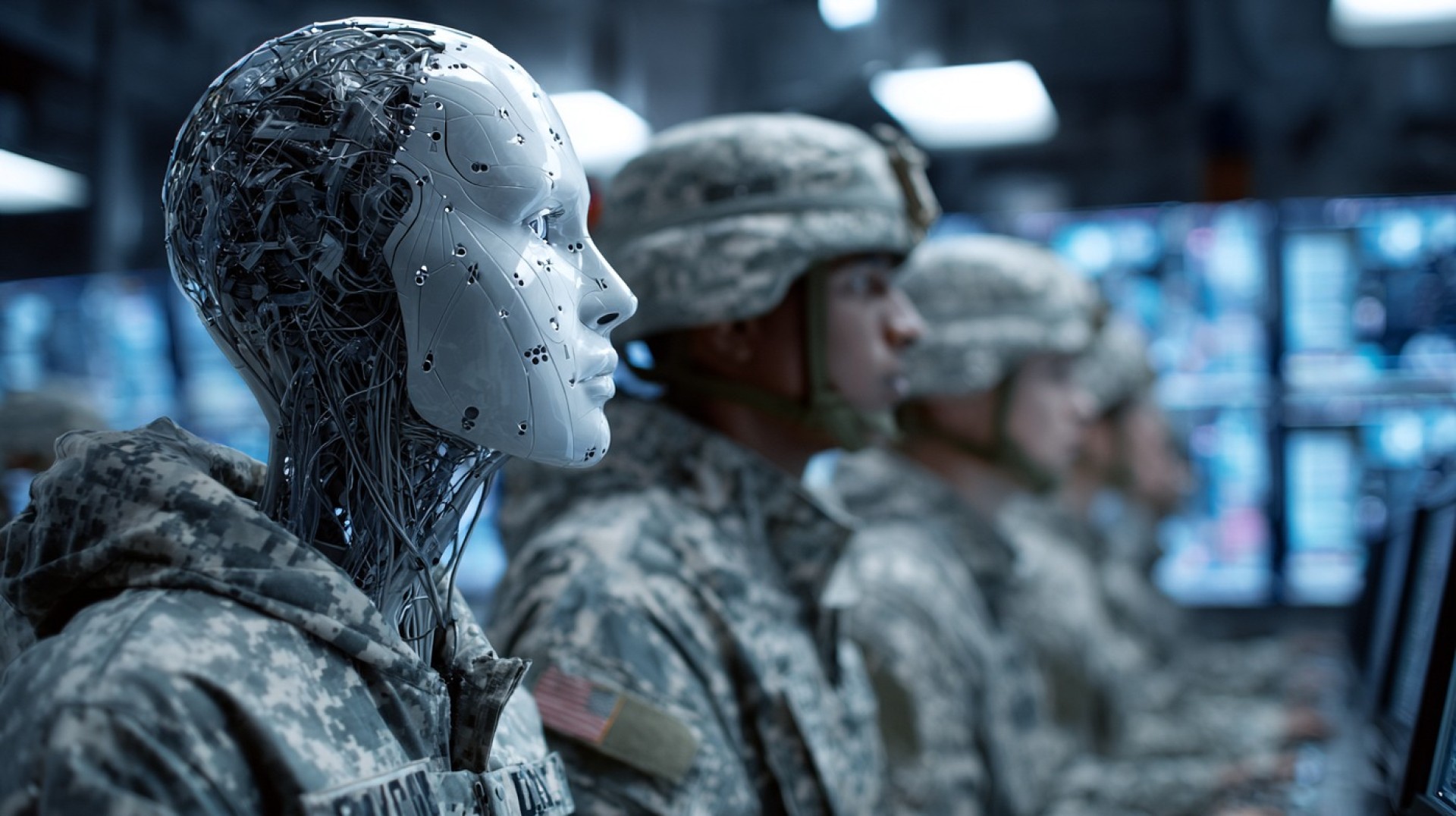
Photo Credit: The sixth Council
NNA News – The rapid expansion of artificial intelligence in military operations is raising new concerns about global security, with analysts warning that existing international governance frameworks may be ill-equipped to manage the risks of algorithmic warfare, cyberattacks and growing technological inequality.
The debate comes as major powers accelerate the integration of AI into defense systems. Recent agreements between the United States Department of Defense and leading technology firms have highlighted how quickly intelligent systems are moving from research laboratories into real-world military applications.
According to Liu Chong, a research fellow at the China Institute of Contemporary International Relations, international discussions on military AI have focused heavily on questions such as whether humans should remain involved in weapons decisions and how existing international law should apply to autonomous systems.
However, Liu argues that these debates risk overlooking the broader consequences of AI-enabled warfare.
"The real challenge is not whether a machine pulls the trigger independently, but how AI dramatically increases the speed, scale and intensity of military operations," he wrote.
Analysts warn that artificial intelligence is transforming modern conflict by allowing military commanders to process large volumes of information, identify targets and coordinate operations at speeds previously impossible. Critics argue that this acceleration could reduce opportunities for human judgment and increase the risk of escalation during conflicts.
Beyond state militaries, concerns are also growing over the ability of non-state actors to access increasingly powerful AI tools. Technologies once limited to governments, including advanced drones, cyber capabilities and automated targeting systems, are becoming cheaper and more widely available.
Security experts have warned that sophisticated AI models could potentially be used to launch cyberattacks against financial institutions, critical infrastructure and public services. This has intensified calls for international cooperation to establish safeguards against the misuse of advanced AI systems.
The issue has particular relevance for developing countries, many of which lack the resources to defend themselves against emerging AI-related threats.
Experts argue that unequal access to AI security capabilities could create a new global divide, leaving smaller nations vulnerable to cyberattacks, digital disruption and technological dependence.
Liu warned that restricting access to technology alone would not solve the problem. Instead, he called for greater investment in cybersecurity capacity, stronger international cooperation and the development of global mechanisms to detect and respond to AI-related risks.
As governments, businesses and researchers continue to shape the future of artificial intelligence, the debate increasingly centers on how to balance innovation with security while ensuring that the benefits of AI are shared more equally across the world.
The discussion is expected to remain a key issue in global governance forums as countries seek common approaches to managing the opportunities and risks associated with rapidly advancing AI technologies.