
Burkina Faso severs ties with France over neo-colonial ambitions'
Saturday 27 June 2026 - 10:08am
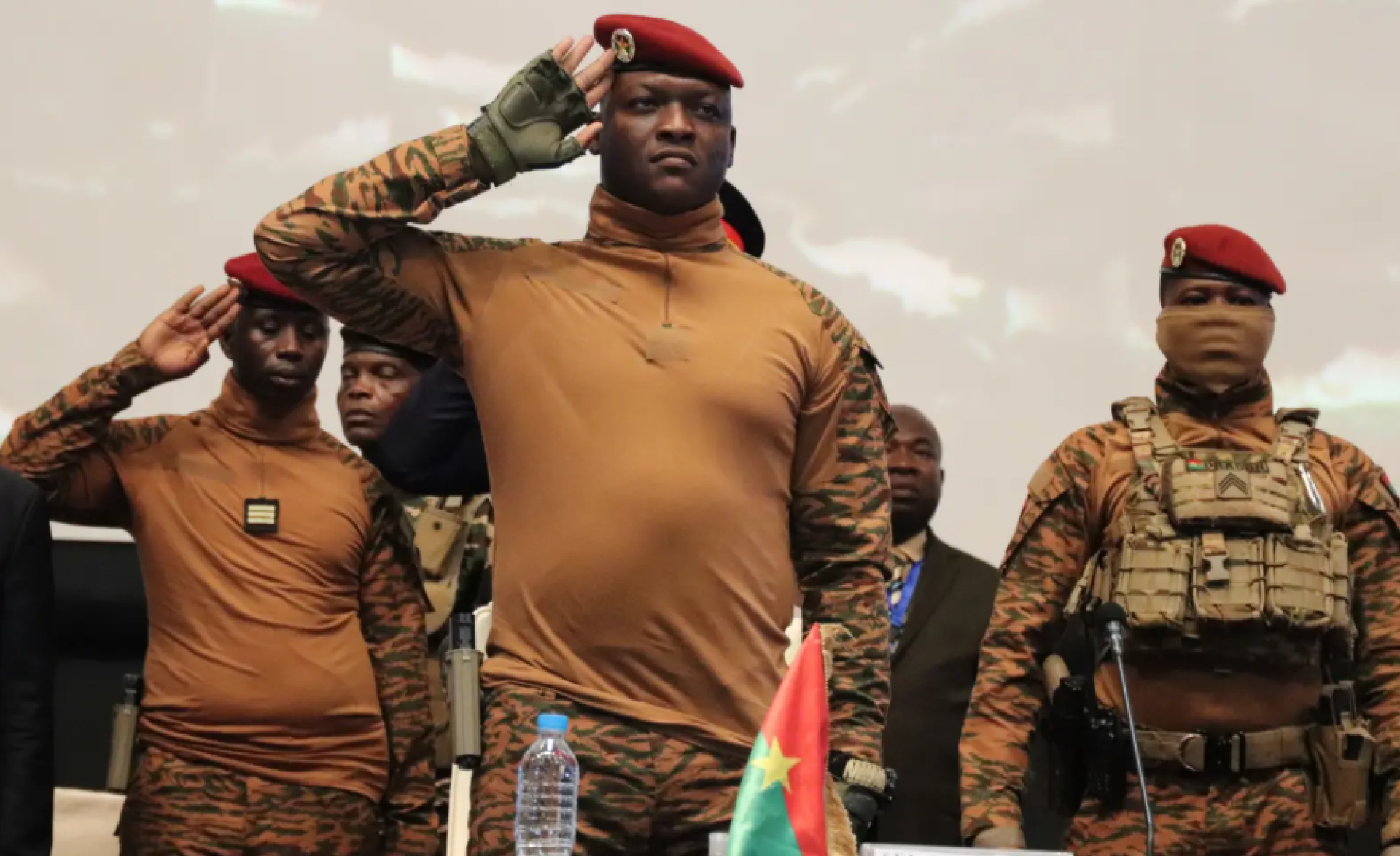
Photo Credit: ISSIFOU DJIBO | Credit: EPA
NNA News - Burkina Faso has severed diplomatic relations with its former colonial ruler, France, with immediate effect. The country’s military government announced the decision on Friday, accusing Paris of persistently acting against Burkina Faso’s national interests and pursuing what it described as “neo-colonial ambitions” in the Sahel. “The government of Burkina Faso hereby informs the national and international community that it has decided to sever diplomatic relations with France with effect from today, June 26, 2026,” the presidency’s statement read out on state television.
Communications Minister Pingdwendé Gilbert Ouédraogo formally announced Burkina Faso's decision to sever diplomatic ties with France. The official statement, read on national television, said the ruling military junta led by Captain Ibrahim Traoré had taken the step over alleged “neo-colonial ambitions” and “persistent interference” in the Sahel nation’s internal affairs. “The Government of Burkina Faso brings to the attention of national and international opinion that it has decided to break its diplomatic relations with the French Republic as of today, 26 June 2026,” the communiqué stated.
Ouédraogo added that the move followed “an in-depth assessment” of bilateral ties. “The essential conditions for promoting relations based on mutual respect, reciprocal trust, respect for the principle of non-interference in internal affairs and national sovereignty are not in place,” he said on national television. The government accused France of “the incessant activism of the regime in power in France against the interests of Burkina Faso. It avowed neocolonial ambitions with the active support of subversive networks and terrorists who are plaguing our country and the Sahel”, and of seeking to portray Burkina Faso as “a pariah of the international community”.
It added: “Faced with these imperialist aims of domination of our country and enslavement of our people, we have made the choice of responsibility and sovereignty.” Ouagadougou has clarified that the break applies only to state-to-state relations. “This decision exclusively concerns diplomatic relations between the two states” and “does not call into question the historical, human, cultural and social ties between the people of Burkina Faso and France,” the government said.
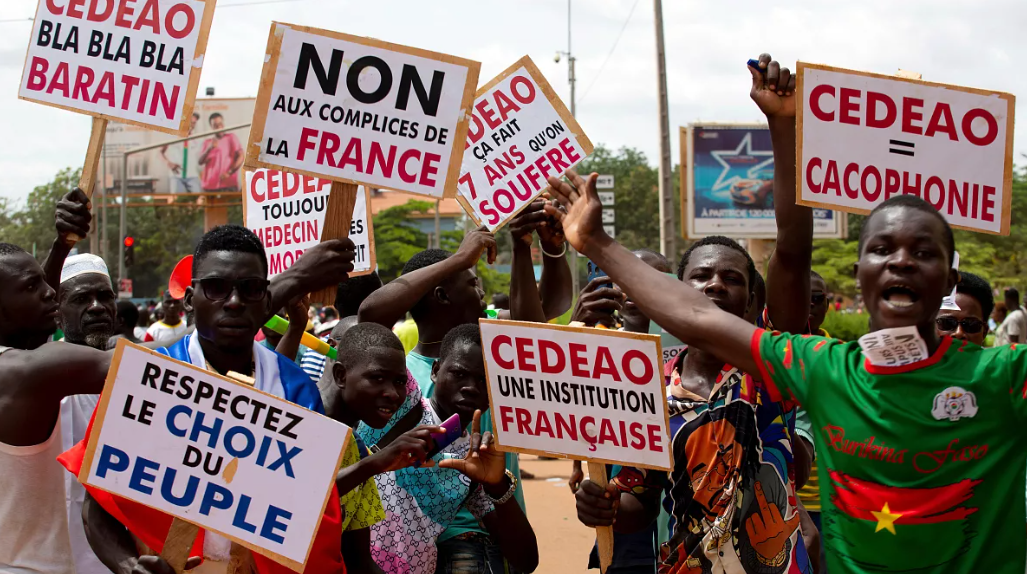
Photo Credit: AP
The West African government also sought to reassure foreign nationals, saying, “The government reassures national and international opinion of its willingness and commitment to ensure the protection of nationals to whom it reaffirms its hospitality, as well as the preservation of their interests,” the communiqué said. It also urged citizens to show “responsibility, restraint and civic-mindedness” towards French nationals and other expatriates.
The statement further added that the government would pursue “an independent foreign policy, based on the diversification of its partnerships, the strengthening of South-South cooperation, the development of balanced relations with all states and the promotion of peace, security, and sustainable development”. It added that “Burkina Faso remains open to dialogue with the international community based on mutual respect, reciprocity and the sovereign equality of states” and “remains committed to building, with all nations committed to peace and justice, a freer, fairer and more united world", the communiqué said.
Before the diplomatic break, France’s Ministry for Europe and Foreign Affairs stated in an update published on March 23, 2026, that “France and Burkina Faso continue their political dialogue. France is also maintaining its cooperation with Burkina Faso and remains committed and available to support the transitional authorities in every field as the country faces a major humanitarian crisis.”
France’s Ministry of Foreign Affairs had not responded to the 27 June announcement at the time of publication. The diplomatic rupture marks a sharp escalation in Burkina Faso’s foreign relations, as the junta-led government continues to redefine its international partnerships following a series of breaks with Western allies. Separately, the government led by Captain Ibrahim Traoré, who came to power in a coup in September 2022, faces increased scrutiny over its domestic governance, including an escalating crackdown on civil society. In April 2026, Burkina Faso’s military government dissolved 118 NGOs and civil society groups.
Photo Credit:
The Ministry of Territorial Administration and Mobility announced the ban, stating that the organisations were dissolved “in accordance with current legal provisions”, with most of the associations working in human rights defence. Territorial Administration Minister Emile Zerbo said that leaders must comply with a July 2025 law restricting rights groups. “Any offender faces the penalties provided for under current regulations,” Zerbo warned. Human rights groups in the Sahel condemned the move, with Amnesty International describing it as a “flagrant attack” on basic rights. “We are alarmed and deeply concerned by this flagrant attack on the right to freedom of association. Dissolving NGOs and associations is at odds with the Constitution of Burkina Faso, which guarantees freedom of association and union,” said Ousmane Diallo, Amnesty International’s Senior Researcher on the Sahel.
However, Diallo argued that the dissolution formed “part of a much broader effort to silence civil society through a combination of repressive tactics” and urged the authorities to reverse the decision and uphold the country’s international human rights obligations. The April action followed a 29 January decree that dissolved all political parties that had been suspended since the 2022 coup. The council of ministers stated the move was part of an effort to “rebuild the state".
Interior Minister Emile Zerbo said a government review found that the “multiplication of political parties had fuelled divisions and weakened social cohesion.” Under the decree, all political parties and formations were disbanded and their assets transferred to the state. Before the coup, Burkina Faso had more than 100 registered political parties, with 15 represented in parliament after the 2020 election.
The split with France reflects a broader realignment across the Sahel, with several former French colonies reducing ties with Paris while strengthening relations with Russia and China.