The newsletter of the facts
E-News
Subscribe to E-News
Our daily analytical digest breaking down the data driving modern policy and markets.

Monday 29 June 2026 - 07:37am
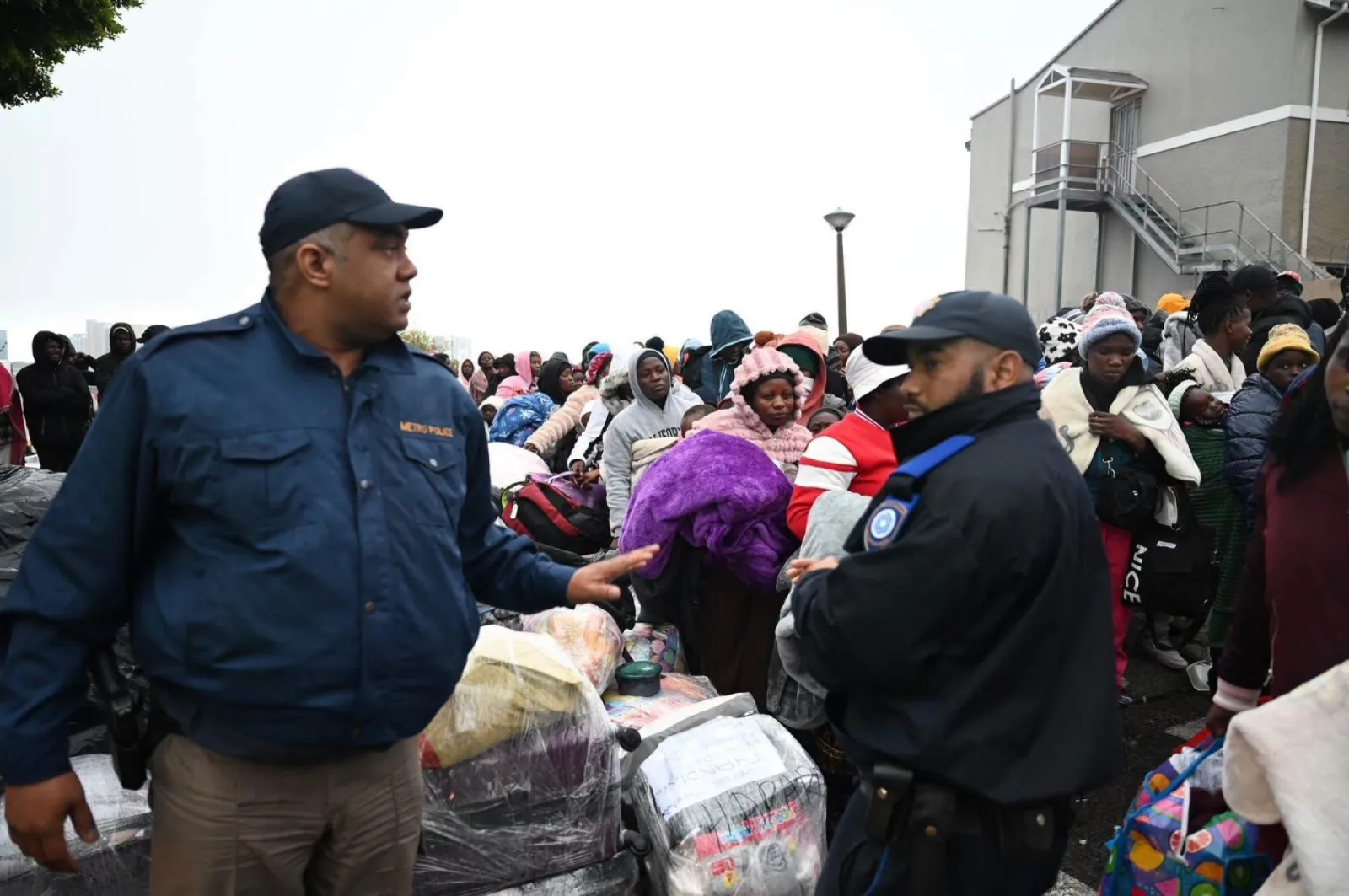
Officials assist Zimbabwean nationals during the relocation from the Zimbabwean Consulate in District Six to the Department of Home Affairs Repatriation Centre in Epping. Photo: Ayanda Ndamane / ANA Studios
NNA News - Hundreds of Zimbabwean nationals seeking voluntary repatriation have been moved from outside their country’s consulate in District Six, Cape Town, to the Department of Home Affairs Repatriation Centre in Epping Industrial on Sunday. The move comes as a severe winter cold front continues to sweep across the Western Cape.
The relocation was coordinated by the City of Cape Town, the Department of Home Affairs and the local Zimbabwean consulate after more than 1,000 Zimbabwean nationals gathered outside the consulate over the past few weeks seeking assistance with voluntary repatriation. It also comes as heavy rain and strong winds intensify flooding risks across the Western Cape. According to the Siyafana Sonke Action Committee, those at the site are requesting voluntary repatriation due to economic hardship and an inability to afford travel back to Zimbabwe.
In addition to economic hardship, the committee and civil society groups have also pointed to growing concerns over insecurity and rising xenophobic sentiment in parts of the country. They linked the situation to anti-migrant sentiment as anti-immigrant camps and demonstrations gain momentum, alongside calls for undocumented migrants to leave by 30 June 2026.
"African citizens are not voluntarily requesting repatriation; they are fleeing from intimidation and violence," the group said in a statement on Monday.
Authorities say those camping outside the Zimbabwean mission include undocumented farm workers, self-employed individuals and labourers, as well as predominantly mothers with infants and children, some of whom have never been to Zimbabwe. South African authorities also confirmed that many of those seeking voluntary repatriation either have expired documentation or are living in the country without legal status.
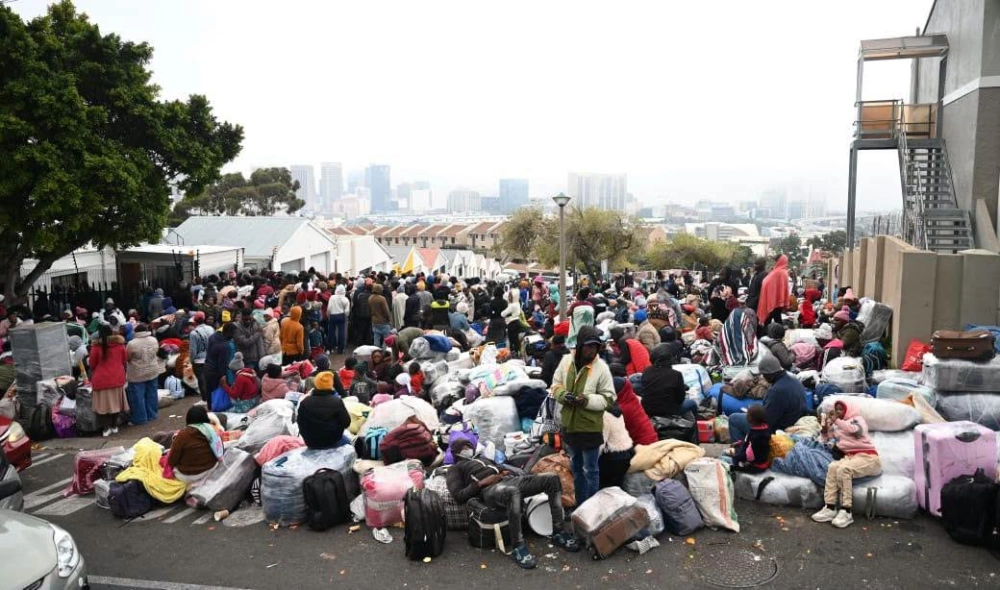
Zimbabwean nationals gather outside the Zimbabwean Consulate in District Six, Cape Town, before being relocated to the Department of Home Affairs Repatriation Centre in Epping. Photo: Ayanda Ndamane / ANA Studios
As the humanitarian situation unfolded, worsening weather further compounded conditions. The South African Weather Service issued a Yellow Level 4 warning for disruptive rainfall, with additional alerts for damaging winds and dangerous coastal conditions across parts of the Western Cape.
Disaster Risk Management spokesperson Sonica Lategan said the weather system was expected to continue until Monday. "The rain is expected to spread eastwards during the evening and persist into Monday. Rainfall accumulations of 15–25 mm are expected, reaching 30–60 mm over the Cape Winelands and City of Cape Town districts during Sunday," she said.
As conditions worsened, authorities moved processing to a single site. City of Cape Town officials said the Epping facility is now the only designated site for voluntary repatriation applications, adding that "no further applications will be handled at the District Six consulate".
City spokesperson Luthando Tyhalibongo, in an interview with South African broadcaster eNCA, said several municipal departments had been deployed. "City Safety and Security Services are on site to maintain public order and assist with the relocation," he said. "Our traffic and cleansing departments are managing access routes and waste in the area."
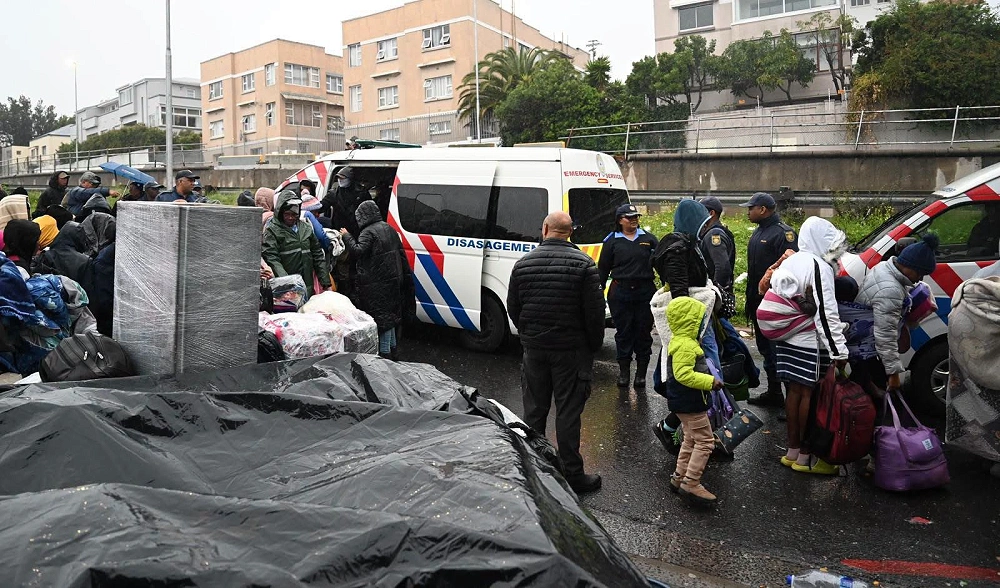
Zimbabwean nationals gather outside the Zimbabwean Consulate in District Six, Cape Town, before being relocated to the Department of Home Affairs Repatriation Centre in Epping. Photo: Ayanda Ndamane / ANA Studios
The city said the Department of Home Affairs Repatriation Centre in Epping Industrial is the only official site for processing applications and is equipped to manage the volume safely and humanely. The unfolding situation has also drawn concern from nearby residents. District Six Ward Councillor Francine Higham said in a statement shared on her WhatsApp channel that she had received many messages from residents expressing concern about the conditions outside the consulate as the situation escalated. "I have received many messages from residents expressing concern about the situation at the Zimbabwean consulate in District Six," she said.
Higham added that the city was working with national authorities and the consulate to ensure an orderly process.
"The city is working closely with the Department of Home Affairs and the Zimbabwean consulate to ensure a safe, orderly and humane process," she said.
She also warned of rising tensions linked to planned migration-related demonstrations scheduled for 30 June. "Let me be clear: xenophobia, intimidation, harassment and violence have no place in South Africa," she said. The relocation followed days of rapidly growing numbers outside the consulate. According to the consulate, Zimbabwean nationals began arriving on 18 June seeking assistance to return home. Numbers increased sharply from 24 June as hundreds more arrived with luggage and bedding, forming an encampment outside the consulate.
Families slept with small children on cold, weather-beaten pavements and in open fields around the area. Buses occasionally transported groups of people to the processing area. By Saturday evening, volunteers had erected marquee tents, though these were insufficient to accommodate the growing crowd. Women and children were prioritised in the limited shelter, while others spent the night under plastic sheets and tarpaulins as the heavy rain continued.
As conditions deteriorated, the Siyafana Sonke Action Committee said civil society had stepped in to fill critical gaps, with humanitarian organisations including the Gift of the Givers, faith groups, and residents providing food, water, blankets, and other essential support.
It said it had submitted time-sensitive requests to the South African government and was "especially urging for safety and safe spaces while committing to continue to do everything in its power to hold the government accountable in the coming days, on June 30th and beyond".
The Siyafana Sonke Action Committee, along with other humanitarian and human rights organisations, has warned of worsening humanitarian conditions due to overcrowding, exposure to cold weather and limited sanitation. Local media and groups on the ground also reported that ongoing rainfall continued to leave children, including infants, exposed to the elements. Among those assisting on the ground was volunteer Ayesha Bagus of Moms for Gaza, who said community support had been overwhelming. "The compassion shown by the Cape Town community has been extraordinary," Bagus said.
She added: "We are relieved that families will now be moved to the Department of Home Affairs Repatriation Centre in Epping Industrial, where they will have access to dignified shelter and be processed more quickly by Home Affairs before returning home."
She also called for a coordinated humanitarian response involving government and civil society. Once processing is completed at Epping, officials will verify identities and complete documentation. They will then arrange transport to the Beitbridge border crossing for the return journey to Zimbabwe. The Department of Home Affairs will oversee transportation onwards following processing.
The city urged residents in Cape Town to avoid the District Six area while operations continue. Meanwhile, a national briefing is expected to take place on Monday at Constitution Hill in Johannesburg. It will bring together more than 160 organisations to address xenophobia, displacement, and humanitarian response capabilities across South Africa.

Join 46,000+ global citizens, corporate executives, and decision-makers who rely on NNA every day for definitive clarity. Enter your email to unlock uncompromised perspective for free.
No thanks, take me back to the home page.We respect your inbox. Unsubscribe in one click, any time.
Three ways to get NNA News the moment it breaks.
Our daily analytical digest breaking down the data driving modern policy and markets.
High-utility situational intelligence delivered directly to your inbox before your first meeting.
The whole network in your pocket, with breaking-news alerts.