
South African doctors warn that xenophobia is fuelling a public health crisis
Monday 29 June 2026 - 03:57pm
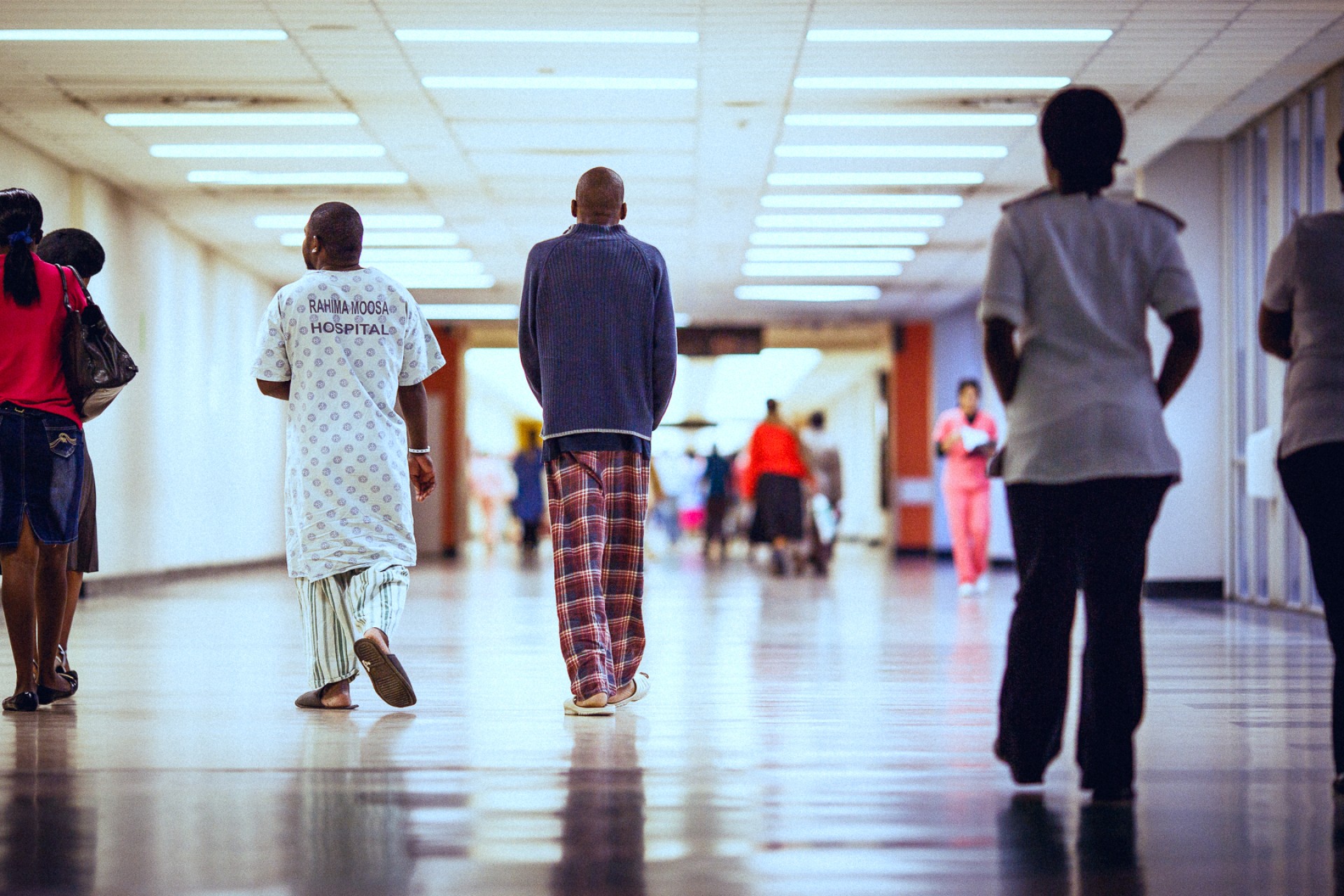
Patients at Rahima Moosa Hospital are moving through corridors. Photo Credit: Rafiq Sarlie, Flickr
NNA News - More than 480 public health professionals across South Africa have warned that rising xenophobia and growing attempts to restrict migrants and refugees from accessing healthcare are fuelling a public health crisis, ahead of an anti-immigrant campaign scheduled for 30 June. In a statement released on Monday, the 481 signatories said that increasing hostility, misinformation and political rhetoric are undermining healthcare access, eroding social cohesion and raising the risk of violence against migrants and refugees.
According to the group, misinformation has become central to normalising xenophobic attitudes and practices. “Much of the hostility directed at migrants is driven by misinformation that goes unchallenged in political discourse and in the media,” the statement said. It added that false narratives about migrants overwhelming hospitals or draining social services have contributed to “conditions for xenophobic groups to block access to health facilities for migrants and refugees, as well as anyone perceived as an outsider".
Amid these tensions, the health professionals said tensions have intensified around an unofficial 30 June deadline promoted by anti-immigrant groups, warning it could escalate into violence. “The arbitrary 30 June 2026 deadline does not provide a lawful or constructive response to the underlying societal challenges of unemployment, service delivery, and public safety,” the statement read. “Rather, this is a dangerous development that could potentially lead to violence targeting African migrants in particular.”
More broadly, the group argued that excluding migrants from healthcare not only violates constitutional protections but also undermines broader public health efforts. To that end, the health professionals referenced a November 2025 Gauteng High Court ruling requiring safe and unhindered access to public healthcare, saying authorities have “largely failed to develop clear, enforceable policies in response".
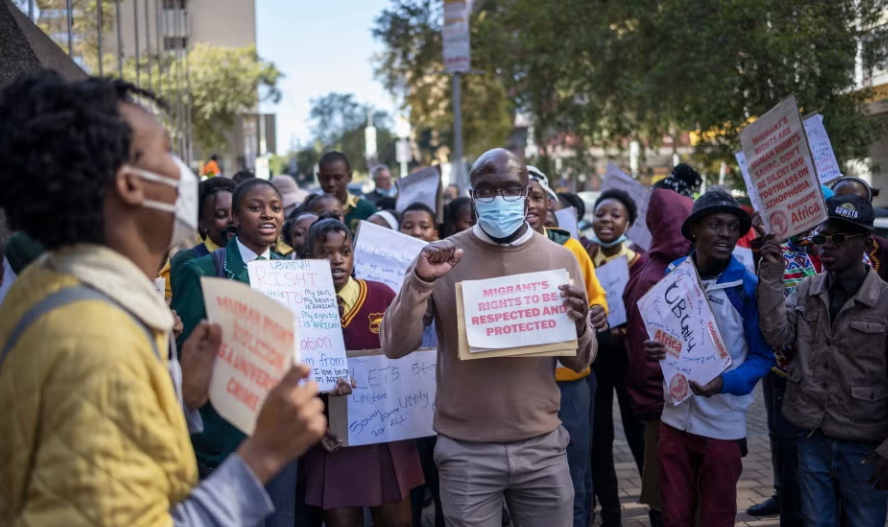
Protesters demonstrate in front of the South African Human Rights Commission (SAHRC) against xenophobia and vigilantism in the country, Johannesburg, during Africa Day, Photo Credit: MICHELE SPATARI/AFP via Getty Images
Challenging claims that migrants are straining the health system, the statement cited research from Médecins Sans Frontières and data from South Africa’s National Department of Health. It said migrants, particularly those without documentation, often delay seeking treatment because of fear of arrest or deportation. “They are more likely to delay seeking care than to overuse it, and often at greater cost to their health and to the health system when they eventually present with advanced illness,” the medical workers added.
The statement also addressed recent remarks by President Cyril Ramaphosa on migration, saying they welcomed warnings against lawlessness but rejected the framing of undocumented migration as a key driver of economic hardship. The medical workers stated that such claims lack support from available evidence and risk reinforcing the narrative that fuels the current climate of fear.
The health professionals further explained that South Africa was home to about 2.4 million international migrants in 2022, representing roughly 3.9 per cent of the population, most of them from countries in the Southern African Development Community, including Zimbabwe, Mozambique, and Lesotho. They added that frustration over unemployment, poor service delivery and inequality has increasingly been redirected towards migrants and refugees since the early 1990s. “Increasing anger and frustration with unemployment, poor service delivery and a sense of abandonment by government is channelled towards migrants and refugees, driven by misinformation,” the statement said.
According to the group, “The cause of this crisis is not foreign nationals but instead lies in state failure, corruption, and compounding inequality.” In response, the group called on authorities to strengthen protection for migrants, counter misinformation, enforce clear healthcare access policies, and ensure dignified treatment regardless of documentation status. At the same time, they warned that xenophobia should be treated not only as a social issue but also as a public health emergency. “Violence, intimidation and exclusion cause direct physical and psychological harm, disrupt access to healthcare, undermine disease prevention and treatment programmes, and weaken social cohesion,” the statement highlighted.