
The World Bank recommends extending South Africa's SEZ tax incentive nationwide
Tuesday 07 July 2026 - 04:30pm
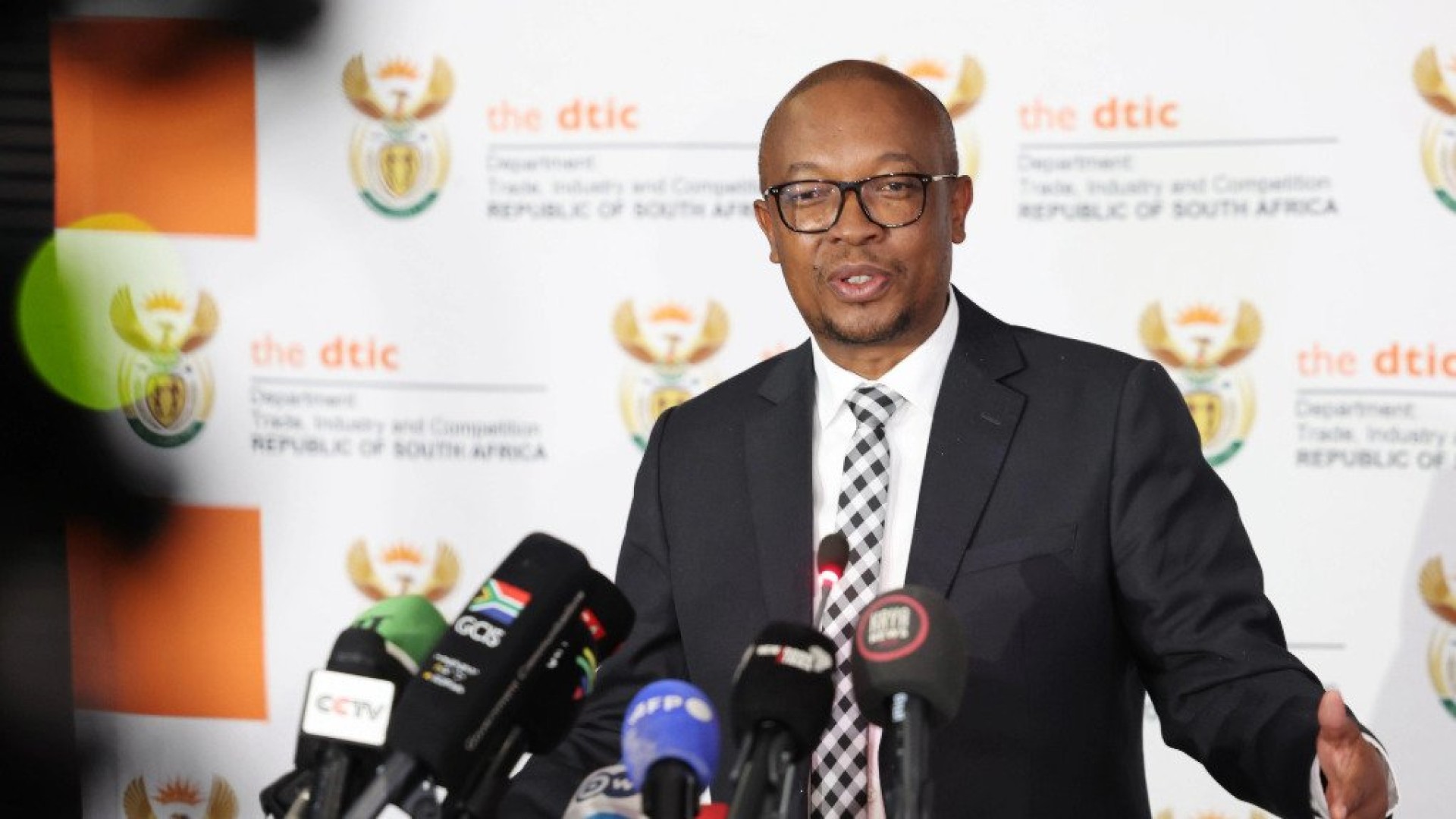
South Africa's Minister of Trade, Industry and Competition, Parks Tau, addresses a media briefing hosted by the Department of Trade, Industry and Competition (DTIC). Photo Credit: DTIC
NNA News - The World Bank has recommended that South Africa extend its 15% corporate income tax incentive to all special economic zones (SEZs), arguing that the country already has the infrastructure, legal framework, and institutional capacity needed to build a world-class SEZ programme.
South Africa’s Minister of Trade, Industry and Competition, Parks Tau, welcomed the findings in a statement issued by his office and the Department of Trade, Industry and Competition (DTIC) on Monday, saying the assessment showed progress in implementing South Africa’s SEZ programme. “As government, we are encouraged by the outcomes of this study. It has confirmed the impressive progress that we have achieved in the roll-out of the programme, as well as the hugely positive impact that it has had on the economy of the country in general and the provinces where they are located in particular,” Tau said.
A Special Economic Zone (SEZ) is a geographically designated area where different laws and business rules apply compared with the rest of the country. Governments use SEZs to attract investment, boost exports, and create jobs by offering incentives such as tax relief, customs benefits, and improved infrastructure. South Africa established the SEZ programme to replace the earlier Industrial Development Zones (IDZs) and broaden the focus of industrialisation. The programme was formalised through the Special Economic Zones Act No. 16 of 2011 and is aligned with the National Industrial Policy Framework and the New Growth Path.
Under the Act, SEZs can take several forms. An Industrial Development Zone is a purpose-built estate focused on value-added and export-oriented manufacturing and services. A free port is a duty-free area adjacent to a port for the storage, repackaging, or processing of imported goods. A Free Trade Zone keeps the focus on developing a specific sector or industry that is primarily aimed at export markets. The World Bank assessment examined South Africa’s SEZ programme through surveys across all 12 zones, interviews with provincial government representatives and businesses operating within the zones, and administrative data from government institutions.
The assessment also drew on information from the DTIC, the South African Revenue Service (SARS), National Treasury, and international case studies from India, China, Poland, the United Arab Emirates, and Jordan. According to the assessment, South Africa has the infrastructure, legal framework, and institutional capacity required to operate a world-class SEZ programme.
The World Bank headquarters in Washington, D.C. The institution has recommended that South Africa expand its 15% corporate income tax incentive to all Special Economic Zones (SEZs). Photo Credit: World Bank
The report also highlighted the economic contribution of existing zones, with the DTIC reporting that operational SEZs have generated R14.8 billion in revenue and created more than 30 000 jobs in the country. “The fact that R14.8 billion in revenue has been generated by operational SEZs, and that more than 30 000 jobs have been created, speaks volumes about the capacity and potential of the programme to contribute immensely to the country’s economic growth, transformation, and industrialisation,” Tau added.
DTIC said the findings will guide the government's review of the next phase of SEZ development under the Revised Special Economic Zones Implementation Model, which forms part of the Spatial Industrial Development Strategy. “The study has identified various areas for improvement and recommendations, which we need to thoroughly analyse and consider implementing in line with the Revised Special Economic Zones Implementation Model,” he explained.
The proposed measures include extending the 15% corporate income tax rate to all SEZs, introducing a five-year intervention framework for underperforming zones, and establishing private-sector industrial parks within SEZs using the Dube TradePort model. The report also suggests making official agreements for municipal services, accelerating mixed-use developments for small and medium-sized businesses, and setting up a special fund for SEZs with different financing options for infrastructure and buildings.
The recommendations come as South Africa continues to expand its SEZ network. The DTIC reported that the country has 13 designated SEZs across eight provinces, supporting industries including automotive manufacturing, renewable energy, agro-processing, pharmaceuticals, and petrochemicals. Nine SEZs are currently operational: Coega, East London, Richards Bay, Dube TradePort, Maluti-a-Phofung, Saldanha Bay, OR Tambo, Atlantis, and Tshwane Automotive.
The newest zone, the Fetakgomo Tubatse SEZ in Limpopo, focuses on mining, mineral beneficiation, energy, agriculture, and automotive production. The operational zones have attracted 224 investors and secured more than R31.7 billion in committed investment, supporting 28 821 permanent jobs, according to DTIC. For the current financial year, Tau said the department has already developed several interventions, some of which align with the World Bank’s recommendations. “We have already designed various interventions that we have prioritised for this financial year, some of which are in line with the study’s recommendations. These are going to result in more SEZs being designated, more investments flowing into the SEZs, more jobs being created, and more small businesses being created in and around the SEZs,” Tau stated.