The newsletter of the facts
E-News
Subscribe to E-News
Our daily analytical digest breaking down the data driving modern policy and markets.

Tuesday 07 July 2026 - 08:54am
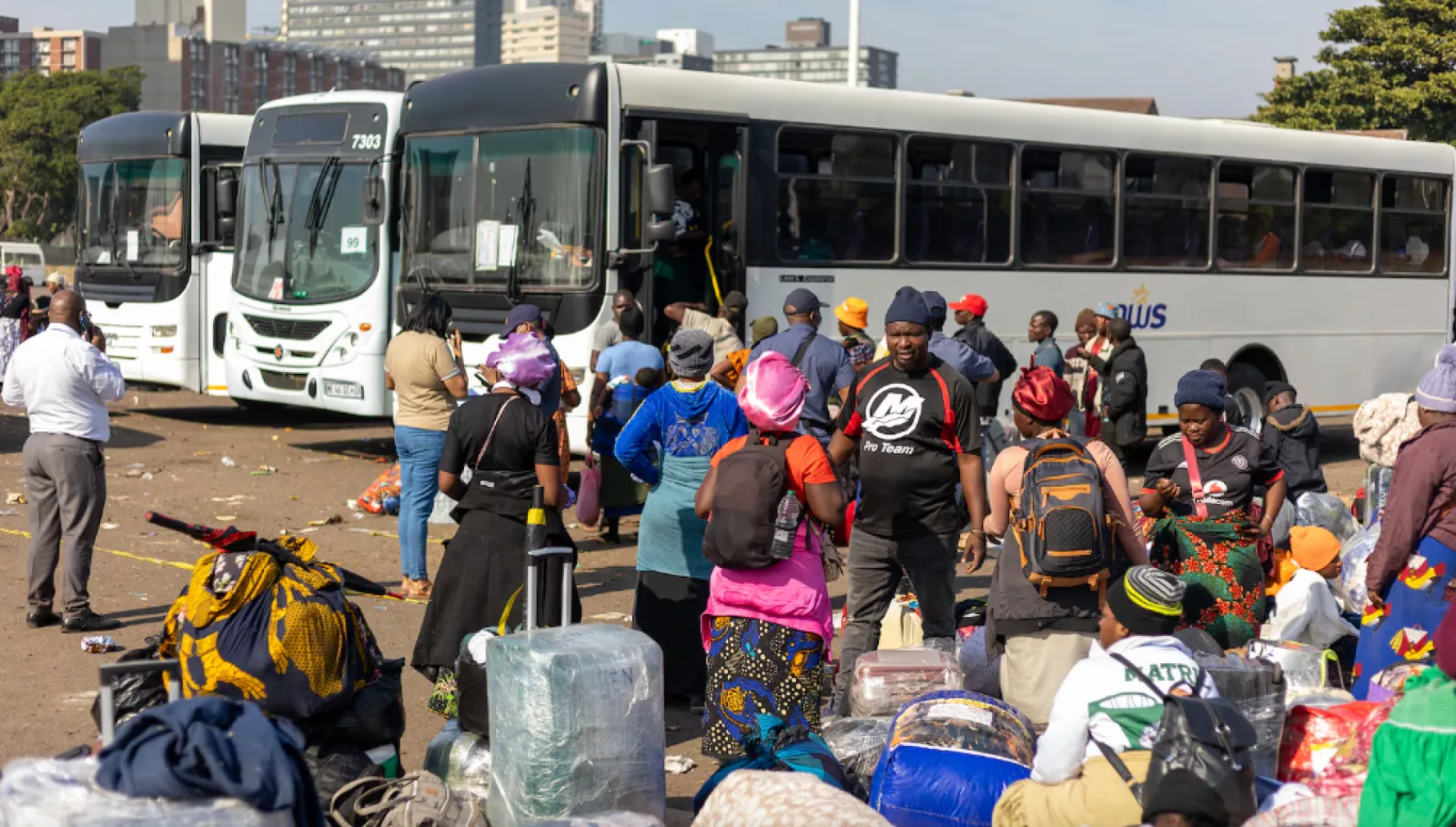
Buses transport Malawian nationals from temporary repatriation centres in Limpopo and Gauteng as South African authorities facilitate voluntary repatriation operations. Photo Credit: Sandile Ndlovu
NNA News - A 47-year-old Malawian man died on Sunday after collapsing on a bus carrying Malawians being repatriated from a temporary centre in Limpopo, South African authorities confirmed on Monday. The death comes as the Malawi High Commission in Pretoria faces mounting criticism from South African civil society groups and aid workers. They accuse the mission of abandoning Malawians displaced by xenophobic violence and failing to assist those seeking to return home voluntarily.
According to a statement issued by the South African government's Inter-Ministerial Committee on Migration (IMC), the man was travelling on a bus bound for Malawi after departing the Musina Proof Plaas Temporary Repatriation Centre in the Vhembe district. "Approximately 10 kilometres from the centre, the passenger tragically passed on, prompting the driver to turn the bus around and return to the processing centre," the IMC said.
Albert Matsaung, head of the Department of Home Affairs in Limpopo, told reporters the bus had been travelling to the Beitbridge border post. The driver turned back. "The person passed away while they were on their way to the port of entry; it did not happen in the centre," Matsaung explained. The South African Police Service (SAPS) in Limpopo spokesperson, Colonel Malesela Ledwaba, revealed that the driver returned after the man told fellow passengers he was feeling unwell about 7 km from the centre. "The bus driver immediately turned the bus around and returned to the temporary repatriation centre to seek medical assistance for the man," Ledwaba added.
Officials who interviewed passengers said the man had complained of feeling hot shortly before collapsing. "The information that we received from the bus driver and from the people that were with the deceased person is that he just said, 'I'm feeling hot; temperatures are up.' Then he took off his shirt, and from there he collapsed," Matsaung explained.
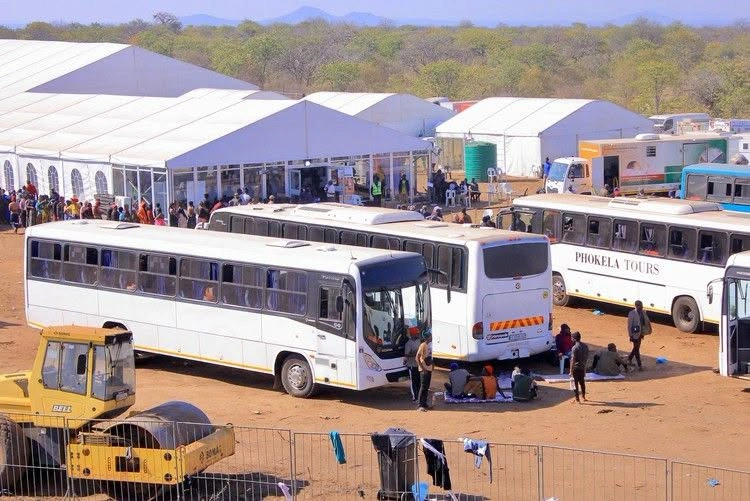
Buses transport Malawian nationals from temporary repatriation centres in Limpopo and Gauteng as South African authorities facilitate voluntary repatriation operations. Photo Credit: Inter-Ministerial Committee on Migration (IMC)
When the bus arrived back at the centre, paramedics found that the man was not breathing. They certified him dead at the scene. Ledwaba said police had opened an inquest docket. Investigations were continuing. "Investigations are under way to determine the circumstances surrounding the death. The exact cause of death will be determined through a post-mortem examination. There are no indications of foul play at this stage," Ledwaba told journalists.
After forensic procedures were completed, police released the bus shortly after midnight. This allowed the remaining passengers to continue their journey, the IMC said. The committee added that Malawian authorities would be informed through diplomatic channels. "Government wishes to reassure the family of the deceased, the Malawian authorities and the public that all necessary processes were undertaken with the utmost professionalism, dignity and respect for the deceased," the committee said.
South African Deputy Government Spokesperson William Baloyi also conveyed the government's condolences. "On behalf of the government and the people of South Africa, we convey our heartfelt condolences to the bereaved family, loved ones, fellow travellers and the government and people of the Republic of Malawi during this difficult time," Baloyi said.
The incident has intensified scrutiny of the Malawi High Commission in Pretoria over its handling of Malawians seeking assistance. An open letter was published on Saturday. It was addressed to Malawian High Commissioner to South Africa Stella Chiripo Ndau. South African civil society groups and aid workers said, "Over 100 people a day have presented themselves at the High Commission: men, women, the elderly, and babies barely old enough to hold up their heads."
The groups accused the mission of showing "tolerance without care: permission to stay and a locked door between them and any warm, dry space". They alleged that people had been forced to sleep outside in freezing night-time temperatures that dropped below zero. "An open-ended basement is not a solution; it is an admission. People are sleeping on bare concrete, with no bedding, no privacy, and no real protection from the cold. Over 100 people are reportedly sharing a single toilet," the signatories wrote.
According to the South African Islamic Medical Association, respiratory infections were "rising daily among those sheltering there". "Every person who falls sick in that basement is sick because of a decision your Commission made and continues to make," the groups wrote. They called for "immediate, full access to indoor, heated facilities", "adequate sanitation", "basic bedding and comfort items", "on-site medical triage", and "a clear, funded repatriation and support plan". The letter concluded: "We will not let the matter go quietly."

Join 46,000+ global citizens, corporate executives, and decision-makers who rely on NNA every day for definitive clarity. Enter your email to unlock uncompromised perspective for free.
No thanks, take me back to the home page.We respect your inbox. Unsubscribe in one click, any time.
Three ways to get NNA News the moment it breaks.
Our daily analytical digest breaking down the data driving modern policy and markets.
High-utility situational intelligence delivered directly to your inbox before your first meeting.
The whole network in your pocket, with breaking-news alerts.