
Brazilian diplomacy earns 88% approval among foreign policy experts
Tuesday 07 July 2026 - 09:15am
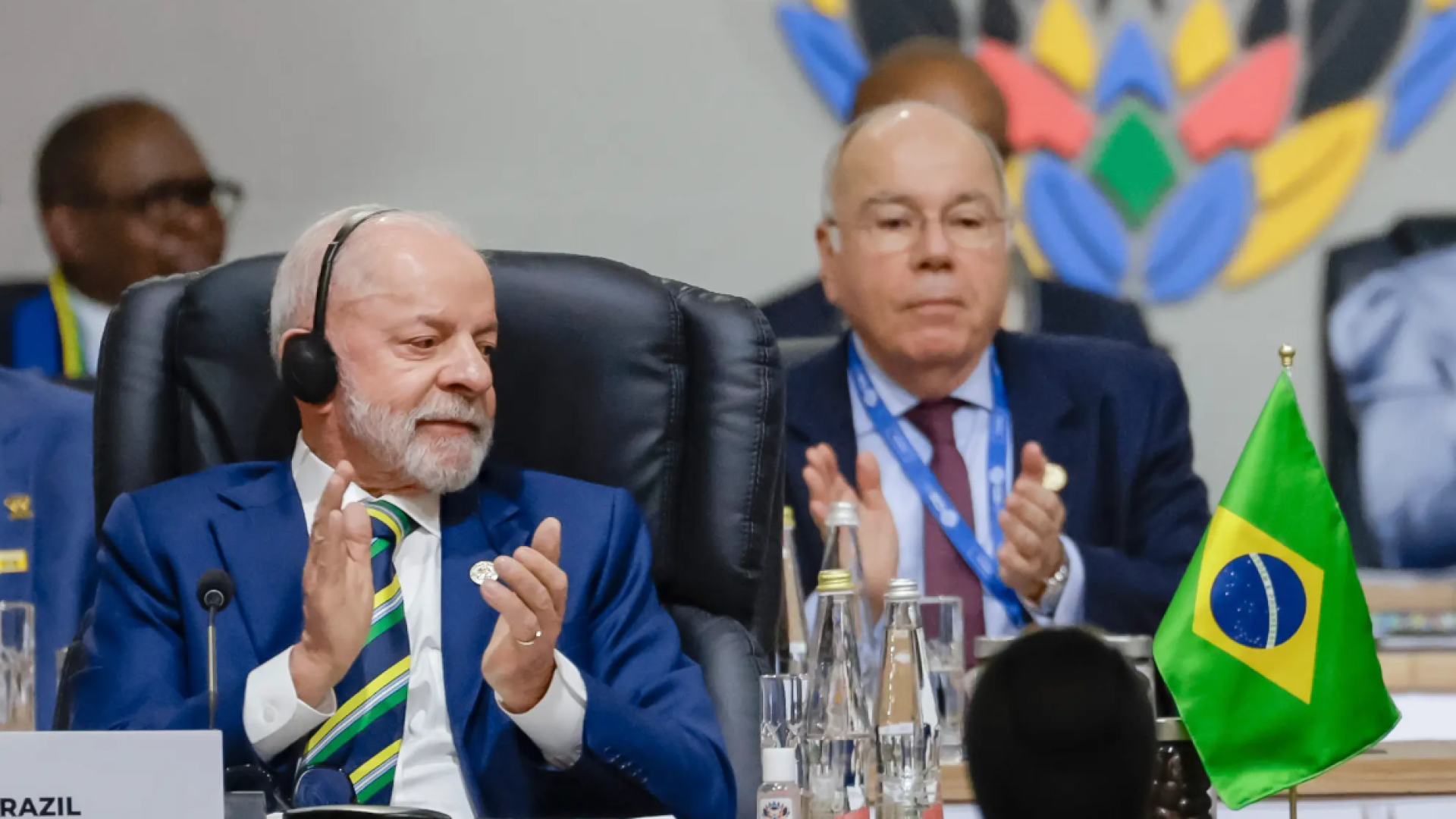
President Luiz Inácio Lula da Silva and Foreign Minister Mauro Vieira during the G20 Summit in South Africa – November 22, 2025. Credit: Ricardo Stuckert/PR
NNA News – Brazil's foreign policy has reached its highest approval rating among foreign policy specialists since the launch of the Emerging Middle Powers survey series, according to a report released on Monday. The findings were first reported by journalist Miriam Leitão's blog in O Globo and cited by Brasil 247. The results were published as the Office of the United States Trade Representative (USTR) begins public hearings in Washington on a proposal to impose an additional 25 percent tariff on Brazilian products.
According to the survey, 88 percent of foreign policy experts positively assess Brazil's international engagement. This marks a significant reversal from 2023, when 69 percent of respondents held a negative view of the country's diplomatic performance. The findings are part of the third edition of the *Emerging Middle Powers* report, which gathered specialists from Brazil, Germany, India, Indonesia and South Africa to evaluate their countries' foreign policies and the broader geopolitical landscape.
During the presentation of the results in Berlin, Carlos Frederico de Souza Coelho, a professor of International Relations at PUC-Rio and Brazil's Army Command and General Staff School (Eceme), highlighted another key finding. According to the survey, 88 percent of Brazilian experts view the influence of the United States on the international stage negatively. This figure is above the average of 80 percent recorded across the five participating countries.
Despite this assessment, the survey also indicates that specialists continue to regard the United States as a strategic partner for Brazil, suggesting that criticism of Washington's global role does not prevent recognition of the importance of bilateral relations. Before the release of the report, Coelho told Miriam Leitão's blog that Brazil had responded positively to trade pressure from Washington by expanding its international partnerships.
He noted that the Mercosur-European Union agreement had been concluded, agreements with EFTA and Singapore had been submitted to Congress, and negotiations with Canada remain underway. According to Coelho, the share of Brazilian exports covered by tariff preferences increased from 12 percent to 31 percent, representing the largest expansion in the country's history. The comments come as the USTR conducts public consultations on the proposed 25 percent tariff on Brazilian goods, a measure that could affect several export sectors.
The report also points to growing support among experts for a policy of non-alignment. According to the survey, there is an increasing perception that countries such as Brazil, South Africa, India and Indonesia seek to preserve greater autonomy amid geopolitical competition between major powers rather than automatically aligning with one international bloc.
Coelho said that, in Brazil's case, non-alignment should be understood as a strategy of maintaining diplomatic flexibility rather than neutrality. According to him, the objective is to preserve the country's freedom to make decisions on a case-by-case basis in line with its national interests.