Prof Pumela Msweli Calls for Stronger China–Africa Collaboration to Unlock Intra-African Trade
Saturday 15 November 2025 - 09:51pm
UNISA SBL's Executive Dean & CEO Prof Pumela Msweli, at the Global South Media and Think Tank Forum’s China-Africa Partner Conference, Johannesburg, 13 November 2025.
Image: NNA TV+
University of South Africa's School of Business Leadership (UNISA SBL) academic leader Professor Pumela Msweli has called for deeper cooperation between Africa and China, emphasising that the continent’s greatest challenges and opportunities lie in its ability to strengthen intra-African trade and develop the leadership and competencies required for a new global order.
Speaking at the Global South Media and Think Tank Forum in Johannesburg, Professor Msweli said the partnership between Africa and China remains essential for addressing the continent’s most persistent structural barriers. She described the relationship as one grounded not only in diplomacy but in practical support, particularly in infrastructure and development financing.
“What a privilege to be in this gathering at a time when the world is rethinking unilateralism,” Msweli said. “Under the theme of this conference, we are challenged to reflect on how the Global South can collectively shape a fairer, inclusive future.”
The Executive Dean focused her address on three key areas: Africa’s internal trade constraints, the value of its partnership with China, and the urgent need for leadership and soft-power development on the continent.
According to the professor, one of Africa’s most pressing challenges is its low levels of intra-African trade. Despite the establishment of the African Continental Free Trade Area (AfCFTA), the continent still trades more with external regions than with other African countries. “Africa trades with itself at less than 20%. Even with tariffs removed, the real obstacles remain non-tariff barriers,” she said.
She explained that these barriers are rooted in Africa’s historical fragmentation. “We were geographically divided. That legacy still shapes our inability to collaborate effectively. Regional economic communities such as the East African Community are promising, but more work is required.”
The professor highlighted China’s role in addressing these structural barriers, particularly through the Belt and Road Initiative, which has invested trillions of dollars into African infrastructure. “China is not just talking, they are putting money on the table,” she said, adding that such investments help Africa overcome its biggest hurdle: poor connectivity and infrastructure.
However, she stressed that Africa must also recognise what it brings to the partnership. Beyond natural resources, the continent holds vast potential through its coastlines, which are critical to the digital Silk Road and future trade routes. But Africa lacks what Msweli called “participative competence.”
“Do we have the competencies to work with the digital technologies that will connect the Global South?” she asked. “This is the soft-power Africa must urgently build.”
In her argument, she emphasised that Africa’s greatest challenge is leadership - the ability to navigate geopolitical shifts, harness resources, and build institutional capacity. She proposed that Africa must reimagine cultural exchange with China, drawing lessons from China’s developmental path.
She referenced Confucian values such as integrity and discipline as key factors in China’s anti-corruption efforts. She pointed to China’s success in lifting hundreds of millions of people out of poverty through special economic zones and integrated rural–urban development.
“These are lessons we can learn and adapt,” she said. “No one can do the soft-power work for us - the leadership, the competence building, the institutional strengthening. That is our task.”
In addition, she acknowledged that academic institutions must partner more proactively with China to document and study past collaboration projects, generating research that can inform future governance and development strategies.
“South Africa, through UNISA and under the leadership of Vice-Chancellor Professor Puleng LenkaBula, has already prioritised maritime studies as a catalytic niche area,” she said, emphasising Africa’s 41,000-kilometre coastline as a strategic asset.
She concluded by reaffirming that Africa–China cooperation remains central to building a more balanced global order. “We have the resources. We have the partners. What remains is for us to develop the leadership capable of navigating this new era for the Global South.”
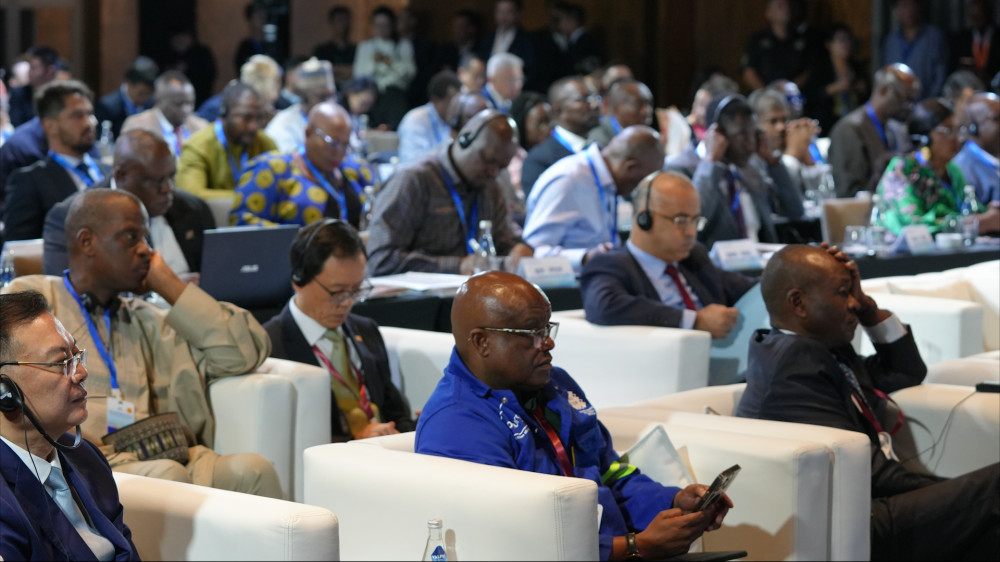
The Global South Media and Think Tank Forum: China-Africa Partner Conference was co-hosted by Independent Media and Xinhua News Agency and attended by senior government officials, media leaders, academics, and representatives from partner institutions from across Africa and China. | NNA TV+ Report