
Zambian youth chasing railway dreams in China
Monday 22 December 2025 - 06:00am
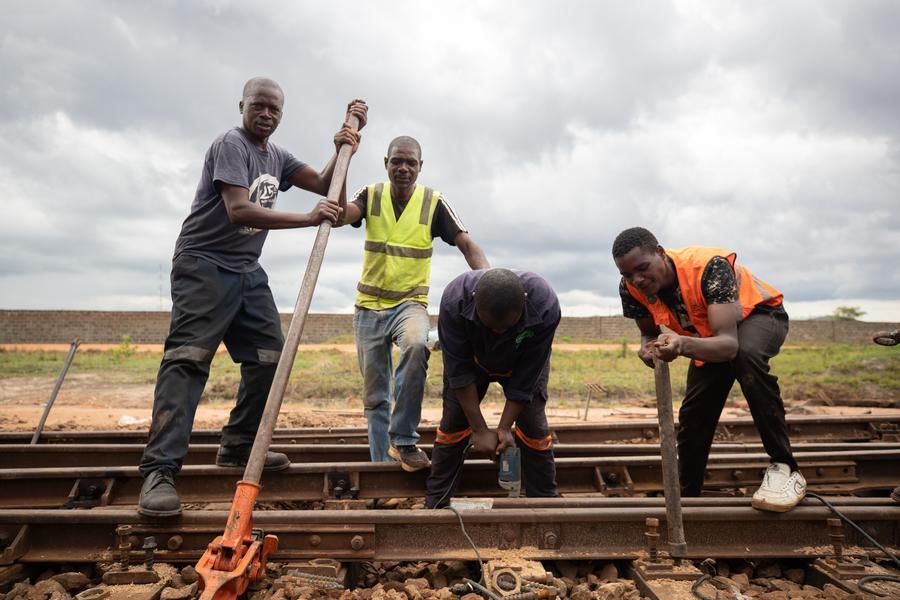
When Michael Njovu, a 26-year-old Zambian postgraduate student in China’s Hunan Province, learned that the Tanzania-Zambia Railway (TAZARA) revitalization project had officially been launched in his homeland, the news resonated deeply.
Currently pursuing a master’s degree in transportation engineering at Central South University, Njovu described the project as both historic and personal. Constructed in the 1970s, the TAZARA railway has long served as a critical trade corridor for landlocked Zambia, enabling exports through Tanzania’s ports.
“This railway has been vital for goods export and trade in Zambia,” Njovu said. “Its revitalization will also create jobs and new opportunities for local communities.”
Once upgraded, the railway is expected to significantly enhance regional connectivity by linking southern and eastern African transport networks, including railways, highways, and ports. Projected improvements include an annual freight capacity of 2.4 million tonnes and delivery times reduced by nearly two-thirds.
The TAZARA railway, which stretches from Dar es Salaam to New Kapiri Mposhi in Zambia, was originally built with interest-free loans from China and officially handed over to the governments of Tanzania and Zambia on July 14, 1976. Measuring 1,860.54 kilometres, the line stands as one of the most ambitious infrastructure projects undertaken in post-independence Africa.
At New Kapiri Mposhi station, a monument marking the railway’s precise length commemorates the work of more than 50,000 Chinese engineers and construction workers who laboured for over five years alongside Tanzanian and Zambian counterparts. Among them were alumni from Njovu’s university, then known as the Changsha Railway Institute.
Established in 2000 through the merger of several institutions, Central South University inherited a legacy of railway engineering expertise. In the 1970s, faculty members and students were dispatched to Africa to support TAZARA’s construction, conducting extensive surveys under challenging conditions in malaria-prone regions.
“These stories, combined with China’s technological advancement, motivated me to study here,” Njovu said.
Njovu is enrolled in a specialised program aimed at equipping students from developing countries with skills in high-speed rail and electric multiple unit technology. Since 2016, the program has trained 243 students from more than 20 countries across Africa, with the majority of graduates returning home to contribute to national development.
According to the university, around 90 percent of its African alumni since 1996 have taken this path — a trajectory Njovu hopes to follow. Upon completing his studies in 2026, he plans to return to Zambia and contribute directly to the country’s railway sector.
“Contributing to my hometown’s railway development is my dream,” he said. “I’m fortunate to be learning advanced techniques that I can take back home.” | NNA TV+ / Xinhwa