The newsletter of the facts
E-News
Subscribe to E-News
Our daily analytical digest breaking down the data driving modern policy and markets.

Saturday 14 February 2026 - 12:00pm
By Sello Lentsoane
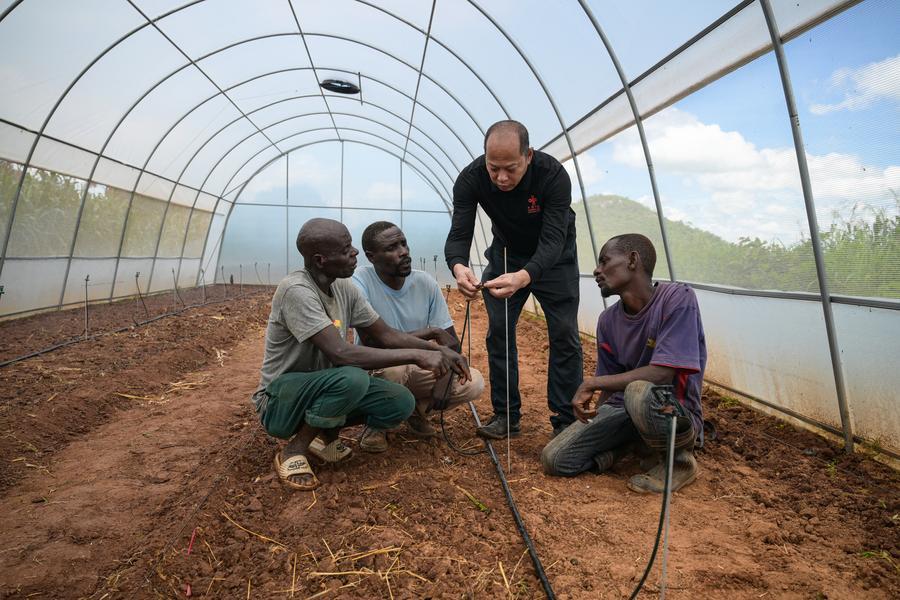
Zindi Village in Zimbabwe’s Mashonaland Central Province is undergoing significant agricultural transformation following the launch of a China-aided agricultural demonstration project in 2024.
Located in Shamva District in northern Zimbabwe, the village has long faced chronic water shortages and unreliable electricity, conditions that constrained subsistence farming and deepened vulnerability to recurring drought.
“When the drought came, there were only a few things to harvest,” said Weveson Zindi, head of the village, describing the hardships residents had previously faced.
The shift began when a group of Chinese agricultural experts arrived under a cooperation framework between China and Zimbabwe. After assessing local challenges, the team drilled boreholes, installed solar-powered pumps and pipelines, and established an irrigation system capable of supplying 55,000 litres of water daily.
“With the boreholes, we can fetch water within our houses, and with the irrigation system, we can water our gardens,” Zindi said, adding that reliable water access has revived previously unproductive land.
Beyond water infrastructure, the experts introduced the scientific use of organic fertilizers and soil improvement techniques, helping farmers gradually convert sandy soil into productive farmland. Training programs were also implemented to equip residents with skills in crop management, mechanised farming, and equipment maintenance.
“We focused on three key areas here, namely staple crops, vegetable production, and livestock farming. More importantly, we have been imparting skills and knowledge to them, enabling them to follow their own development path,” said Zhao Ke, head of the fourth batch of Chinese agricultural experts in Zimbabwe.
Zhao noted that rural revitalisation requires more than physical infrastructure. “It requires new approaches to management and community participation,” he said, adding that long-term sustainability depends on local ownership of skills and knowledge.
Residents say the impact is already visible. “We have learned a lot from the Chinese. They taught us a lot about farming. Now we can plant different vegetables such as green pepper, chili, and sesame, and we get profits,” said Handna Gwanzu, a villager.
For Gwanzu, the benefits extend beyond improved harvests. Increased income has enabled families to pay school fees and strengthened confidence in Zimbabwe’s agricultural future.
“We appreciated the experience from Chinese experts, and we believe more and more local farmers in the country will benefit from that,” she added.
The Zindi project aligns with broader efforts under the China-Zimbabwe agricultural cooperation to enhance food security, build rural resilience, and modernise smallholder farming systems in drought-prone areas.

Join 46,000+ global citizens, corporate executives, and decision-makers who rely on NNA every day for definitive clarity. Enter your email to unlock uncompromised perspective for free.
No thanks, take me back to the home page.We respect your inbox. Unsubscribe in one click, any time.
Three ways to get NNA News the moment it breaks.
Our daily analytical digest breaking down the data driving modern policy and markets.
High-utility situational intelligence delivered directly to your inbox before your first meeting.
The whole network in your pocket, with breaking-news alerts.