
UN mission chief meets M23 leaders to discuss ceasefire monitoring
Saturday 14 February 2026 - 12:00pm
By Sello Lentsoane
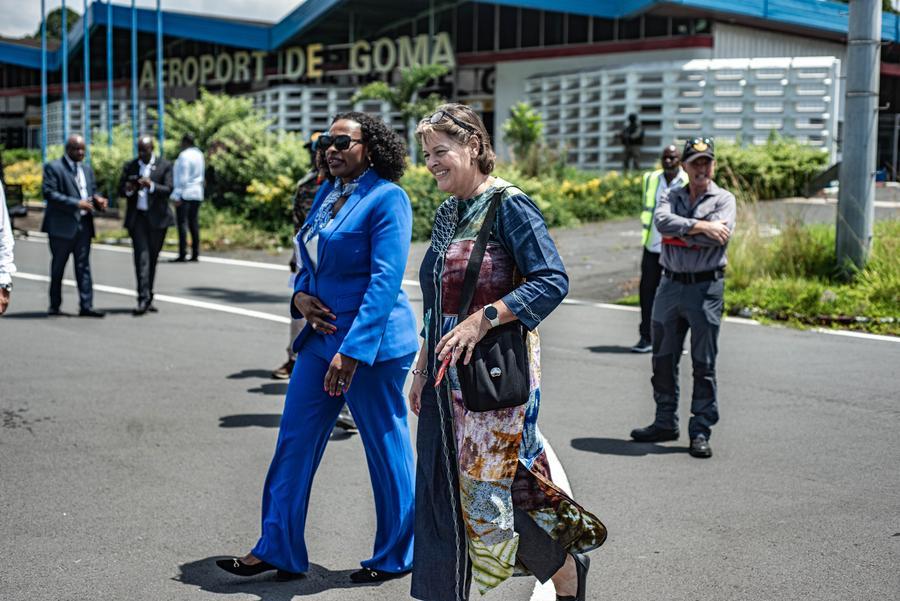
Vivian van de Perre, acting head of the United Nations Organization Stabilization Mission in the Democratic Republic of the Congo (MONUSCO), met leaders of the March 23 Movement (M23) in Goma on Friday to discuss the operationalization of a ceasefire monitoring mechanism in eastern Democratic Republic of the Congo.
The visit comes amid renewed diplomatic efforts to stabilize the country’s conflict-affected east. Van de Perre arrived in North Kivu’s provincial capital by helicopter on Thursday, marking one of the first high-level UN engagements in Goma since the city was seized by M23 forces in January 2025.
Following talks with Corneille Nangaa, head of the Congo River Alliance (AFC), a politico-military coalition aligned with M23, the UN official said discussions centered on “the concrete implementation of the ceasefire monitoring and verification mechanism in line with the agreement signed by the AFC, M23 and the government of the DRC” under the Doha process.
“It is essential that commitments made in this agreement quickly translate into clear, credible and verifiable operational arrangements on the ground,” van de Perre said. She added that MONUSCO is mandated by the United Nations Security Council to support the implementation of a permanent ceasefire and participate in verification efforts.
She emphasized that MONUSCO’s engagement would be phased and conditional upon confirmed security guarantees for UN personnel and assets, noting that all actions would remain strictly within its Security Council mandate.
Speaking to the press on behalf of the AFC M23, senior official Benjamin Mbonimpa welcomed the UN’s involvement, stating that the mission was expected to provide “logistical assistance” within the ceasefire verification framework. He said UN personnel would enjoy full security in areas under AFC M23 control, while declining responsibility for zones outside its authority.
Mbonimpa also said the group had “not been informed or invited” regarding the ceasefire proposed by Angola, accusing Kinshasa of repeated ceasefire violations.
In a separate statement issued Friday, the Congolese presidency said it had accepted the principle of a ceasefire proposed by Angola “in a spirit of responsibility and de-escalation” aimed at pursuing a peaceful resolution to the conflict. The government reaffirmed its commitment to regional stability and a return to lasting peace, though it has not clarified whether it agrees to the proposed implementation date of February 18.
Angola, which has served as a key mediator in the DRC crisis since 2022, announced earlier this week that a ceasefire between Kinshasa and M23 could take effect on February 18, pending formal public acceptance by both parties.
The M23 seized Goma in January 2025 and later captured Bukavu, the capital of South Kivu Province. In recent weeks, clashes have also been reported near Minembwe in South Kivu, according to local sources, underscoring the fragility of the current security environment.