The newsletter of the facts
E-News
Subscribe to E-News
Our daily analytical digest breaking down the data driving modern policy and markets.

Tuesday 09 June 2026 - 02:29pm
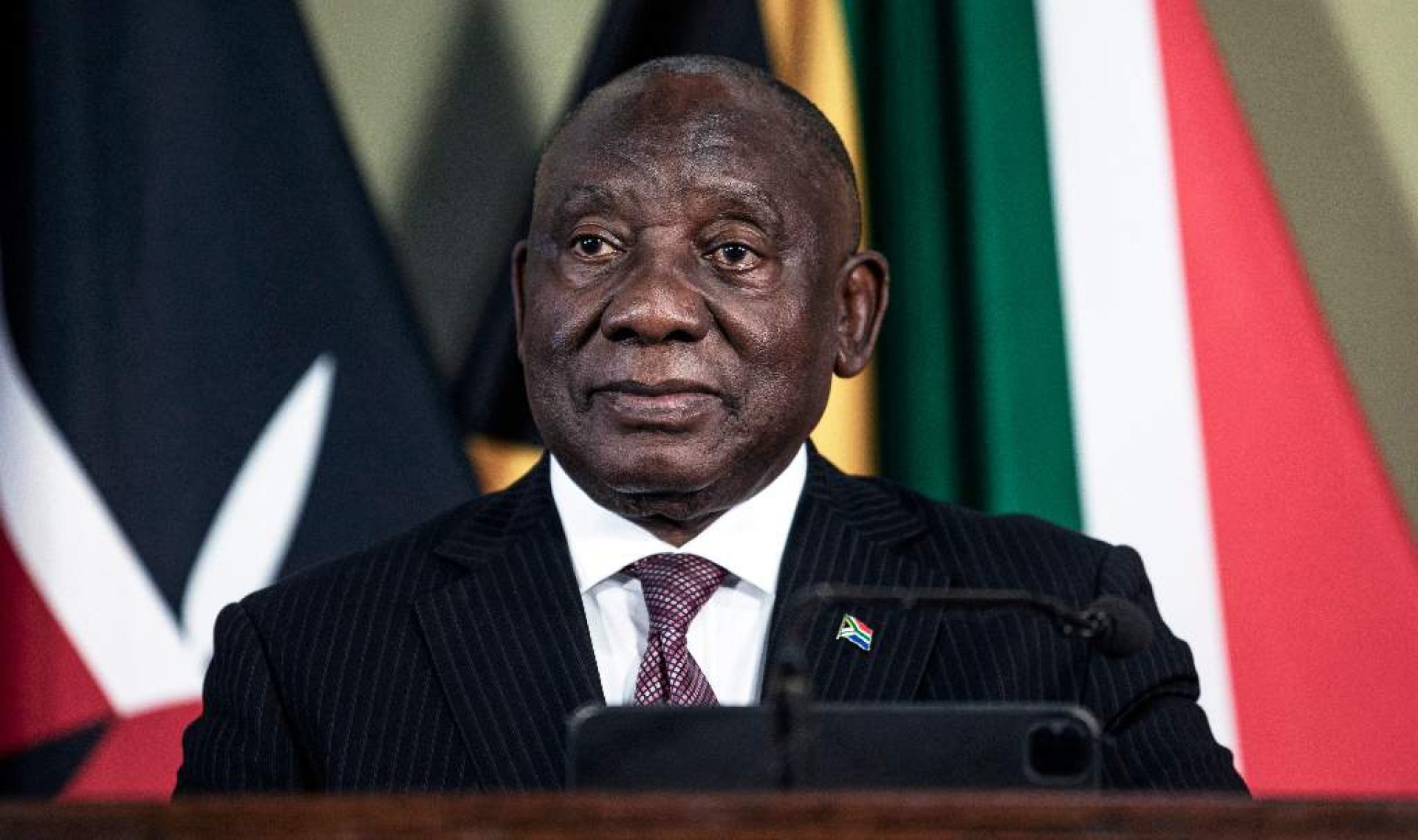
Photo Credit: Per-anders Petterson Getty Images
NNA News - South African political parties are divided over President Cyril Ramaphosa’s address on illegal immigration, with the uMkhonto we Sizwe Party confirming it will join a protest march in Durban this week, while other opposition parties dismissed his proposals as lacking detail and political will. Ramaphosa spoke to the nation on Monday evening after community-led movements and opposition parties stepped up calls for stricter enforcement of immigration laws. He acknowledged public concern over undocumented migration, foreign-owned businesses in townships, crime, unemployment and pressure on service delivery, but announced no new legislation.
The MKP, led by former president Jacob Zuma, said it would take part in a Durban march on Wednesday, 10 June 2026, alongside anti-immigration group March and March. In an 8 June press release, March and March stated it had invited civic movements to join the march, which will start at 09h00 at Curries Fountain Stadium. “We are calling upon all our members to join the march on the 10th of June 2026. Let’s reclaim our city,” the group said.
A second march is planned for Cape Town on 16 June. A flyer circulating on social media lists the starting point as the Mandela Glasses in Sea Point. NNA NEWS has not independently verified whether a permit has been granted. MKP Chief Whip Philasande Mkhize told reporters the party wanted existing laws applied consistently. “South Africa has immigration laws, and they must be enforced properly,” Mkhize said.
The Inkatha Freedom Party called the situation a national crisis. IFP national spokesperson Mkhuleko Hlengwa stated that there had been a lack of political will to address the issue. “Individuals who are found to be in the country illegally should be returned to their countries of origin,” Hlengwa said. The Economic Freedom Fighters rejected Ramaphosa’s address. EFF MP Sam Matiase argued the president had offered no solution to the immigration crisis. “The government has been largely indifferent while attacks against foreign nationals continue in various parts of the country,” Matiase said. “The president is only now responding because of pressure from the ground, not because of a genuine plan.”
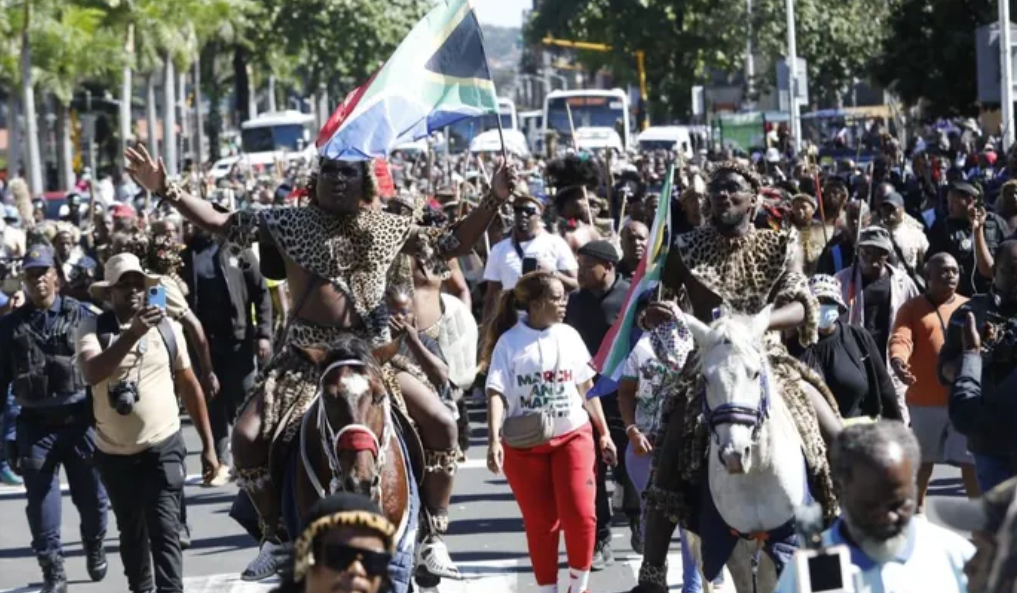
Members of the March and March movement took to the streets in recent demonstrations, drawing attention and controversy over their rhetoric and the broader debate on immigration, crime, and social cohesion in South Africa. Image: Doctor Ngcobo / IOL
March and March founder Jacinta Ngobese-Zuma welcomed Ramaphosa’s acknowledgement of problems in the informal economy and labour market, but questioned whether his proposals could be implemented. “I do want to acknowledge that we are happy that he’s acknowledged some of the things, like foreign nationals operating township businesses, criminal activity, and the impact on the labour market,” she said. However, Ngobese-Zuma added: “I don’t think the president was properly briefed… Some of the things, if not all of them, that he said are not going to be implementable.”
In its 8 June release, March and March also demanded that the township economy be “returned to its rightful owners” and that municipalities produce within 14 days a plan to “reclaim” government buildings allegedly occupied by illegal occupants. The group cited the Durban CBD, saying it “has been hijacked by illegal immigrants and criminal syndicates led by foreign nationals from Somalia, Pakistan and Nigeria”.
The African National Congress defended the president’s approach. ANC spokesperson Mahlengi Bhengu-Motsiri noted Ramaphosa was trying to balance different viewpoints while responding to public concerns.
“The president is actually really speaking to the hearts and minds of South Africans and is trying to appeal to everyone,” Bhengu-Motsiri said.
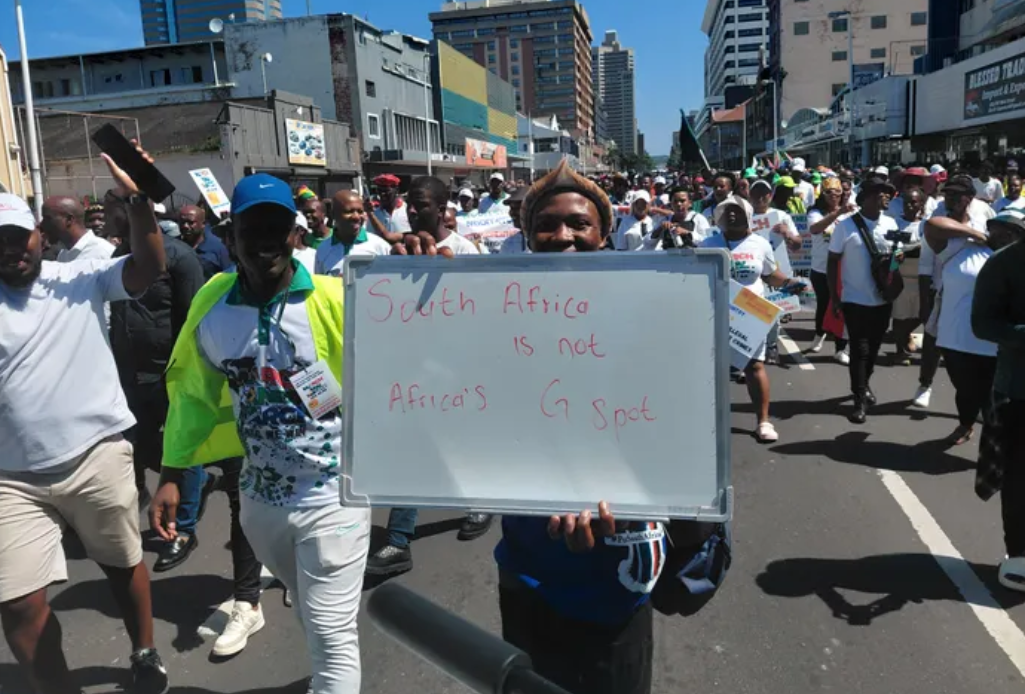
A March and March anti-foreigner protest in Durban. Image: XOLILE MTEMBU
The African Transformation Movement remained unconvinced. ATM leader Vuyo Zungula warned the speech risked creating false hope.
“What President Ramaphosa is trying to do is to make the patriots… have false hope that the government will actually address the problem,” Zungula said. “These tensions have persisted for nearly two decades and successive governments have failed to produce tangible solutions.”
The range of responses highlights how immigration has become a flashpoint ahead of the 10 June and 16 June marches. March and March said “South Africa belongs to us, not politicians,” and urged all parties to include its demands in any memorandum to the government. The Presidency did not immediately respond to a request for comment. The South African Police Service and the City of Cape Town also did not immediately confirm whether permits had been issued for the planned marches.

Join 46,000+ global citizens, corporate executives, and decision-makers who rely on NNA every day for definitive clarity. Enter your email to unlock uncompromised perspective for free.
No thanks, take me back to the home page.We respect your inbox. Unsubscribe in one click, any time.
Three ways to get NNA News the moment it breaks.
Our daily analytical digest breaking down the data driving modern policy and markets.
High-utility situational intelligence delivered directly to your inbox before your first meeting.
The whole network in your pocket, with breaking-news alerts.