The newsletter of the facts
E-News
Subscribe to E-News
Our daily analytical digest breaking down the data driving modern policy and markets.

Tuesday 30 June 2026 - 08:43pm
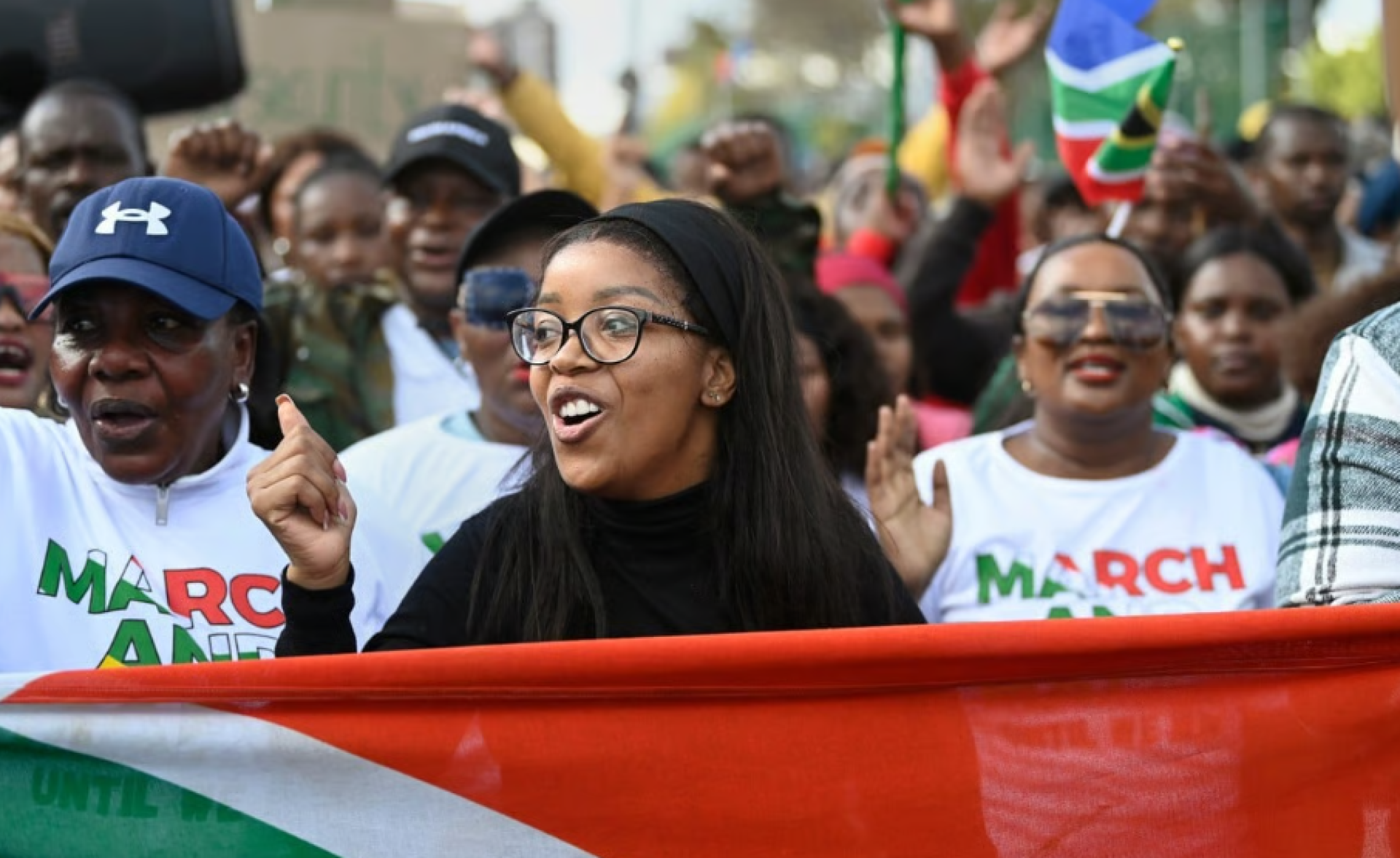
March and March leader Jacinta Ngobese-Zuma (C) leads demonstrators as they chant slogans during a protest against undocumented migrants. Photo Credit: RODGER BOSCH / AFP
NNA News - March and March leader Jacinta Ngobese-Zuma has given the South African government six months to remove undocumented foreign nationals, warning that the movement will stage protests every Thursday if no action is taken. The warning came after thousands marched in Durban and other cities across the country on Tuesday during protests focused on immigration and unemployment.
The ultimatum has intensified the already sensitive national debate over immigration enforcement, unemployment, and public order. Authorities acknowledged the protesters' concerns but insisted on expressing them within the law. The South African Police Service also confirmed arrests linked to looting in several provinces as demonstrations unfolded.
Expanding on the movement’s demands, Ngobese-Zuma told supporters in Durban that South Africans were being displaced in key sectors of the economy, including trucking and e-hailing services. “Foreigners are replacing South African truck drivers. Foreign nationals have taken over the Uber business. We demand our township economy come back to South Africans,” she said.
Turning to the government, Ngobese-Zuma argued that the state should redirect the resources used to police the demonstrations toward immigration enforcement. She then gave authorities six months to act, warning that the movement would stage weekly Thursday protests if the deadline passed without action. “The government should use all the resources it used to monitor us today to remove those foreign nationals selling drugs here in Point. Should the government fail to remove the foreign nationals, we will embark on a protest march every Thursday. Given that the government has spent R680 million to monitor this protest, it means it will spend this amount every week,” she added.
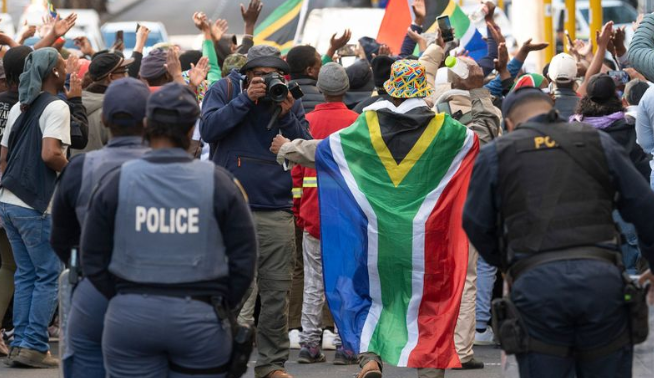
March and March protestors outside the Western Cape Provincial Parliament during a march against illegal immigrants on June 30. Photo: Gallo Images / Brenton Geach
The state, however, rejected any suggestion that public frustration justified unlawful conduct, issuing a brief statement urging citizens to raise their concerns through lawful channels. Ngobese-Zuma dismissed that response, arguing that officials were avoiding what she described as the core issues of illegal immigration and corruption within the country’s documentation system. She said weak enforcement had fuelled growing public frustration. “I think our government has a serious communication problem,” she said. “The one thing I’m not understanding is why the government of South Africa is not addressing the real issue, which is the illegal immigration crisis and foreign nationals who are buying documents and corruptly getting onto the system.”
Continuing her criticism, she argued that accountability should begin within state institutions, accusing officials of failing to tackle corruption while shifting attention towards citizens. “If you feel like threatening anyone, threaten the illegal immigrants who are in the country illegally. Threaten your own officials who are selling documents. Threaten government officials who haven’t been doing their job,” she continued. Responding to criticism of the campaign, Ngobese-Zuma dismissed accusations of xenophobia, insisting its focus was illegal immigration rather than nationality. “Don’t tell us about xenophobia or afrophobia or ethnic mobilisation. Tell us about the crisis of illegal immigration in the country and how you are going to fix it. That’s what we want to hear,” she added.
Ngobese-Zuma urged her supporters to remain disciplined, despite her criticism of the government, emphasising that the campaign aimed to exert political pressure rather than cause destruction. “Today is not about us; it’s about the future of South Africa. As we take to the streets, let us remember that this moment is not an opportunity to destroy our country, but an opportunity to press the reset button, rebuild, and allow the people of South Africa to be prioritised in their own countries without feeling apologetic about it or fearing being labelled hateful. Today is not about migrants but about the people of South Africa. This moment is not the end, but merely the beginning.”
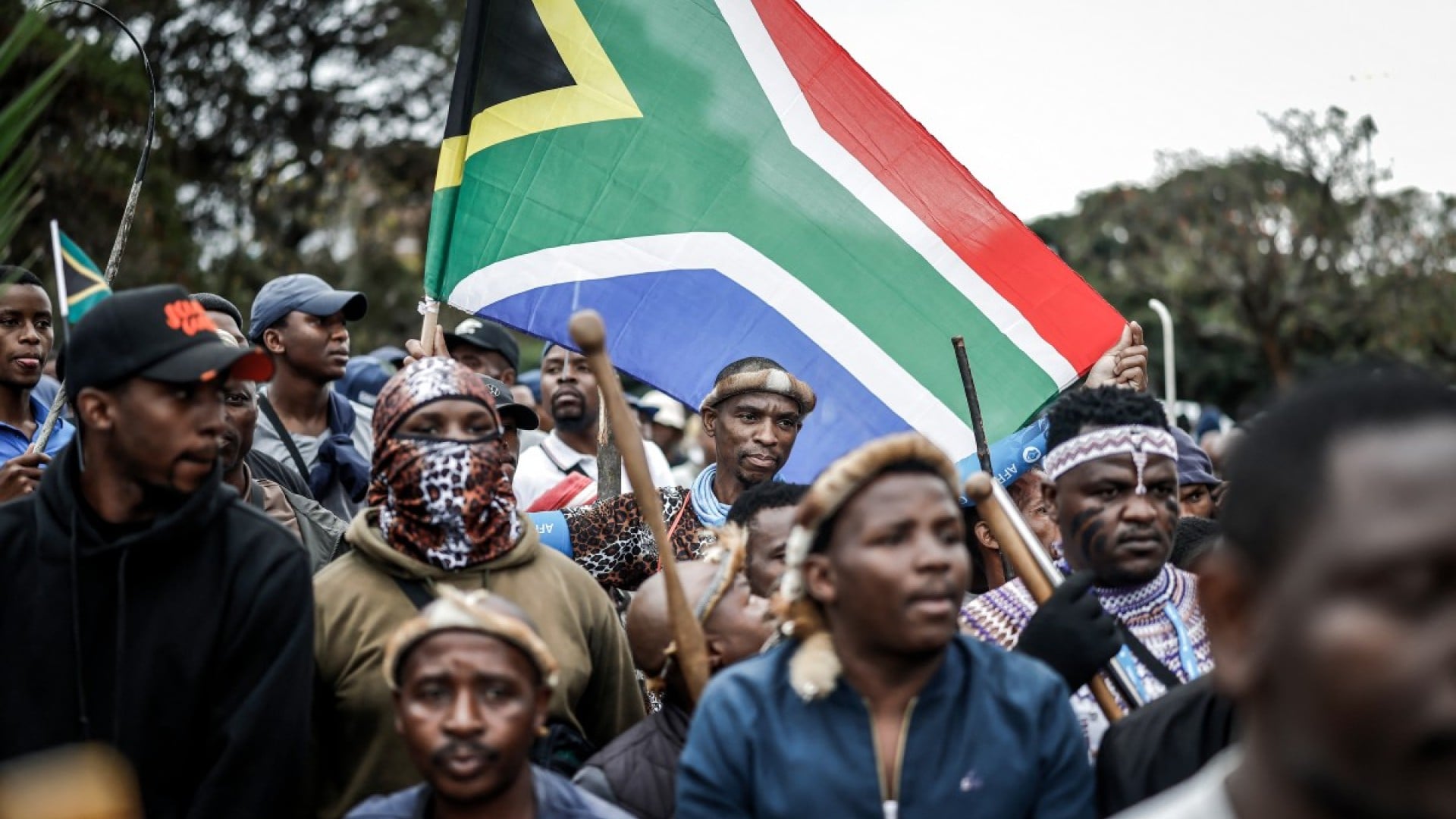
March and March protestors outside the Vaal, marching against illegal immigrants. Photo: Gallo Images / Brenton Geach
She continued to argue that the state had failed South African children, citing it as evidence of a broken system. “I will never forget seeing our children being made to spend their days at the beach just to pass time while other children were receiving an education. It is a clear sign that the system is broken; it doesn’t care about a South African child. The sympathy we are seeing now was not extended to the children of South Africa when they needed it. It is so sad,” she said. While the organisers called for discipline, the monitoring group, Siyafana Sonke, reported rising volatility in Johannesburg by mid-afternoon, saying demonstrators had spread across multiple locations and stretched police capacity. The group recorded looting, attacks on foreign-owned businesses, intimidation, property damage and isolated shootings, along with reports of delayed police responses in some areas.
In Gauteng, incidents included shootings and arson in Hillbrow, army deployment in Kliptown, stone-throwing in Berea, damage to shops in Yeoville, an injury outside Alexandra Mall, and citizens’ arrests in Germiston; and looting in Cosmo City. Similar incidents were reported elsewhere. In KwaZulu-Natal, protests were reported in Briardene and Pietermaritzburg. Demonstrations also took place in Mangaung in the Free State, while police recorded arrests of foreign nationals in parts of Cape Town.
As reports of unrest emerged, the Ministry of Police said most demonstrations had remained peaceful but confirmed arrests linked to isolated looting incidents. Acting Minister of Police Firoz Cachalia urged restraint, saying police would act against criminal conduct while maintaining public order. Before concluding her address, Ngobese-Zuma acknowledged support from several political figures, while singling out individuals within the ANC, including Gauteng Premier Panyaza Lesufi. “When it comes to the ANC, we will only acknowledge the support of certain individuals who stood with us,” she said.
The six-month deadline now sets the timeline for the movement’s next phase, with weekly Thursday protests threatened if the government fails to act. Authorities said they would continue balancing the constitutional right to protest with the need to maintain public order as tensions over immigration and unemployment remain high.

Join 46,000+ global citizens, corporate executives, and decision-makers who rely on NNA every day for definitive clarity. Enter your email to unlock uncompromised perspective for free.
No thanks, take me back to the home page.We respect your inbox. Unsubscribe in one click, any time.
Three ways to get NNA News the moment it breaks.
Our daily analytical digest breaking down the data driving modern policy and markets.
High-utility situational intelligence delivered directly to your inbox before your first meeting.
The whole network in your pocket, with breaking-news alerts.